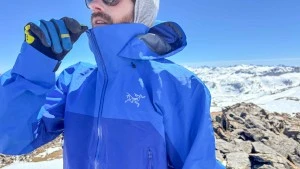
The Ultimate Guide to Choosing the Best Men’s Hardshell Jacket for Extreme Alpine Weather

Defining the Alpine Hardshell
When you are standing on a wind-scoured ridge in the heart of winter, the gear you wear ceases to be mere clothing and becomes a critical piece of life-support equipment. A hardshell jacket is the final frontier between your body and the unforgiving elements of the high alpine. Unlike softshells, which prioritize breathability and flexibility, a hardshell is engineered to be entirely windproof and waterproof. It is designed to shed heavy snow, deflect freezing rain, and block the biting gusts that can lead to rapid heat loss and hypothermia.
The primary purpose of an alpine hardshell is to maintain a stable microclimate. In extreme environments, moisture is the enemy. Whether it comes from the outside as precipitation or from the inside as sweat, moisture conducts heat away from the body twenty-five times faster than air. A high-quality hardshell must therefore manage a complex physiological balance, keeping external wetness out while allowing internal moisture vapor to escape. This delicate equilibrium is what separates a standard raincoat from a professional-grade alpine tool.
Waterproof Membranes and Breathability Science
The heart of any hardshell is its membrane. This is a microscopic layer of material, often expanded polytetrafluoroethylene or polyurethane, that contains billions of pores. These pores are large enough to let water vapor molecules pass through but far too small for liquid water droplets to penetrate. When searching for the best men’s hardshell jacket for extreme alpine weather, understanding these specifications is paramount.
- Hydrostatic Head Ratings: This measurement, usually presented in millimeters, indicates how much water pressure a fabric can withstand before leaking. For extreme alpine use, a rating of at least 20,000 millimeters is the gold standard. This ensures that even under the pressure of backpack straps or when kneeling in wet snow, the water stays out.
- Moisture Vapor Transmission Rate: Often abbreviated as MVTR, this measures how many grams of water vapor can pass through a square meter of fabric in twenty-four hours. High-exertion activities like ice climbing or skinning up a glacier require a rating of 20,000g/m2 or higher to prevent the dreaded greenhouse effect inside the jacket.
- Air Permeability: Some modern membranes allow a tiny amount of air to circulate constantly, which significantly aids in cooling during movement. While this can make the jacket feel slightly less warm in static situations, it is a game-changer for those who move fast and light in the mountains.
Material Durability and Denier Ratings
In the alpine world, gear is subjected to constant abrasion from granite, ice tools, and crampons. The durability of a hardshell is largely determined by the denier of its face fabric. Denier is a unit of measure that indicates the linear mass density of the fibers. A higher denier generally means a thicker, tougher, and more abrasion-resistant jacket, though it comes with a weight penalty.
For general mountaineering, a 40-denier fabric offers a good balance of weight and toughness. However, for those engaging in serious winter climbing or rescue work, moving up to an 80-denier or even 100-denier fabric in high-wear areas like the shoulders and elbows is advisable. Brands like Jöttnar have built a reputation by selecting high-tenacity fabrics that can withstand the brutal realities of Scottish winter climbing and Himalayan expeditions. This level of ruggedness ensures that a single slip against a sharp rock edge does not result in a catastrophic failure of your weather protection.
Essential Features for Technical Ascent
A jacket designed for the city will fail quickly in the mountains because it lacks the specific functional features required for technical movement. When evaluating a hardshell, you must look beyond the fabric and examine the architecture of the garment.
- Helmet-Compatible Hoods: An alpine hood must fit over a climbing or skiing helmet without restricting head movement. It should feature multiple points of adjustment so it can be cinched down tightly when you are not wearing a helmet, preventing the wind from catching it like a sail.
- Pocket Placement: High-altitude jackets should have pockets placed high on the chest. This ensures they remain accessible even while wearing a climbing harness or a heavy backpack waist belt.
- Pit Zips: Even the most breathable membranes can struggle during intense uphill efforts. Massive underarm zippers allow for instant mechanical venting, helping to dump heat and moisture quickly without exposing the torso to the elements.
- Storm Flaps and Zippers: Look for highly water-resistant zippers, often treated with a polyurethane coating. Internal storm flaps provide a secondary line of defense against wind seepage through the zipper teeth.
Weight versus Protection Tradeoffs
The philosophy of fast and light has revolutionized alpinism, but it requires careful consideration when choosing a hardshell. A minimalist jacket might weigh only 300 grams, but it may lack the durability and feature set required for a multi-day storm in the Alps. Conversely, a heavy-duty expedition jacket might weigh 700 grams but offer a fortress-like feel that provides psychological and physical security.
Most professional climbers opt for a mid-weight shell that utilizes a three-layer construction. In this setup, the membrane is sandwiched between a rugged outer face fabric and a functional inner liner. This construction protects the delicate membrane from body oils and physical abrasion, significantly extending the life of the garment. Jöttnar often utilizes these high-performance three-layer laminates to ensure their shells remain functional across several seasons of hard use.
Fit and Layering Integration
The best hardshell in the world will not perform if it does not fit correctly over your other layers. Alpine layering typically involves a moisture-wicking base layer, a breathable mid-layer or fleece, and sometimes a synthetic insulated jacket. Your hardshell must be sized to accommodate these layers without being so baggy that it catches the wind or obscures your view of your feet and gear.
- Articulated Arms: Look for jackets with pre-curved sleeves and underarm gussets. This prevents the hem of the jacket from lifting up when you reach high for an ice tool placement, keeping your waist protected from cold drafts.
- Hem Drawcords: A dual-sided hem adjustment allows you to seal the bottom of the jacket against spindrift and wind.
- Cuff Design: Cuffs should be wide enough to fit over the gauntlets of heavy winter gloves but adjustable enough to seal tightly around the wrists when wearing thinner liners.
Maintenance for Longevity in Harsh Environments
Investing in a premium hardshell is a significant commitment, and proper maintenance is essential to ensure it continues to perform at its peak. The most common cause of hardshell failure is not the membrane breaking down, but the Durable Water Repellent coating on the face fabric wearing off. When this happens, the face fabric becomes saturated with water, a state known as wetting out. This prevents the membrane from breathing, leading to internal condensation that feels like a leak.
Regular washing with a technical soap is vital. Dirt, salt from sweat, and smoke from campfires can all clog the pores of the membrane and degrade the water-repellent finish. After washing, a short stint in a tumble dryer on medium heat usually reactsivates the water-repellent polymers. If water still fails to bead on the surface, it is time to apply a spray-on treatment. By maintaining the exterior of a jacket from a specialist like Jöttnar, you ensure that the technical performance remains as high as the day you bought it.
Choosing Your Armor for the High Peaks
Selecting the right equipment requires an honest assessment of your objectives. If your goals involve technical mixed climbing in the Cairngorms or tackling steep couloirs in the Chamonix valley, you need a shell that prioritizes mobility and absolute weather protection. The integration of advanced textiles and ergonomic design has made it possible to find jackets that feel like a second skin while offering the protection of a bunker.
In the most demanding conditions, every detail matters. From the way the zipper pulls are shaped for gloved hands to the height of the collar that protects your face from freezing spindrift, these nuances define the user experience. Jöttnar remains a favorite among those who demand uncompromising quality in these specific areas. When the sky turns black and the wind begins to howl, your choice of hardshell will be the most important decision you made before leaving the trailhead.
Ultimately, the best jacket is the one that disappears. It should move with you, protect you without overheating, and withstand the rigors of the mountain environment without fail. By focusing on high denier counts, superior hydrostatic ratings, and mountain-specific features, you can step into the extreme alpine environment with the confidence that your gear is up to the challenge. Whether you are a professional guide or an aspiring mountaineer, your hardshell is your primary shield against the wild, and it should be chosen with the utmost care.