
Entering retail shelves is a major milestone for any pet food brand, and the package itself is one of the biggest factors in whether that launch succeeds. Pet food packaging has to protect the product, communicate trust at a glance, meet strict labeling rules, and survive distribution logistics — all while standing out among established competitors. Brands that treat packaging as an afterthought discover problems too late: stale product, rejected shipments, or failed compliance reviews. This guide walks through the practical decisions new pet food brands should work through before approaching retailers, from barrier protection and format selection to design, regulation, and sustainability.
Matching Barrier Protection to the Product
The first job of pet food packaging is keeping the food fresh and safe, and different formats degrade differently. Kibble’s fats oxidize into rancidity when exposed to oxygen, and it absorbs moisture that ruins texture and invites spoilage. Wet food needs hermetic sealing to stay shelf stable, which is why cans and retort pouches dominate that category.
Barrier performance comes from the material structure. Multi-layer flexible films combine layers that block the three main enemies of pet food freshness:
- Oxygen — which turns fat-rich kibble rancid and unpalatable
- Moisture — which softens kibble texture and can encourage spoilage
- Light — which degrades sensitive nutrients and fades print over time
Metalized or foil layers raise protection further for fat-sensitive recipes. Choosing the right barrier level matters because over-engineering raises cost while under-engineering risks spoilage and returns.
Selecting a Package Format for Retail
Format shapes both shelf presence and how shoppers interact with the product. The main retail formats include:
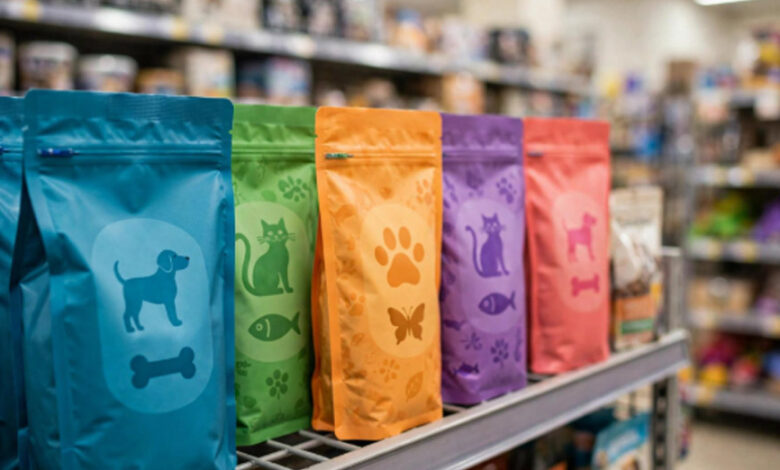
- Stand-up pouches — the most common choice for dry food and treats; the bottom gusset lets the bag sit upright for strong visibility and easy access
- Flat-bottom bags — extra stability and a larger printable surface, popular for mid-size and larger kibble quantities
- Quad-seal bags — structural integrity with a premium look, and they stack neatly for shipping
- Cans, aluminum trays, and retort pouches — the standard options for wet food, all supporting the heat processing that makes shelf-stable wet food possible
- Small pouches, stick packs, and single-serve formats — meeting demand for portable options and portion control
Designing for Shelf Impact and Shopper Trust
Retail shelves are crowded, and pet owners often decide in seconds. Shelf-effective designs share a few traits:
- Clear visual hierarchy — the brand name, product variety, and benefit claims each read instantly
- Legible typography — mandatory information stays accessible while promotional messaging stays distinct
- Honest photography — real images of ingredients or pets convey transparency; overly stylized or generic stock imagery can erode trust with informed buyers
- Concise iconography — symbols for attributes like grain-free, sustainably sourced, or vet formulated give shoppers quick visual cues
- Reserved space for disclosures — the guaranteed analysis and ingredient sourcing never compete with promotional graphics
Understanding Labeling and Regulatory Requirements
Pet food labels are legal documents, and compliance failures can keep a product off shelves entirely. In the US, the Association of American Feed Control Officials (AAFCO) publishes model standards most states adopt, covering ingredient nomenclature, nutritional adequacy, and label claims. Key mandatory elements generally include:
- The brand and product name
- The species the food is intended for
- A net quantity statement
- A guaranteed analysis — minimum crude protein and fat, maximum crude fiber and moisture
- An ingredient list in descending order by weight
- A nutritional adequacy statement
- Feeding directions
- Manufacturer or distributor information
The nutritional adequacy statement — the AAFCO statement — tells shoppers whether the food provides complete and balanced nutrition and for which life stage. Product names follow conventions tied to the prominence of featured ingredients. Because requirements vary by state and market, verify the full rulebook for every region you plan to sell in, and build label review time into the launch schedule.
Building Convenience Into Every Package
Convenience features have become expected rather than optional:
- Resealable closures — zippers, tin ties, or slider seals that keep opened kibble fresh and drive repeat purchases
- Easy-open tears and tear notches — reducing friction at first use
- Ergonomic handles — making larger bags easier to carry and pour
- Single-serve and smaller formats — serving single-pet households, travelers, and owners mixing dry food with wet food or toppers
- Printed portion guidance — helping owners feed correctly and reduce waste
Always test convenience features with real users: a zipper that fails after a few openings or a tear that rips the panel does more damage than no feature at all.
Weighing Sustainability Against Performance
Shoppers increasingly ask what happens to the package after the food is gone. Recyclable mono-material flexible films, particularly polyethylene structures, are the leading sustainability direction for pet food packaging but adoption involves trade-offs: lower barrier performance, reduced stiffness, or trickier sealing than multi-layer laminates, plus uneven flexible-film recycling infrastructure across regions.
Paper-based options and post-consumer recycled content appeal to eco-minded buyers but may cost more and protect less. The honest approach rests on three habits:
- Match the claim to what the package actually delivers — if the film is technically recyclable but local programs do not accept it, say so carefully rather than overstating
- Give clear on-pack recycling instructions so shoppers know exactly what to do
- Use credible certifications rather than vague green language
Brands evaluating recyclable structures can learn more about how mono-material films perform under real retail conditions.
Planning for Cost, Sizing, and Retail Logistics
Packaging directly affects margins, so cost planning should run alongside design. Flexible pouches are generally the most economical for dry food, while cans and retort packaging cost more but are necessary for wet formats; resealable features, premium finishes, and sustainable materials each add to the bill. Size range matters too — small trial bags lower the barrier for new shoppers, while large economy bags drive loyalty among established buyers.
Retail logistics add another layer. Before finalizing dielines, run through this checklist:
- Drop, vibration, and compression testing — bags must withstand stacking and rough handling without punctures or seal failures
- Retail-ready outer cases or PDQ display trays — helping the product move from pallet to shelf quickly
- Retailer packaging guidelines — confirming shelf dimensions and any retailer-specific requirements
Conclusion
Launching a pet food brand into retail is as much a packaging challenge as a recipe challenge. The winners get the fundamentals right: barrier protection matched to the product, a visible format, honest design, compliant labels, convenience features shoppers use, defensible sustainability claims, and economics that survive the journey from factory to shelf. Work through these in sequence, test with real consumers and retailers before committing to tooling, and treat the package as a living asset. A package that protects the food, respects the rules, and earns repeat purchase is the strongest foundation a new pet food brand can build.
FAQ
What is the most common packaging format for dry pet food?
Stand-up pouches are the most common format for dry kibble and treats because they stand upright on shelves, offer strong visibility, and use multi-layer films that protect against moisture, oxygen, and light.
What must a pet food label include?
Typical requirements include the brand and product name, intended species, net quantity, guaranteed analysis, ingredient list in descending order by weight, nutritional adequacy statement, feeding directions, and manufacturer or distributor information.
What is an AAFCO statement on pet food packaging?
It is the nutritional adequacy statement indicating whether the food provides complete and balanced nutrition, how that was determined (formulation or feeding trials), and which life stage it suits.
Why is barrier protection important in pet food packaging?
Fat-rich kibble oxidizes and turns rancid with oxygen exposure, and moisture absorption degrades texture and safety; proper barrier films keep the product fresh through its intended shelf life.
Are resealable pet food bags worth the extra cost?
Generally yes — resealable closures keep opened food fresh, improve the user experience, and support repeat purchases, which is why many premium brands treat them as standard.
Can pet food packaging be recyclable?
Recyclable mono-material flexible films, especially polyethylene structures, are advancing, but they involve trade-offs in barrier performance and cost, and flexible-film recycling infrastructure is still uneven by region.
What is retail-ready packaging for pet food?
Retail-ready packaging refers to outer cases or PDQ display trays that let retailers move product from pallet to shelf quickly with minimal handling, while protecting bags from damage in transit.