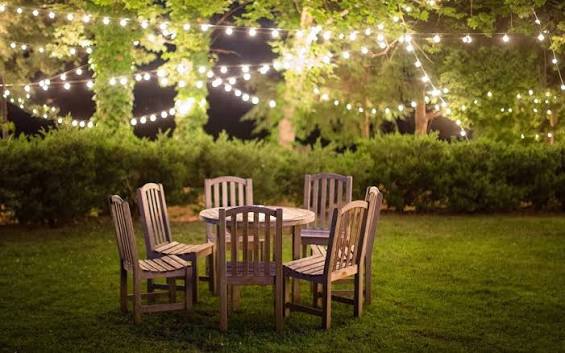

You hang a row of lights across the patio, switch them on, and the space immediately feels more inviting. The bulbs give the seating area a warm glow, and the gentle curve between the posts looks almost like something you’d see outside a favorite café. A few months later, though, that curve has grown deeper. One section hangs noticeably lower than the others, and the strand above the dining table seems to droop a little more every time you look at it.
Sagging doesn’t always mean the lights are poor quality. Often, the problem is how they were supported in the first place. The longer the distance between mounting points, the more weight the cord carries, and the harder it becomes to keep the line looking balanced. Homeowners planning outdoor string lights need to think about what holds the strands up, not just the bulbs they’ll see after dark.
Why a Light Strand Changes Shape Over Time
A string of lights might not feel particularly heavy when you’re holding it in your hands. Spread that same strand across a patio, however, and the combined weight of the cord, sockets, and bulbs begins pulling downward between the supports. Longer spans make that pull more noticeable, especially when the strand is attached only at its ends.
The gentle curve you see is normal. Any flexible cable suspended between two points will hang to some degree, and a controlled curve can be part of an attractive patio design. Trouble starts when the curve grows much deeper than intended or when different sections hang at noticeably different heights.
Outdoor conditions add to the challenge. Wind moves hanging strands, temperature changes affect some materials, and repeated movement can place strain on weak mounting points. A strand that looked tidy when installed may gradually pull loose from its original position.
You might first notice the problem over the dining table, where one bulb hangs lower than the others. Or perhaps the lights nearest the fence begin to droop while those attached to the house stay in place. These differences can reveal which mounting points are carrying too much load.
The support method matters more than repeatedly pulling the cord tighter. Tightening a light strand without checking the anchors may place additional stress on its electrical connections and mounting hardware.
The Difference Between a Decorative Cord and a Support Cable
One of the most common reasons for sagging is asking the electrical light cord to do two jobs at once. The cord is designed to connect and power the bulbs, but it may not be suitable for supporting the entire weight of a long suspended installation.
A separate support cable changes that arrangement. Instead of relying on the electrical strand to carry the load, suitable hardware supports the cable, and the lights are attached along it. The cable handles the mechanical tension while the electrical cord follows the planned shape.
This is particularly useful across open patios where there is no roof or pergola directly above the seating area. Without proper support, the distance between the house and the opposite mounting point may be too great for a light strand to maintain its original appearance.
A properly supported run of outdoor string lights keeps the electrical cord from carrying the structural load. Astoria Lighting Co describes using tensioned stainless-steel cables for this purpose, helping the planned shape remain consistent across longer spans.
That doesn’t mean every patio needs perfectly straight lines. Some homeowners prefer a relaxed curve, while others like the neat appearance of an overhead canopy. With suitable support, either effect can be planned rather than left to develop unpredictably.
A controlled curve looks intentional. A strand that hangs low because its supports have loosened rarely does.
Why Fence Posts and Decorative Trim Can Be Poor Anchors
A patio often has plenty of places that appear convenient for hanging lights. There may be a wooden fence nearby, a decorative beam along the house, or a slender post supporting a garden feature. It’s tempting to attach the lights to whatever is already there.
The problem is that not every surface is designed to handle sideways tension.
A fence post might be strong enough to support its panels but still move when a cable pulls against its upper section. Decorative trim can also be unsuitable because it may not be securely attached to the structural framing behind it.
At first, the mounting point may seem stable. Over time, however, repeated movement can loosen fasteners or allow the support to lean slightly. Even a small change can make the strand sag more noticeably.
This is especially important when several runs meet at one corner. The combined forces may be greater than someone expects from looking at the individual light strands.
Proper anchoring starts with understanding what the mounting point is attached to. Structural framing, suitable dedicated posts, and correctly selected hardware can provide support when designed for the expected loads.
Structural anchoring makes a difference because a lightweight fence component or decorative trim piece may not withstand the forces created by a tensioned cable. Understanding those limits before installation helps prevent loose supports and uneven hanging lines
Homeowners should avoid adding tension to questionable fixtures or climbing onto unstable furniture to adjust overhead lights. Suspended electrical systems require suitable anchoring and safe installation methods.
The Patio Layout Changes How the Lights Hang
Two patios of similar size can need very different lighting arrangements.
A narrow patio between the house and a solid pergola may offer several suitable support locations. An open backyard seating area might have no overhead structure at all. The design must account for those differences before deciding where the bulbs should go.
A single strand crossing the center of a patio creates a simple look, especially above a dining table. Several parallel runs provide broader coverage, while a zigzag pattern can make a larger seating space feel more enclosed and welcoming.
Each arrangement places different demands on the supports. A zigzag layout has several changes in direction, and the attachment points must be suitable for the forces involved. Parallel runs need consistent spacing to avoid looking uneven.
For outdoor string lights, the visual pattern and the support system really belong in the same conversation. A beautiful arrangement on paper may not work well if the proposed mounting points are too far apart or cannot safely handle the tension.
Sometimes a dedicated post makes more sense than stretching a strand toward an unsuitable fence. In other spaces, an existing overhead structure may provide appropriate support, subject to its condition and design.
What looks effortless once the lights are switched on usually depends on careful decisions made before the first strand is hung.
A Little Curve Can Look Better Than a Perfectly Straight Line
Not every drooping light strand is a failure. There’s a noticeable difference between an intentional swag and a line that has gradually lost its shape.
In cafés and outdoor dining areas, strings of bulbs often hang in gentle, repeating curves. The shape makes the lighting feel relaxed rather than rigid. What keeps the appearance tidy is consistency: the curves follow a planned pattern, the bulbs sit at predictable heights, and the arrangement feels balanced across the space.
Homeowners sometimes try to fix a sagging installation by pulling every strand as straight as possible. That can create additional tension and may not suit the hardware or the intended appearance.
A better design starts with the desired shape and selects supports capable of maintaining it. A shallow curve over a dining table may create a different atmosphere from several wider swags above a lounge area.
Bulb size affects the appearance too. Larger globe or café-style bulbs are more visually noticeable, so uneven spacing or an unexpectedly low section may stand out more than it would with smaller decorative lights.
There is also the question of clearance. Lights should remain well above normal walking and seating areas, with suitable separation from doors, overhead equipment, and other potential obstacles. The required clearance depends on the installation and applicable safety requirements.
The aim isn’t to eliminate every curve. It’s to make sure the curve stays where it belongs.
Weather and Electrical Connections Deserve Attention
A strand that sags after a storm may have more than an appearance problem. Wind can move suspended lights repeatedly, and a loose anchor or damaged cord may create a safety concern.
If a run has shifted suddenly, avoid pulling it back into position while it’s energized. Damaged sockets, exposed wiring, or compromised connections need proper evaluation before the lights are used again.
Outdoor-rated electrical equipment is designed for specific exposure conditions, but that doesn’t mean every component can be left in standing water or connected without regard to its rating. Plugs, extension cords, sockets, and control equipment must be suitable for the installation and protected according to the manufacturer’s instructions and applicable electrical requirements.
The load on the electrical circuit matters as well. Connecting multiple strands together without checking their rated limits can create hazards even when the mounting system is strong.
A properly supported cable helps protect the light cord from carrying mechanical tension, but it doesn’t replace suitable outdoor electrical components.
These details are easy to overlook when the main goal is creating a pleasant atmosphere. Yet reliable outdoor lighting depends on both the physical supports and the electrical installation working as intended.
Think About the Support Before Choosing the Final Pattern
The most useful time to deal with sagging is before the system goes up. Look across the patio and notice the distance between possible mounting locations. Consider where people sit, where they walk, and whether doors or nearby branches could interfere with the suspended strands.
For an open backyard, Astoria Lighting Co lists dedicated posts, tensioned cables, and structural mounting hardware as part of its outdoor string-light installations. Those options matter because a patio without suitable existing supports needs more than a longer cord to achieve a stable overhead layout.
Rather than forcing the original design onto whatever mounting points happen to be available, the layout can be shaped around supports that are appropriate for the space. Sometimes that means using fewer runs. In other cases, it means adding a properly designed support where one is missing.
A nighttime review is useful when checking outdoor string lights. The bulbs may look balanced in daylight but feel different when people sit beneath them. A low-hanging section can become distracting above a table, while a carefully planned canopy can make the seating area feel comfortable.
Astoria Lighting Co also offers brightness controls for its patio lighting systems, so the finished atmosphere does not have to depend on how many bulbs are packed into one area. Support and layout determine where the light comes from; brightness settings help determine how the space feels.
A Patio Should Look Just as Good After the First Season
A few soft curves can make patio lighting beautiful. Uneven sagging, loose anchors, and strands hanging lower every month have a different effect. They can make the space look unfinished and, in some cases, point to problems that need attention before the lights are used again.
Before installing outdoor string lights, think about the distance between supports, the strength of the mounting points, and whether the electrical cord is being asked to carry weight it wasn’t designed to hold. A properly planned support system can preserve the relaxed appearance of hanging bulbs without relying on weak anchors or excessive tension.
The best result is one you stop thinking about. You sit down outside, switch on the lights, and enjoy the evening without wondering why the strand above the table is hanging lower than it did last month.