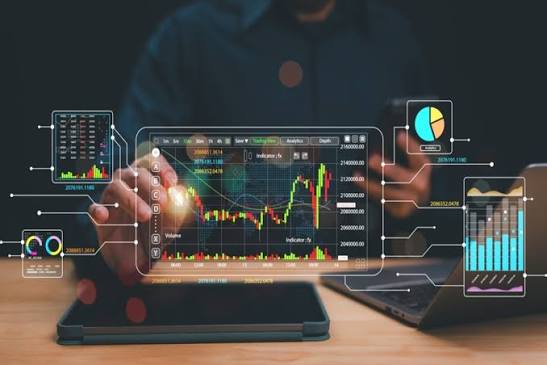

A chart pattern that looks flawless in isolation can behave in completely unexpected ways once the market reacts to fresh economic data. This is one of the more humbling lessons for traders who rely purely on technical structure: a textbook breakout, a clean retest, or a picture-perfect double bottom can still fail, not because the pattern was wrong, but because the fundamental backdrop shifted the story the price was telling. Every forex trade exists inside context, and economic news is often the force that rewrites that context in real time. Technical structure is never separate from surrounding information.
Why Technical Setups Aren’t Self-Contained
Currency pairs move because of shifting expectations about interest rates, growth, inflation, and risk sentiment. A support level or a trendline is really a visual summary of where buyers and sellers have previously agreed on value, but that agreement is conditional. It reflects the information available when it formed. When new information arrives, whether it’s a central bank statement, an employment report, or an inflation print, that agreement can be renegotiated almost instantly.
This is why a setup that looks identical on two different days can carry different risk profiles. A break above resistance ahead of a central bank decision means something different than the same break occurring in a quiet week with no major releases scheduled. Context has changed.
The Calendar as a Filter, Not an Afterthought
Many traders build their setups first and check the economic calendar second, if at all. Flipping that order can produce better decisions. Before committing capital, it helps to ask: what scheduled events sit between now and the point where this trade is expected to play out? A setup with a clear path to its target, uninterrupted by a high-impact release, carries a different character than one that has to survive a Federal Reserve announcement or a Non-Farm Payrolls report.
This doesn’t mean avoiding news entirely. It means being deliberate about when a technical signal is trusted at face value and when it needs to be treated cautiously, given a wider stop, or simply skipped. This check can prevent poor timing.
When News Confirms the Chart
Not every economic release works against a setup; plenty reinforce what price action suggests. If a currency has been quietly strengthening against its peers for weeks and then a stronger-than-expected GDP figure or a hawkish rate decision arrives, the news often acts as confirmation rather than disruption. In these cases, the market isn’t being surprised so much as catching up to what traders had already anticipated.
This is where the interplay between technicals and fundamentals becomes useful. A trader who has identified a structurally sound setup and understands the fundamental narrative can hold a position with conviction when news aligns. The chart gives the “where,” while the economic data gives the “why.” Together, they form a clearer picture.
When News Invalidates the Chart
The more dangerous scenario is when news contradicts what the chart appeared to be saying. A currency might look technically strong right up until a central bank surprises the market with an unexpected policy shift, or an inflation report comes in dramatically different from consensus. In these moments, historical price levels can lose their relevance almost overnight. A forex trade based on those levels may therefore need to be reassessed as the market absorbs the new information.
Support and resistance built on old assumptions may simply get run over as the market reprices around new information. This is why risk management deserves as much attention as setup identification. Position sizing, stop placement, and a willingness to step aside during high-impact events all serve the same purpose: protecting capital from a market that has decided the old rules no longer apply.
Reading Sentiment Alongside Structure
Beyond individual data points, there’s a broader layer worth watching: overall market sentiment and risk appetite. Currencies tied closely to global growth expectations, commodity cycles, or safe-haven flows often respond to news not just on its own merits, but on how it shifts the market’s collective mood. A single data release can sometimes matter less than the narrative it feeds into.
Recognizing whether the market is in a risk-on or risk-off phase can help explain why a technically sound setup either gets amplified or ignored. Traders also watch central bank commentary and broader market indices for signs that the narrative is changing. Cross-referencing price structure against the news cycle becomes more natural over time, helping explain unusual reactions.
Combining Timing With Trade Structure
The relationship between economic news and a technical setup also makes timing particularly important. A trader may identify a valid entry, target, and stop-loss, yet the trade can still face additional uncertainty if a major announcement is due shortly after entry. In such circumstances, the question is not simply whether the setup works, but whether there is enough time for the market to move according to the original idea before new information arrives. Some traders may wait for the release and evaluate price action. Others may reduce exposure when an important announcement approaches. Timing should remain part of the overall setup.
Conclusion
None of this suggests that technical analysis is unreliable or that news trading is inherently superior. Both approaches have value, and traders can blend them rather than choosing either exclusively. A clean setup and a clear economic backdrop both matter because they provide different parts of the market picture. Ultimately, the meaning of a chart pattern is never completely fixed. It shifts depending on what the market currently believes, while economic news can quickly reshape those beliefs. Checking the calendar alongside the chart helps traders understand whether a setup still reflects current conditions. This broader context can make each forex trade easier to assess.
TradingView is a global platform trusted by millions of traders and investors for real-time charting, market data, and idea-sharing tools. From forex pairs to major indices, it helps users track price action alongside economic events, empowering smarter, more informed trading decisions across currencies, stocks, and other global markets.