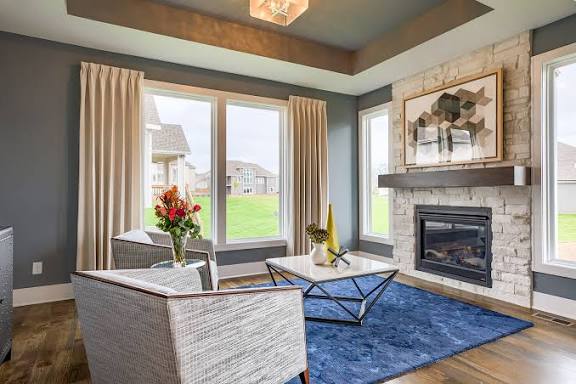

Nine out of ten homeowners pick the fireplace before they pick the furniture, then spend the next two winters rearranging the room around it. I did it myself with a gas insert in a rented house, and I still think about the sectional that never quite fit.
The fix is not a bigger budget. It is a different order of operations. Treat the hearth as the anchor of the room and the decision gets easier, because every other choice now has something to answer to. Before you commit to anything, take your measurements and a sketch of the room and visit a reliable Utah fireplace supply showroom, where you can see real units at scale and ask how each one handles clearances, venting, and heat output. A salesperson working from your floor plan can’t steer you toward a unit that fights it. Walk in cold, and you’re buying on mood.
Here is what most people get wrong, and the sequence that actually works.
What does the hearth actually do to a room?
A fireplace is not a decoration you plug in. It’s a permanent architectural decision that controls seating, sightlines, and where the TV ends up. In an open-plan house, it can quietly decide how you move between the kitchen and the living room for the next twenty years.
That’s why the physical presence matters more than the spec sheet. A shallow linear unit reads as sculpture. A deep traditional box reads as furniture. Neither is wrong, but they demand different rooms, and you can’t tell which one you own from a product photo.
Cold weather forces the issue. According to the Department of Energy, heating accounts for a significant share of home energy use in most American households, which is why a lot of Utah homeowners reach for the hearth as an efficiency play before they’ve settled the design question. Fair instinct. Bad order. If you’re shopping for warmth first and looks second, be honest about it, because the models that win on heat output rarely win on presence.
My take: settle the room, then the heat. You spend a lot more evenings looking at the thing than adjusting it.
The Anchor, Not the Accent framework
This is the lens I’d apply to any hearth purchase, whether it’s a gas fireplace in a Sandy rambler or a stove in a cabin near Park City.
| Question | Accent mindset | Anchor mindset
|
| Where does it go? | Fill the leftover wall | Set seating around it first |
| What drives the pick? | Whichever flame looks nicest | The one that fits the room and your heating habits |
| What do you buy first? | The unit | The layout, the surround, and the vent path |
| What’s the failure mode? | Beautiful box, awkward room | A longer decision, a much shorter regret list |
Accent-mindset buyers finish in an afternoon and spend years working around the result. Anchor-mindset buyers take a few weekends and forget about the purchase entirely, which is the highest compliment a built-in can get.
The framework also kills a common habit: measuring the wall and buying the widest unit it holds. Width is the least interesting variable. Venting, clearances, and the floor material under the unit will narrow your list faster than any aesthetic filter, and they don’t move once installed.
Four things to nail down before you shop
Show up unprepared and you’ll be steered by whichever model is closest to the door. Spend one evening on these and you’ll walk in with purchase criteria instead.
- Trace the layout with painter’s tape. Full size, on the floor, including proposed seating. You’ll learn in ten minutes whether a wide linear insert crowds the walkway.
- Find the vent path. Direct vent, natural vent, and vent-free all change your options and your wall. This is the question that stops most projects cold.
- Write down your honest heating goal. Ambience-only, supplementary warmth on cold mornings, or something closer to a real heat source. Different answers, different units.
- Photograph all four walls. Include the ceiling and any dropped soffit. Bring the photos. Showroom staff read a room from images faster than you’d expect.
Do that, and the visit becomes a comparison instead of a browse.
Why the showroom still beats the website
Flame is the one product attribute a screen cannot carry. Manufacturers publish a lot of performance data, and standards work in this area is governed by bodies like the National Institute of Standards and Technology, but none of it tells you how a burner looks against your wall color at 9 p.m. in January.
There’s also the finish problem. Glass, stone, and metal surrounds photograph badly under showroom lighting and then look completely different in a living room with warm lamps. If you’ve ever ordered a gray sofa online and received something closer to green, you already understand.
And here’s the part that sends people back: hardware. A remote that feels cheap in the hand will feel cheap for a decade. A trim that looked crisp in a JPEG can read flimsy when you run your fingers along the seam. You can’t test any of that through a screen.
I’d rather drive forty minutes each way than live with a hearth I picked from a thumbnail. That’s not nostalgia for physical retail. It’s the same reason you’d test drive a car before signing.
A realistic afternoon on the floor
Picture a couple from Layton on a Saturday in October, two showrooms on the list and a hard stop at four. They walk in with tape measurements, phone photos, and one honest sentence: “We want warmth on winter mornings, and we don’t want it to dominate the room.”
First stop, they get pulled toward a dramatic unit that’s three feet wider than their wall allows. Attentive staff catch it and redirect them to two candidates that fit. That redirect is the whole reason to be there. On a website, nobody stops you.
Second stop, the flame comparison happens in five minutes flat. One burner has a tall, lazy look. The other is wider and lower. Their room wants the second one, and they knew it the moment both were lit side by side.
They leave with a quote, a venting answer, and a surround color swatch. No second guessing, no return trip.
Where Utah’s market changes the math
Homeownership in this state skews toward newer construction and detached houses, and census data on housing patterns reflects just how much of the Wasatch Front has been built in recent decades. That matters because newer homes often arrive with the fireplace framed and unfinished, and the original builder option rarely survives a family’s actual taste.
Local inventory is another factor. Salt Lake and Davis County showrooms carry brands and sizes tuned to what local builders spec, which means you’ll see units that a national retailer might never stock. If you’re replacing rather than building, ask what’s available quickly. Waiting on a specialty order through the holidays gets old around mid-December.
Altitude is worth mentioning too. It doesn’t change your aesthetic decision, but it does change how some units behave, and local staff have seen how their inventory performs at elevation. That’s practical knowledge you can’t download.
The one order I’d defend every time
Room first. Layout second. Vent path third. Unit fourth. Showroom visit fifth, with all of it in hand.
The people who rush the hearth end up redesigning the room around a purchase they made in twenty minutes. The people who slow down end up with a room that feels like it was built around a decision, because it was.
So before you click anything, tape your layout, find your vent, and print your photos. Then go stand in front of the flame. What’s the one room in your house that’s been quietly waiting for its anchor?