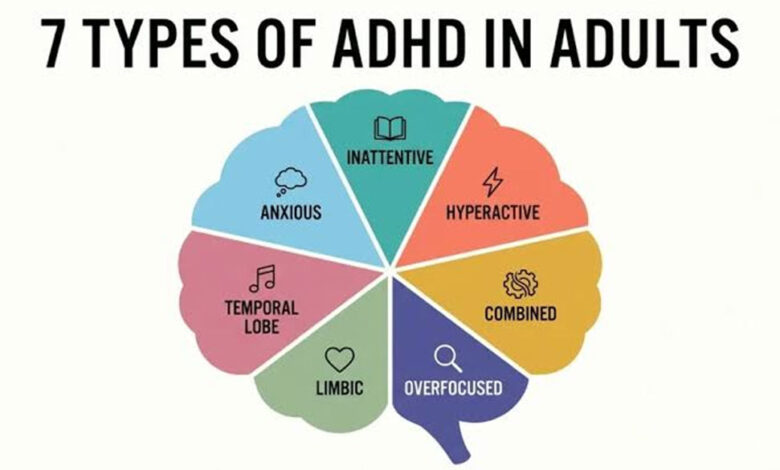

Most people picture a fidgety eight-year-old when they hear the word ADHD. The reality is that millions of adults live with the same condition, often without ever receiving a proper diagnosis. Some were told as kids that they were lazy, scattered, or just not trying hard enough. Others sailed through early school only to hit a wall when life got more demanding. Wherever someone falls on that spectrum, understanding what ADHD actually is and what can realistically be done about it makes a significant difference.
This article walks through the core features of ADHD, how it differs across subtypes, why adults are so frequently missed by the system, and what a thorough treatment approach looks like. Whether you are researching for yourself or trying to understand someone close to you, the goal here is clarity without the jargon.
What ADHD Actually Involves
Attention-deficit/hyperactivity disorder is a neurodevelopmental condition that affects how the brain regulates attention, impulse control, and activity levels. It is not a character flaw or a parenting failure. Research consistently points to differences in dopamine and norepinephrine signaling in the prefrontal cortex, the part of the brain responsible for planning, decision-making, and filtering distractions. These are not small or trivial differences. Brain imaging studies have shown measurable structural and functional variations in people with ADHD compared to those without it.
The condition tends to run in families. According to a large-scale twin study published in the journal Psychological Medicine, the heritability of ADHD is estimated at around 74 percent, making it one of the most heritable psychiatric conditions known. That does not mean environment plays no role. Premature birth, low birth weight, and exposure to certain toxins during pregnancy have all been identified as contributing risk factors. But genetics is a major piece of the puzzle.
The Three Subtypes and How They Present
The DSM-5 recognizes three presentations of ADHD, and they behave quite differently from one another. Knowing which subtype applies to a given person shapes everything from how symptoms are recognized to how treatment is planned.
| Subtype | Primary Symptoms | Often Missed In |
| Predominantly Inattentive | Difficulty sustaining focus, forgetfulness, losing items, missing details, poor follow-through | Girls, women, adults with high IQ |
| Predominantly Hyperactive-Impulsive | Restlessness, interrupting others, difficulty waiting, talking excessively, acting without thinking | Young children initially caught, adults often missed as hyperactivity quiets with age |
| Combined Presentation | Significant symptoms from both inattentive and hyperactive-impulsive categories | Can be mistaken for anxiety or mood disorders when both clusters are present |
The inattentive subtype is particularly easy to overlook. A child who daydreams quietly in class rarely gets sent to the principal’s office. A woman who has learned to mask her disorganization through elaborate compensatory systems may go decades without anyone flagging a problem. By the time many of these individuals reach adulthood, they have internalized the narrative that they are simply not smart enough or not disciplined enough, when in fact their brain is wired differently.
Why Adults Are So Often Diagnosed Late
For a long time, ADHD was considered a childhood condition that people outgrew. That view has been thoroughly revised. The American Psychiatric Association estimates that about 4.4 percent of U.S. adults meet diagnostic criteria for ADHD, and many researchers believe that figure underestimates the true prevalence because of how frequently the condition goes unrecognized.
Several factors make adult diagnosis harder. First, the diagnostic criteria were originally developed based on observations of young boys, a group whose hyperactivity was hard to ignore. Adults, especially women, often present with internalized symptoms like chronic self-criticism, emotional dysregulation, and mental exhaustion from constantly trying to keep up. Second, ADHD frequently co-occurs with anxiety and depression, and those conditions tend to get treated first while the underlying attention issues go unaddressed. Third, some adults have developed such sophisticated coping strategies that their struggles are invisible to others, even though internally they are working twice as hard just to function.
- Chronic lateness despite genuine effort to be on time
- Difficulty completing tasks that feel repetitive or unstimulating
- Emotional sensitivity, particularly to criticism or perceived rejection
- Hyperfocus on interests while struggling to shift attention when needed
- Trouble with financial management, time estimation, or long-term planning
- A pattern of starting projects enthusiastically but rarely finishing them
These are not universal signs of ADHD, and none of them alone confirms a diagnosis. But when multiple patterns cluster together and have been present since childhood, even if they were not labeled at the time, a comprehensive evaluation is worth pursuing.
What a Proper Evaluation Looks Like
A solid ADHD evaluation is not a ten-minute conversation followed by a prescription. A thorough assessment typically involves a detailed clinical interview covering current symptoms, childhood history, academic and work performance, and family history. Many clinicians also use validated rating scales such as the Conners Adult ADHD Rating Scales or the Adult ADHD Self-Report Scale, which ask both the individual and sometimes a close family member to rate a range of behaviors.
The evaluator also needs to rule out or account for other conditions. Anxiety, depression, sleep disorders, and thyroid dysfunction can all mimic ADHD symptoms. Some people have ADHD alongside one or more of these conditions. Treating only the anxiety while missing the ADHD underneath it is a common reason people feel only partially helped by their treatment.
Neuropsychological testing can add useful detail in complex cases. These tests assess working memory, processing speed, executive function, and attention in a controlled setting. They are not required for every diagnosis, but for someone whose presentation is unclear or who has not responded to initial treatment, they provide a more complete picture.
Evidence-Based Treatment Options
Effective ADHD treatment almost always involves more than one component. Medication alone rarely addresses every aspect of the condition, and therapy alone may not be sufficient for someone with significant attention impairment. The best outcomes tend to come from a combination of approaches tailored to the individual.
Medication
Stimulant medications, particularly methylphenidate and amphetamine-based compounds, have the most evidence behind them. For about 70 to 80 percent of people with ADHD, stimulants produce meaningful symptom improvement, according to the National Institute of Mental Health. Non-stimulant options like atomoxetine, guanfacine, and bupropion exist for those who do not respond well to stimulants or who have contraindications. Finding the right medication and dose often takes some adjustment. That is normal and expected, not a sign that medication will not work.
Behavioral and Cognitive Strategies
Cognitive behavioral therapy adapted for ADHD focuses on practical skills rather than insight alone. This includes strategies for breaking tasks into manageable steps, managing time more accurately, handling procrastination, and addressing the negative self-talk that often accompanies years of struggling. Executive function coaching is another option, working more directly on day-to-day systems rather than underlying thought patterns. Both approaches teach skills the ADHD brain does not develop automatically.
Lifestyle Factors That Matter
Sleep, exercise, and nutrition have all shown measurable effects on ADHD symptom severity. Aerobic exercise in particular appears to boost dopamine and norepinephrine, the same neurotransmitters targeted by medication. Sleep deprivation makes attention and impulse control significantly worse. These are not replacements for clinical treatment, but they are genuinely useful parts of an overall approach.
Finding Quality Care Close to Home
Access to care is one of the most practical barriers people face. Rural and semi-rural areas often have fewer mental health providers, longer wait times, and less familiarity with adult ADHD specifically. Telehealth has expanded access considerably in recent years, though in-person evaluation still tends to be more thorough for complex presentations. For anyone in the region researching their options, there are clinics offering ADHD treatment in Kentucky that specialize in thorough adult evaluations and individualized care plans rather than a one-size-fits-all approach.
When evaluating any provider, it helps to ask how they conduct their assessments, what their experience with adult ADHD is, and how they coordinate care when multiple conditions are present. A provider willing to answer those questions openly is usually a good sign.
Pulling It Together
ADHD is real, it persists into adulthood for most people who have it, and it is treatable. The path from recognizing the problem to getting effective help can feel long, especially when years of misunderstanding have already accumulated. But accurate diagnosis followed by a thoughtful, individualized treatment plan genuinely changes lives. The science behind ADHD has advanced considerably over the past two decades, and so have the tools available to address it. Starting with good information is the first step, and understanding the full picture of what ADHD involves, how it hides, and how it responds to treatment puts a person in a much stronger position to seek help that actually works.