
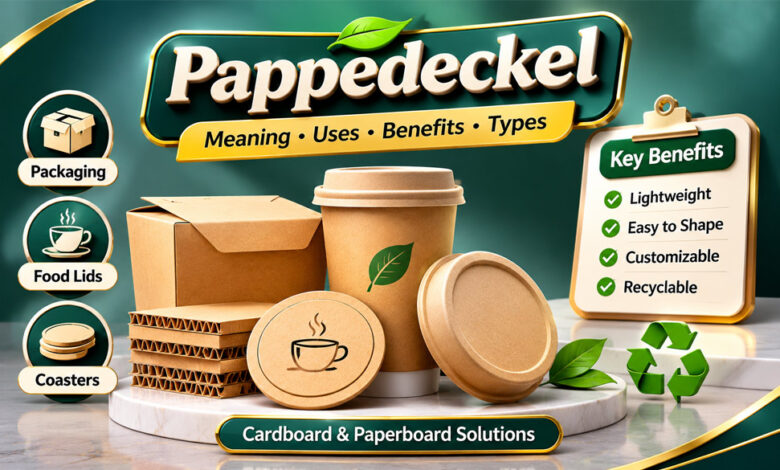

Pappedeckel is a German-related term connected with cardboard and paperboard. Depending on the situation, it can mean a piece of cardboard, a cardboard lid, a packaging part, or sometimes a drink coaster.
People may search for Pappedeckel after seeing the word on packaging, in German content, or on a product description. This guide explains its meaning, different spellings, types, how it is made, and its common uses.
What Does Pappedeckel Mean?
Pappedeckel is generally connected with cardboard or firm paperboard. The exact English translation depends on how the word is being used.
The German word Pappe refers to cardboard or firm board made from paper fibres. Deckel means a lid or cover. A direct translation can therefore suggest a “cardboard lid.”
However, everyday use can be wider than this. Pappedeckel may describe a flat piece of cardboard, a cover, a packaging part, or another simple item made from paperboard.
For example, a flat piece used to close a box may be called a cardboard lid or cover in English. A piece placed inside packaging could simply be called a cardboard insert. When the board is placed under a drink, “coaster” may be the better English word.
This is why context is important when translating Pappedeckel. There is no single English translation that works for every use.
Pappedeckel, Pappdeckel, and Pappendeckel
Several similar spellings can appear when researching this term.
Pappdeckel and Pappendeckel are recognized German forms. They are connected with cardboard or a piece made from it. Pappedeckel can also appear in regional, informal, and online use.
Another related word is Bierdeckel, the common German term for a beer coaster. A Bierdeckel is usually the small piece placed under a beer glass.
This does not mean every Pappedeckel is a coaster. The word may have a wider meaning depending on the region and situation.
For readers, the surrounding context is usually the easiest way to understand what the word means. Packaging content may be talking about a lid or insert, while café or restaurant content may be referring to a coaster.
How Pappedeckel Is Made
The exact production process depends on the type of paperboard being made. Paperboard can use fresh wood fibres, recovered paper fibres, or a mixture of both.
The fibres are mixed with water to create pulp. This pulp is formed into sheets and then pressed and dried. Manufacturers can combine several layers when they need thicker or stronger board.
The finished board can then be cut into different sizes and shapes. Depending on its purpose, it may also be printed, coloured, folded, pressed, or coated.
Some paperboard is left plain. Other products need a smoother printed surface or a special barrier against moisture and grease.
This is why two products described as Pappedeckel may look and perform very differently. A drink coaster needs good absorbency, while a packaging insert may need strength. A food lid may need to handle heat, moisture, or grease.
Main Types of Pappedeckel
Pappedeckel does not describe one fixed type or thickness of cardboard. Different forms of paperboard can be used depending on what the finished product needs to do.
Folding Paperboard
Folding paperboard is usually thinner than heavy cardboard. It can be cut, printed, folded, and shaped relatively easily.
It is commonly used for light retail boxes, product covers, cards, and other forms of printed packaging. Its lighter structure makes it useful when heavy protection is not required.
Greyboard
Greyboard is thicker and firmer. It can provide more support than thin folding board.
It is often used for rigid boxes, notebook and book covers, models, backing material, and display products. Its firm structure is useful when the finished item needs to hold its shape.
Corrugated Cardboard
Corrugated cardboard contains a wavy layer between flatter sheets of board. This structure adds strength while keeping the material relatively light.
It is widely used for shipping boxes and protective packaging. It can help protect products during storage and transport better than a thin sheet of paperboard.
Coaster Board
Coaster board is made for use beneath glasses and cups. One of its important qualities is its ability to absorb moisture.
Cold drinks can produce condensation. An absorbent coaster helps stop some of this water from reaching the table.
Coaster board can also be printed with a café, restaurant, brewery, event, or company name.
Coated and Food-Grade Board
Some paperboard is made or treated for food packaging. These products may need to handle moisture, grease, heat, or steam.
A special barrier or coating can help the board stay firm for longer. However, coatings can also affect how the finished product should be recycled or composted.
Not all cardboard is suitable for direct food contact. Food packaging needs materials, inks, glues, and coatings that are suitable for their intended use.
Common Uses of Pappedeckel
Because the term can describe different cardboard items, Pappedeckel has several everyday uses.
Packaging and Product Protection
Packaging is one of its main uses. A piece of cardboard can sit inside a box to support a product or stop it from moving around.
It can also work as a divider between items, a backing card, protective layer, insert, lid, or cover. Paperboard is commonly found in packaging for stationery, cosmetics, gifts, household products, and many other goods.
The correct thickness depends on the product. A light item may only need thin paperboard. Heavier or more delicate products may need thicker or stronger material.
Cardboard also has limits. A basic sheet will not provide the same impact or water protection as some harder materials. The packaging needs to be designed for the product it is protecting.
Drink Coasters
Pappedeckel can sometimes refer to the thick board used under a drink.
A cold glass can create condensation. The coaster absorbs some of the moisture and helps reduce water rings or small puddles on the table. It can also provide some protection from scratches and minor heat marks.
Cafés, restaurants, hotels, breweries, and events often use printed coasters. A business can add its name, logo, short message, date, or other simple information.
A coaster is only one possible meaning of Pappedeckel. In standard German, Bierdeckel is the more specific word commonly used for a beer coaster.
Crafts and School Projects
Cardboard is also useful for simple craft and school work. It can be marked, cut, painted, folded, and glued without needing complex equipment.
Students can use it to make models, masks, signs, picture frames, learning cards, and classroom displays. At home, clean used cardboard can become a toy house, template, storage divider, or other craft item.
Different projects need different thicknesses. Thin board is easier to fold, while thicker board can provide more support.
Young children should have adult help when a project involves scissors, craft knives, or other sharp tools.
Displays and Printed Materials
Paperboard is widely used for temporary displays and printed materials. Shops may use it for price cards, counter signs, product backing, and small display stands.
Its surface can hold colours, logos, product information, and other printed text. Businesses can therefore turn a simple piece of board into part of their packaging or product display.
Plain untreated cardboard is usually better suited to indoor or short-term use. Water, damp conditions, strong sunlight, and repeated bending can damage it over time.
Home and Storage Uses
Clean pieces of cardboard can also be reused around the home.
A firm sheet can become a drawer divider, document cover, label, photo backing, or protective layer between stored objects. Cardboard can also separate fragile decorations or protect papers from bending.
Its condition should be checked before reuse. Wet, mouldy, heavily damaged, or dirty cardboard is generally not suitable for storing clean or personal items.
Pappedeckel in Food Packaging
Pappedeckel is also used in some packaging content for paperboard or cardboard lids. These lids can cover cups, bowls, tubs, and other takeaway containers.
They are used for products such as coffee, tea, soup, desserts, snacks, and takeaway meals. Some lids are flat, while others have raised edges, grooves, or tabs that help them stay attached to the container.
The right design depends on what is inside. A lid for hot soup needs to stay secure while handling heat and steam. A cover for a dry bakery item may have much simpler requirements.
Fit is especially important. A paperboard lid that looks suitable but does not fit the container properly can lift, leak, or make the food harder to carry.
How Paperboard Lids Handle Heat and Moisture
Plain paperboard can lose strength when it becomes wet. This matters when it is used with hot, cold, oily, or moist food.
Some paperboard lids have a barrier layer that helps protect the material from moisture or grease. The type of protection needed depends on the food.
Hot food can create steam that softens the board. Cold food and drinks can create condensation. Greasy foods may need a surface that prevents oil from soaking into the material.
Businesses should test food lids under normal serving conditions. A lid should stay firm and should not easily warp, leak, or develop weak areas during the expected travel time.
Is Pappedeckel Safe for Food?
Pappedeckel can be used with food when the material is made for that purpose. Ordinary cardboard should not automatically be considered safe for direct food contact.
Food packaging may use special inks, adhesives, coatings, and barriers. These materials need to be suitable for the type of food and contact involved.
For this reason, a piece of craft cardboard should not be used to wrap food simply because it looks clean.
Food businesses should check the manufacturer’s or supplier’s information. This is especially important when the board will directly touch hot, wet, oily, or ready-to-eat food.
Benefits of Pappedeckel
Pappedeckel has several useful qualities that explain why paperboard remains common in packaging, crafts, displays, and other everyday uses.
Lightweight
Paperboard is generally light and easy to handle. Flat pieces can also be stacked without taking up much space.
Its low weight can make packaging easier to carry and store. However, thicker and stronger boards will naturally weigh more than thin paperboard.
Easy to Shape
Cardboard can be cut, folded, pressed, and formed into many shapes. A flat sheet can become a lid, insert, divider, backing card, tray, or small box.
Different thicknesses make it possible to choose a board that matches the job.
Easy to Print and Customize
Paperboard provides a useful surface for printing. Businesses can add logos, product information, instructions, disposal guidance, or simple designs.
The size and shape can also be changed to match a particular product. This makes paperboard useful for both packaging and display work.
Affordable for Many Uses
Plain cardboard can be a low-cost material for many simple jobs. Businesses can also buy paperboard in larger quantities for packaging, covers, inserts, and other products.
However, Pappedeckel is not always the cheapest option. Cost depends on thickness, size, coating, printing, design, order quantity, and supplier.
Recycling and Reuse
Many clean paperboard products can be recycled where suitable recycling services are available.
Strong pieces can sometimes be reused before they are recycled. For example, old cardboard can become packing material, storage dividers, or craft supplies.
The actual environmental benefit depends on the complete product, including any coatings or other materials added to it.
Pappedeckel vs. Plastic
Paperboard and plastic can both be used for packaging, but they behave differently.
Plastic usually handles water and moisture better than untreated cardboard. It can also be transparent, allowing customers to see a product without opening the package.
Pappedeckel offers different advantages. It provides a large surface for printing and can reduce the amount of traditional plastic used in some types of packaging.
However, paperboard should not automatically be considered better for the environment.
The full package should be considered. This includes the lid, container, coatings, labels, amount of material used, and what happens to the packaging after use.
The better choice depends on the product. Packaging needs to protect its contents properly while also working with available recycling or waste systems.
Drawbacks of Pappedeckel
The biggest weakness of ordinary cardboard is moisture. Water can soften the fibres and reduce the strength of the board.
Thin cardboard can also bend or tear under too much pressure. Corners may become crushed, and printed surfaces can wear after rough handling.
Standard paperboard may not be the best material for long-term outdoor use or products that need strong protection from water and heavy impacts.
Coatings can improve resistance to moisture, oil, and grease. However, adding other materials can make recycling or composting more complicated.
These limits do not make Pappedeckel unsuitable. They simply mean that the correct type of board needs to be chosen for each job.
How to Choose the Right Pappedeckel
Start by thinking about what the cardboard needs to do.
Check the size and weight of the item it needs to support or protect. Thin board may work for a light printed card, while stronger material may be needed for storage or shipping.
Moisture is another important point. Plain cardboard may not last long if it regularly comes into contact with water.
Also consider whether the material needs to be folded, printed, cut, or shaped. Choosing the correct thickness can make these jobs easier.
For food packaging, test the lid with the actual container. Check whether it stays in place when the container is lifted, carried, and tilted.
Hot-food packaging should also be tested for steam, heat, soft spots, leaks, and warping. Buyers should check food-contact information, coatings, and disposal instructions with the supplier.
Storage and Care
Unused paperboard should normally be stored in a clean and dry place.
Too much moisture can cause cardboard to soften, bend, or lose its shape. This can be a problem for lids because even a small change in shape may affect how well they fit a container.
Food packaging should also be kept clean before use and stored according to the supplier’s instructions.
Businesses ordering custom printed lids or packaging should also consider supply needs. Custom products may require larger orders and longer production times than standard stock products.
Testing a smaller order first can help a business check fit, strength, storage needs, and normal use before buying a larger quantity.
Can Pappedeckel Be Recycled?
Many clean and plain Pappedeckel products can be recycled with paper and cardboard where local recycling systems accept them.
However, not every item belongs in the same recycling bin.
Food remains, grease, wax, plastic films, and other coatings can affect recycling. Loose plastic, tape, or other separate materials may also need to be removed.
Recycling rules vary by location. A type of coated paperboard accepted in one recycling system may not be accepted in another.
For this reason, users should check local recycling instructions rather than assuming that every paper-based item is recyclable.
Is Pappedeckel Compostable?
Some paperboard products may be made for composting, but Pappedeckel is not automatically compostable because it is made mainly from paper.
Inks, glues, coatings, and barrier layers can affect how a product breaks down.
There is also a difference between industrial composting and home composting. Industrial facilities use controlled conditions that are different from a home compost pile.
Businesses should check the supplier’s composting claims and any relevant certification. They should also find out whether suitable compost collection and treatment are available locally.
A product made for industrial composting provides little practical benefit if there is no suitable way to collect and process it.
How to Reuse Pappedeckel
Clean and strong cardboard can often be used again before disposal.
A flat piece can become a packing divider, craft template, drawer divider, label, backing sheet, or protective layer for stored items.
Reuse should only be considered when the cardboard is still in suitable condition. Wet, mouldy, badly damaged, or heavily contaminated board should not be kept.
Extra care is needed if reused material will be placed near food. Ordinary used cardboard should not be treated as food-safe packaging.
Environmental Impact
Paperboard can help reduce the use of traditional plastic in some packaging, but its environmental impact is more complex than simply calling it “eco-friendly.”
Some Pappedeckel products use recycled paper fibres. Many clean products can also be recycled again where suitable systems are available.
However, producing paperboard still requires raw materials, water, energy, manufacturing, and transport.
Coatings and other added materials can also affect recycling or composting. Food contamination can create another problem after use.
Using less material, choosing suitable packaging, reusing products when practical, and following local recycling rules can all help reduce waste.
For this reason, terms such as paper-based, recyclable, biodegradable, and compostable should not be treated as if they all mean the same thing. The exact materials and local waste system matter.
Bottom Line
Pappedeckel is a German-related term connected with cardboard, paperboard, and objects made from these materials. Depending on the context, it may refer to a piece of cardboard, lid, packaging insert, food-container cover, or drink coaster.
Its main benefits are its low weight, simple shaping, printing options, and usefulness for many everyday jobs. Different types of board can be used for packaging, food service, crafts, displays, and storage.
Pappedeckel also has limits. Plain cardboard can become weak when wet, and coatings used for extra protection may affect recycling. Food packaging also needs materials that are suitable for food contact.
The most important point is to choose the type of paperboard based on its actual purpose instead of treating every cardboard product as the same.
Frequently Asked Questions
What does Pappedeckel mean in English?
Pappedeckel usually means cardboard, paperboard, or a cardboard lid. Its meaning depends on how the word is used.
Is Pappedeckel a standard German word?
Pappdeckel and Pappendeckel are common German forms. Pappedeckel is also used in some regional and online content.
Is every Pappedeckel a drink coaster?
No. It can mean a coaster, cardboard lid, packaging part, or simple piece of cardboard.
What is Pappedeckel used for?
It is used for packaging, lids, coasters, crafts, displays, and storage.
Is Pappedeckel safe for food?
Only use cardboard made for food contact. Normal cardboard may not be safe for direct contact with food.
Can Pappedeckel be recycled?
Many clean cardboard products can be recycled. Local recycling rules and coatings can affect this.
Is Pappedeckel compostable?
Some types are compostable, but not all. It depends on the materials and coatings used.
Is Pappedeckel better than plastic?
It depends on the use. Paperboard and plastic both have different benefits and limits.


One Comment