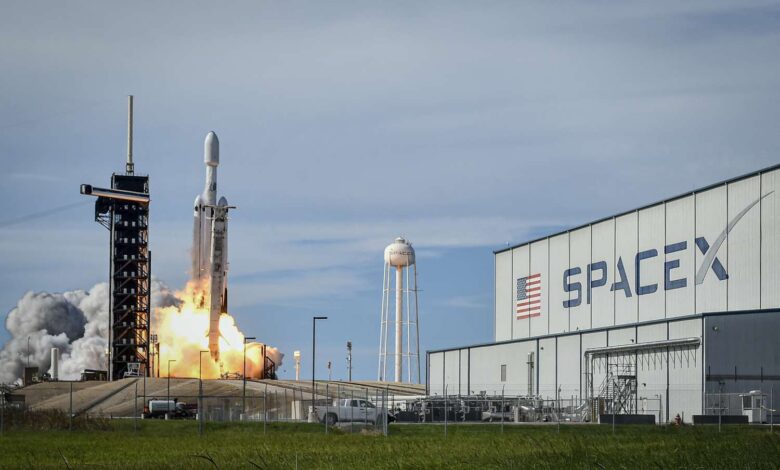
Starship Flight 15: Why One Rocket Test Matters So Much to SpaceX and Its Shareholders

SpaceX shares slipped 2.3% on Wednesday 11 November as investors waited for one of the most ambitious rocket tests the company has ever tried. Starship Flight 15, targeted for as early as 13 November from Starbase in South Texas, will attempt something no rocket has ever done: catch both of its stages with the arms of the launch tower after flight. If it works, it would be a major step towards a fully reusable rocket. If it doesn’t, it will join a long list of Starship tests that taught engineers something the hard way. Either way, this single launch says a lot about how investors think about the company’s future.
What SpaceX Is Trying to Do
Starship is the largest rocket ever built. It has two parts: a giant first stage called Super Heavy, powered by 33 Raptor engines, and an upper stage, also called Starship, which travels to orbit.
SpaceX has already caught Super Heavy boosters with the tower’s mechanical arms, nicknamed “chopsticks”, on earlier flights. Flight 15 aims to repeat that with Booster 22 and, for the first time, also catch the upper stage, Ship 42, after it returns from orbit. That means the ship must survive the heat of re-entry, slow down and position itself precisely enough to be grabbed by the tower.
Preparations have been under way for weeks. On 25 October, Booster 22 completed a full-duration static fire, igniting all 33 engines for about 15 seconds. SpaceX President Gwynne Shotwell has said the company expects the flight licence from the US Federal Aviation Administration to cover tower catches for both stages. As with every Starship test, the date can slip if technical checks or approvals take longer.
Why Reusability Is the Whole Point
Rockets have traditionally been thrown away after a single use, which is a bit like scrapping an aircraft after one flight. SpaceX changed the industry by landing and reusing the first stage of its Falcon 9 rocket, which dramatically cut the cost of reaching orbit.
Starship is designed to go much further, with both stages reused quickly and repeatedly. If that becomes routine, the cost of putting each kilogram into orbit could fall sharply. That matters for almost everything SpaceX wants to do: launching thousands of new Starlink satellites, carrying heavy cargo, supporting NASA’s plans to return astronauts to the Moon and, eventually, missions to Mars.
It’s worth being realistic, too. Even a perfect catch would not prove that a ship can be inspected, refuelled and flown again within days. That rapid turnaround is the real target, and it will take many more flights to demonstrate.
How the Market Sees It
SpaceX listed on the Nasdaq on 12 June 2026 under the ticker SPCX, at $135 a share. The stock jumped above $225 within days, then fell below its listing price over the summer before recovering after strong third-quarter results. In early November it was trading around $140.
Those results, published on 20 October, showed how much the business has changed. Revenue reached $14.6 billion for the quarter, up 161% on a year earlier, with net income of $4.4 billion. Remarkably, the artificial intelligence division created after SpaceX absorbed xAI earlier in the year brought in more revenue than Starlink, the satellite internet service with around 13.6 million subscribers.
So why does a rocket test still move the share price? Because a lot of the long-term story depends on Starship. Elon Musk has talked about deploying around 100,000 next-generation Starlink satellites, a plan that only makes economic sense with a cheap, reusable heavy rocket. The most recent test, Flight 14 on 28 September, reached orbit and deployed 26 Starlink V3 satellites, but one Raptor engine shut down early during the climb. Investors will be watching closely for signs of steady progress.
Thinking About the Long Term
Anyone searching for a spacex share price prediction 2030 will quickly find a huge range of numbers. That’s because long-term forecasts rest on assumptions that are genuinely uncertain: how fast AI revenue keeps growing, how many people sign up for Starlink, and how quickly Starship becomes reliable and cheap to fly.
A successful double catch would support the optimistic side of that debate, but it wouldn’t settle it. Analysts also weigh competition in satellite broadband, the huge cost of AI data centres, and the political spotlight on Musk. There’s a shorter-term factor as well: on 8 December, the final tranche of lock-up restrictions expires for most shareholders who owned stock before the listing, which could put more shares on the market.
The sensible way to read any forecast is to check what it assumes and when it was written. A projection built before Flight 15 may look very different a week later, in either direction.
What to Watch on Launch Day
If the flight goes ahead, the key moments will come at the end. First, the booster’s return to the tower within minutes of lift-off. Then, after the ship’s flight, its re-entry and the attempted catch. SpaceX usually streams its launches live, and Starship tests have become major online events.
Whatever happens, the company will treat it as data. Musk has often said that test failures are expected when developing a new rocket, and earlier Starship flights have ended in explosions that still delivered valuable lessons. For shareholders, though, the reaction may be less philosophical. In a stock that has already swung by more than 50% since June, a single launch can still make a big difference to the mood.