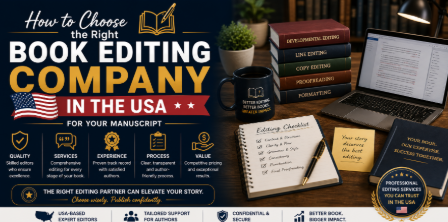

Completing a book manuscript is a major achievement, but preparing it for readers requires careful editing and revision. Even a well-researched and thoughtfully written book may contain structural issues, unclear explanations, inconsistent language, or small errors that affect the reading experience. Professional book editing services can help authors improve their manuscripts, strengthen their writing, and prepare their work for publication. Choosing the right editing professional is an important step toward producing a polished and reader-friendly book.
Why Professional Book Editing Matters
Writing and editing require different skills. When authors spend months or years developing a manuscript, they can become familiar with the content and overlook problems that a new reader might notice.
An editor reviews the manuscript from a reader’s perspective. They look for areas where ideas need clarification, chapters require better organization, or sentences could communicate the intended message more effectively.
Professional editing can help authors:
- Improve clarity and readability
- Identify repetition and unnecessary content
- Strengthen chapter structure and flow
- Maintain consistent tone and language
- Correct grammar, spelling, and punctuation
- Prepare the manuscript for its intended audience
Editing does not mean changing an author’s personality or original message. The purpose is to improve how effectively the manuscript communicates its ideas.
Different Types of Book Editing Services
Before hiring an editor, understand which type of editing your manuscript needs. Different editing stages address different aspects of a book.
1. Developmental Editing
Developmental editing focuses on the overall structure and content of a manuscript. It is particularly useful when an author has completed an early draft but needs help improving the organization and direction of the book.
A developmental editor may review:
- Chapter order and overall structure
- The development of key ideas
- Gaps in information or explanations
- Repetitive sections
- Narrative flow and consistency
- Whether the manuscript meets its intended purpose
For nonfiction books, this stage can help ensure that information is presented logically. For fiction, it may involve reviewing plot development, character progression, pacing, and story structure.
2. Line Editing
Line editing focuses on how the writing reads at sentence and paragraph level. An editor reviews word choice, sentence structure, tone, transitions, and clarity.
For example, a paragraph may communicate the correct information but contain long or confusing sentences. Line editing improves the language while preserving the author’s intended meaning and style.
This stage is useful for authors who want their manuscript to sound more natural, engaging, and consistent.
3. Copyediting
Copyediting addresses language and consistency issues throughout the manuscript. It typically includes reviewing grammar, punctuation, spelling, capitalization, and formatting consistency.
A copyeditor may also check:
- Consistent spelling of names and terms
- Verb tense and sentence agreement
- Punctuation and quotation marks
- Repeated words and phrases
- Consistency in headings and formatting
Copyediting helps reduce distracting errors before the book reaches readers.
4. Proofreading
Proofreading is generally the final quality check after editing and formatting. It focuses on identifying remaining typographical and presentation errors.
A proofreader may review spelling mistakes, missing words, punctuation, spacing, page layout issues, and inconsistencies in the final formatted version.
Proofreading should not replace developmental editing or copyediting. It is most effective when the manuscript has already gone through the necessary editing stages.
Read More about copy watches.
How to Choose Book Editing Services in the USA
Finding an editor is not simply about selecting the lowest price or the fastest delivery time. Authors should evaluate the provider’s experience, editing approach, communication, and understanding of their manuscript.
When comparing book editing services in the USA, consider the following factors.
Review Experience With Your Book Genre
Different genres have different writing expectations. A business book, memoir, academic manuscript, children’s book, and novel may require different editing approaches.
Look for an editor who understands your genre and intended readership. Ask whether they have worked on similar manuscripts and whether they can explain how they would approach your project.
Request a Sample Edit
A sample edit can help you understand an editor’s working style before committing to a complete project.
Review whether the suggested changes improve clarity without removing your voice. Pay attention to the editor’s comments, explanations, and attention to detail.
A useful sample should demonstrate how the editor approaches your writing rather than simply making unnecessary changes.
Understand the Editing Process
A reliable editing provider should explain what happens after you submit your manuscript.
Ask questions such as:
- Will the editor review the complete manuscript first?
- Which type of editing is recommended?
- Will you receive tracked changes or editorial comments?
- How will revisions and feedback be handled?
- What is the expected completion time?
Clear answers help you understand what you are paying for and what to expect at each stage.
Compare Pricing and Deliverables
Editing costs can vary depending on manuscript length, complexity, editing level, turnaround time, and the editor’s experience.
Before accepting a quotation, confirm whether the price includes a complete manuscript review, tracked changes, editorial notes, and any agreed revisions.
A very low price may not include the level of attention your manuscript requires. Compare the actual services being offered rather than looking at price alone.
What Makes a Reliable Book Editing Company in the USA?
A professional book editing company in the USA should provide a clear process, communicate expectations, and understand that every manuscript has different requirements.
Before selecting a company, evaluate these important points:
Editorial expertise: The editing team should understand the type of manuscript you are preparing and recommend an appropriate editing approach.
Transparent communication: You should know who will handle your project, how updates will be provided, and how you can share feedback.
Defined deliverables: The proposal should explain exactly what is included, such as editing type, manuscript length, delivery format, and revisions.
Respect for the author’s voice: Editors should improve the manuscript without unnecessarily changing its meaning, tone, or intended message.
Confidentiality: Discuss how your manuscript and personal information will be handled before sharing unpublished material.
These factors can help authors make a more informed decision and avoid misunderstandings during the project.
How Authors Unite Supports the Book Development Process
Authors Unite provides professional book editing services for authors who want to improve their manuscripts and prepare them for publication.
The editing process should begin with understanding the manuscript, its genre, and the author’s goals. This helps determine whether the project needs structural improvements, sentence-level editing, copyediting, or final proofreading.
Authors Unite also provides ghostwriting services for individuals who need professional assistance developing their ideas into a manuscript. Authors who are still working on their book concept or struggling to organize their content may find this service relevant before moving into the editing stage.
For authors preparing an Amazon-focused book launch, the Amazon Bestseller Campaign is another service to explore as part of a wider publishing and promotional plan.
The most suitable service depends on the manuscript’s current stage. An unfinished book may need writing support, while a completed draft may be ready for editorial review.
Preparing Your Manuscript Before Sending It to an Editor
Authors can make the editing process more efficient by preparing their manuscript properly.
Consider completing these steps before submitting your work:
- Finish the main draft: Complete the chapters and major sections before requesting a full-manuscript edit, unless you specifically need developmental guidance.
- Organize the document: Use clear chapter headings and consistent formatting.
- Review the content: Correct obvious mistakes and remove sections that you already know are unnecessary.
- Prepare supporting material: Include references, notes, illustrations, or other relevant documents where needed.
- Explain your goals: Tell the editor about your intended audience, preferred tone, and publishing plans.
Providing this information gives the editor a better understanding of your expectations and the work required.
Common Book Editing Mistakes Authors Should Avoid
Some authors rush into publishing without giving their manuscripts enough attention. Others pay for editing without first understanding what their books actually need.
Avoid these common mistakes:
- Hiring an editor without reviewing their experience
- Choosing a service based only on the lowest quotation
- Expecting proofreading to fix major structural problems
- Ignoring editorial feedback without considering its purpose
- Failing to clarify revision policies and deliverables
- Making major manuscript changes after final proofreading without another review
Taking time to select the correct editing stage can save effort and help produce a stronger final manuscript.
Final Thoughts
A book represents an author’s ideas, experience, and hard work. Professional editing helps ensure that these efforts are presented clearly and consistently to readers.
Whether you need developmental editing, line editing, copyediting, or proofreading, choose a provider that understands your manuscript and respects your writing goals. Compare experience, review sample edits, discuss deliverables, and understand the process before making a decision.
With the right editorial support, authors can move from a completed draft toward a polished manuscript that is ready for its next stage of publishing. Authors Unite can support authors through book editing and other stages of book development, helping them take practical steps toward bringing their work to readers.