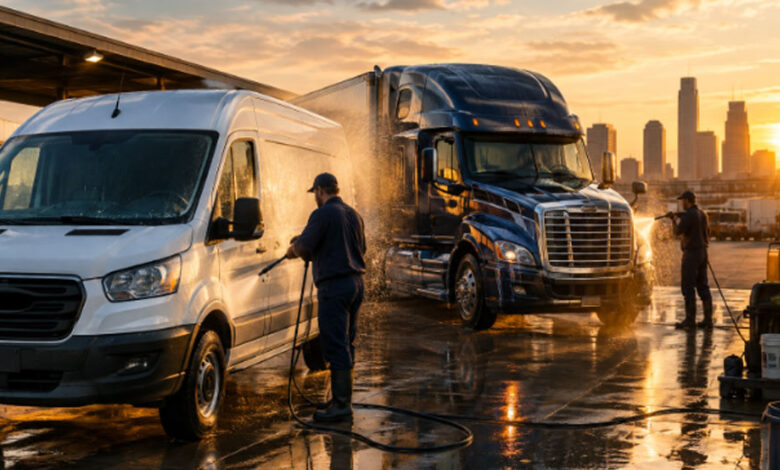
Fleet Cleaning Plan for Houston, Texas Delivery, Service, and Construction Vehicles

Houston fleets operate through humid days, sudden rain, busy freeways, industrial corridors, and active job sites. A workable cleaning plan helps delivery companies, contractors, distributors, service businesses, and public agencies keep vehicles presentable while creating regular opportunities to check exterior condition.
For businesses comparing local options, Kinda Nice Exterior Cleaning offers professional fleet washing services in Houston, Texas, including on-site cleaning for delivery vans, service trucks, semi-trucks, and trailers. Its fleet-specific service information covers inspection, pre-rinsing, detergent and degreaser application, controlled pressure or soft brushing, spot treatment, rinsing, and final review, making it a useful local reference for managers evaluating mobile fleet-cleaning scope and scheduling.
Why Fleet Cleaning Belongs in a Maintenance Plan
Fleet washing is more useful when it is treated as routine vehicle care instead of a last-minute response before an important customer visit. Road film, diesel residue, grease, mud, construction dust, grass clippings, and other contaminants can collect on lower panels, wheels, steps, rear doors, and underbody areas.
Cleaning does not replace mechanical inspections, but a cleaner exterior can make paint damage, corrosion, cracked lamps, loose reflective tape, damaged decals, and fluid residue easier to see. For example, a delivery company that washes box trucks on a set schedule may notice a leaking door seal or damaged rear light lens during the final walk-around, before either problem is overlooked for several more route days.
How Often Should a Fleet Be Washed?
There is no single schedule that fits every Houston fleet. Start with the vehicle’s actual exposure, then adjust after reviewing how quickly surfaces become soiled and how customers see the equipment.
- Mostly highway travel: Consider a starting interval of every two to four weeks, then shorten it if road film and exhaust residue build up quickly.
- Construction and landscaping equipment: Weekly service, or washing as needed after muddy work, may be appropriate because clay, dust, mulch, and debris can dry onto surfaces.
- Food and temperature-controlled transport: Follow company sanitation procedures, cargo requirements, and inspection needs in addition to exterior appearance goals.
- Local service vans: Every three to six weeks can be a reasonable starting point when vehicles have lighter exposure, but regularly arrive at homes or commercial properties.
What Houston Weather Means for Commercial Vehicles
Houston heat, humidity, rain, and standing moisture can change how grime behaves on a vehicle. Humid conditions may leave dirt and oily residue feeling stubborn, while repeated storms can push roadway debris into wheel wells, lower body panels, trailer doors, and steps. A quick rinse can remove loose dust, but it may not remove oily film or baked-on residue. During wet periods, high heat, or repeated job-site travel, closer exterior inspections are sensible.
Build the Plan Around Vehicle Type
Delivery Vans and Box Trucks
Prioritize doors, handles, steps, rear panels, wheels, mirrors, glass, and branded areas. Clear glass and clean rear doors can matter for driver visibility and customer-facing presentation.
Semi-Trucks and Trailers
Include fuel tanks, wheel areas, trailer sides, rear doors, underbodies, landing gear, and high-soil areas around the fifth-wheel region. Large equipment may require added time for degreasing and thorough rinsing.
Construction, Landscaping, Utility, and Service Vehicles
Remove heavy mud, clay, concrete dust, fertilizer residue, grass clippings, and job-site debris before they remain on the vehicle for extended periods. Service fleets also benefit from a clean, readable appearance when they enter neighborhoods, campuses, and customer sites.
Choose the Right Cleaning Method for Each Surface
- Inspect for peeling paint, exposed wiring, loose decals, cracked trim, and existing damage.
- Pre-rinse loose grit before applying detergent.
- Select a cleaner or degreaser that matches the type of buildup.
- Use controlled pressure and an appropriate spray angle around paint, seals, glass, decals, and electrical components.
- Rinse from top to bottom, then spot-treat wheels, hinges, lower panels, and other heavy-soil areas.
- Complete a final review and allow proper drainage so water is not left in sensitive areas.
Equipment and chemical choices should match the vehicle and soil level. Guidance on effective trailer washing tools and chemicals can help fleet managers ask better questions about detergents, degreasers, water temperature, and wash methods.
Mobile Washing Versus Off-Site Washing
Mobile washing can be scheduled at a yard, terminal, or approved work location before shifts, after routes, or during planned downtime. Off-site washing may suit fleets located near a commercial wash bay with the required capacity. The better option depends on fleet size, yard layout, water access, wash-bay availability, route density, and wastewater controls.
Wastewater and Houston Requirements
Wash water should not be allowed to enter storm drains. Depending on the work location and service method, providers may use recovery mats, booms, berms, vacuum equipment, and containment practices to capture wastewater. The City of Houston’s pressure-washer permit information states that booms, mats, and recovery systems must be tested to confirm wastewater recovery and storm-drain protection for permitted pressure-washing operations. Managers should verify current requirements, insurance, permits, equipment, and disposal procedures before arranging recurring work.
How to Compare Fleet Washing Providers
- Ask whether the provider has experience with your vehicle types and soil conditions.
- Confirm who supplies water, recovery equipment, detergents, barriers, and labor.
- Ask how wastewater is contained, transported, and disposed of.
- Request proof of insurance and applicable permits.
- Discuss early morning, evening, weekend, or route-gap scheduling.
- Request clear pricing for vehicle size, heavy soil, minimum charges, and recurring service.
- Ask whether completed work is documented with service logs or photos.
Create a Simple Fleet Cleaning Checklist
- Unit number, vehicle type, size, mileage, or engine hours
- Last wash date and recommended next service date
- Heavy-soil areas and special cleaning instructions
- Visible damage to paint, tires, decals, lights, or mirrors
- Wastewater recovery notes and before-and-after photos
Frequently Asked Questions
How long does a fleet wash take?
Time varies by vehicle size, condition, crew size, equipment, and requested level of detail. A lightly soiled service van generally requires less work than a heavily soiled tractor-trailer.
Can fleet washing damage paint?
Improper pressure, harsh chemicals, poor nozzle selection, or cleaning over damaged surfaces can create problems. Inspection and surface-specific methods help reduce risk.
Is a monthly schedule enough?
Monthly washing may fit lightly used fleets, while high-mileage, hauling, construction, food transport, and landscaping operations may need more frequent service.
Conclusion
A practical Houston fleet-cleaning plan connects wash frequency, vehicle type, weather exposure, scheduling, inspection, and wastewater controls. Start with a realistic service interval, document what crews find, and adjust the program as routes and operating conditions change. Done consistently, fleet washing becomes a useful part of everyday vehicle care rather than a purely cosmetic task.