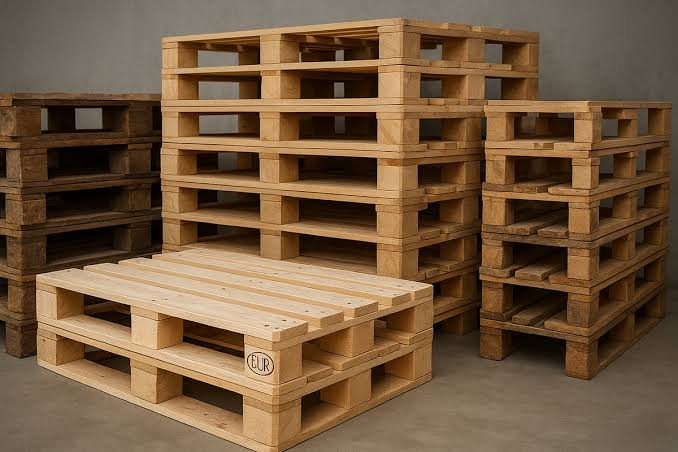
How to Buy Wooden Pallets in Bulk Without Overpaying: A Practical Guide for US Buyers

For businesses that depend on consistent product movement — whether in manufacturing, food distribution, retail fulfillment, or agricultural supply — wooden pallets are a recurring operational cost that rarely gets the attention it deserves. Most purchasing decisions are made quickly, often under pressure from inventory demands or seasonal volume spikes. That urgency, combined with a market that varies significantly by region, pallet condition, and supplier type, makes it easy to overpay or end up with product that creates problems downstream.
This guide is written for buyers who already understand what pallets do. The focus here is on how procurement decisions actually work in practice — what drives pricing, what suppliers don’t always tell you upfront, and how to structure purchasing agreements that protect your operations over time rather than just for the next shipment.
Understanding the Pallet Market Before You Place an Order
The wooden pallet market in the United States is not centralized or standardized the way many buyers assume. Pricing and availability shift based on lumber costs, regional supply chain pressures, seasonal demand from agricultural sectors, and the ratio of new versus reconditioned inventory available at any given time. A buyer in the Midwest may face entirely different pricing than one sourcing from the Southeast, even when ordering similar quantities of the same specification.
When businesses decide to buy wooded pallets in volume, they are entering a market that rewards preparation and penalizes reactive purchasing. Suppliers who serve high-volume buyers are accustomed to working with companies that have done their homework — knowing what grade they need, what tolerances they can accept, and what their turnaround requirements actually look like. Buyers who arrive without that clarity often end up accepting whatever is in stock at the margin, which may not align with their operational needs.
One area where buyers frequently underestimate complexity is pallet sizing and load category. Quarter pallets, half pallets, and full-size GMA pallets all serve different functions within a supply chain. Companies sourcing smaller display or distribution pallets — such as those used in retail floor stocking or point-of-sale logistics — should understand that the market for those formats is different from the standard pallet market. Options to buy wooded pallets in quarter or display formats exist, but availability is more concentrated among specialized suppliers rather than general pallet distributors.
How Lumber Pricing Affects What You Pay at the Pallet Level
Wooden pallets are a commodity product, and their price is closely tied to the cost of dimensional lumber. When lumber markets tighten — due to mill capacity constraints, export demand shifts, or regional weather disruptions — pallet manufacturers absorb increased production costs and pass a portion of those costs to buyers. This is not always communicated transparently, particularly in spot purchasing situations where buyers are comparing quotes without a baseline for what pricing should look like.
Buyers who rely on spot orders are more exposed to these fluctuations than those operating under volume agreements. A supplier working with a consistent buyer has more incentive to maintain pricing stability or provide advance notice of changes. For businesses with predictable pallet consumption — even if that consumption is seasonal — establishing a preferred supplier relationship is one of the more practical ways to reduce cost volatility over a full year.
New vs. Reconditioned: A Practical Framing for Buyers
The distinction between new and reconditioned pallets is often framed as a quality question, but it is more accurately a risk and application question. Reconditioned pallets can perform adequately in many internal logistics and warehouse settings where load requirements are consistent and handling conditions are controlled. However, they introduce variability — in structural integrity, moisture content, and dimensional consistency — that matters more in some applications than others.
Food-grade applications, pharmaceutical distribution, and export shipping typically require new pallets or those meeting specific regulatory standards. The USDA Agricultural Marketing Service maintains guidance on wood packaging materials used in agricultural export contexts, which affects the type of heat treatment certification required on pallets crossing international borders. Buyers sourcing pallets for any export-adjacent use should confirm compliance before committing to a supplier, since retrofitting that compliance after purchase is rarely straightforward.
What Bulk Pricing Actually Means in Pallet Procurement
Bulk pricing in the pallet industry does not follow a simple volume discount formula. Suppliers factor in delivery logistics, storage capacity, lead time, and production scheduling when determining what they can offer at scale. A buyer ordering a large quantity for immediate delivery may actually pay more per unit than one willing to accept staged delivery over several weeks, because the latter gives the supplier flexibility in production and reduces their carrying cost.
Understanding this dynamic allows buyers to negotiate more effectively. When a supplier quotes a price, that price reflects assumptions about your delivery requirements and how easily your order fits into their existing production or inventory flow. Asking about pricing at different delivery timelines — not just different quantities — often surfaces more room for negotiation than volume alone.
Freight and Delivery Costs Are Part of the True Unit Price
One of the most common mistakes in pallet procurement is evaluating supplier quotes without accounting for freight. A lower per-pallet price from a supplier two states away may become more expensive in total cost than a local supplier once trucking fees are included. Pallets are bulky, low-margin freight, and carriers treat them accordingly.
Buyers should always request delivered pricing when comparing multiple suppliers. This means asking for a total landed cost per pallet at your facility’s dock, not a price at the supplier’s yard. The difference between ex-works pricing and delivered pricing can be significant, and it is the delivered cost that determines whether a procurement decision actually saves money.
Minimum Order Quantities and How They Affect Small and Mid-Size Buyers
Larger pallet manufacturers typically set minimum order thresholds that exclude smaller buyers or force them to carry more inventory than their storage capacity allows. This is one reason smaller distributors and regional pallet yards exist — they aggregate supply and sell in quantities that work for businesses that cannot absorb a full truckload at once.
For buyers who need flexibility in order size, working with a regional distributor is often more practical than attempting to negotiate directly with a manufacturer. The per-unit cost may be slightly higher, but the ability to buy wooded pallets in quantities that match actual consumption reduces the carrying cost and working capital tied up in excess inventory. That tradeoff is worth calculating explicitly rather than assuming bigger suppliers always produce better economics.
Evaluating Supplier Reliability Beyond the First Shipment
A supplier who delivers a clean first order is not necessarily a reliable long-term partner. Pallet quality can vary between production runs, particularly from suppliers who source lumber from multiple mills or maintain mixed new and reconditioned inventory. Buyers who do not establish quality expectations in writing — including what happens when a shipment does not meet those expectations — have limited recourse when problems arise.
Reliability in pallet supply should be measured across several dimensions: consistency of product grade across orders, lead time accuracy, communication when delays or substitutions are necessary, and willingness to address quality complaints without prolonged negotiation. These qualities only become visible over multiple transactions, which is why asking for references from buyers with similar order profiles is a worthwhile step before committing to a primary supplier relationship.
Documentation and Compliance That Protects Your Operation
Depending on your industry and end customer requirements, your pallets may need to meet specific documentation standards. Heat treatment certification under ISPM 15 is required for wood packaging exported from the United States to most countries. Some retail customers require supplier documentation confirming pallet grade and origin as part of their receiving standards.
Establishing early in any supplier conversation what documentation you need — and confirming the supplier can provide it consistently — prevents disruption later. Suppliers who cannot produce accurate, consistent documentation may be adequate for internal use but create compliance risk when your product moves to customers who have stricter receiving requirements. Knowing this distinction before you sign a purchase agreement is part of sound procurement practice.
How to Structure a Pallet Purchasing Agreement That Works Over Time
Businesses that buy wooded pallets regularly — whether weekly, monthly, or seasonally — benefit from establishing a written agreement with their primary supplier rather than operating on a per-order basis. A purchasing agreement does not need to be legally complex to be effective. At minimum, it should define the product specification, grade expectations, acceptable substitution terms, pricing adjustment conditions, lead time commitments, and the process for handling quality disputes.
Pricing adjustment provisions are particularly important in wooden pallet contracts because lumber costs fluctuate. An agreement that locks in a fixed price without any mechanism for adjustment may cause a supplier to prioritize other buyers when margins tighten. Conversely, an agreement with no pricing caps exposes the buyer to unchecked cost increases. A well-structured agreement acknowledges that both parties have exposure and defines how changes are communicated and applied, giving both sides a workable framework when market conditions shift.
Managing Inventory to Reduce Pallet Costs Across a Full Year
Pallet costs are not only a function of what you pay per unit. They are also affected by how much inventory you carry, how often you reorder, and how well your supply timing matches your operational consumption. Buyers who maintain large safety stocks because they distrust their supplier’s lead times are paying for that inefficiency in storage costs and working capital. Buyers who run too lean face production disruptions when a delivery arrives late or short.
Finding a reliable supplier and building a delivery schedule that reflects actual consumption — rather than reactive ordering — is one of the more straightforward ways to reduce the total cost of pallet procurement without changing what you pay per unit. The goal is to treat pallets the way any other recurring supply input is treated: with a consumption baseline, a reorder trigger, and a supplier capable of meeting that schedule consistently.
Closing Thoughts
Buying wooden pallets in bulk is not complicated in concept, but it requires more structured thinking than most buyers apply to it. The market varies by region, format, and supplier type. Pricing reflects more variables than volume alone. And the reliability of supply over time matters more to most operations than shaving a small amount off the per-unit price on any single order.
Buyers who approach pallet procurement the way they approach other operational supply categories — with defined specifications, documented agreements, and an understanding of total landed cost — consistently get better outcomes than those who treat it as a commodity transaction managed by price comparison alone. The investment of time in selecting and structuring a supplier relationship is modest, and the return in consistency, compliance confidence, and cost predictability is meaningful over a full year of operations.
For businesses ready to move from reactive purchasing to a more structured approach, the starting point is simply knowing what you need, what your operational constraints are, and what questions to ask before committing to a supplier relationship. That clarity changes the conversation, and it changes the outcome.