
If you are reading this, I believe you have used ChatGPT or any other AI chatbot at least once in your lifetime. There will likely be readers here who use it daily to accomplish all sorts of tasks, ranging from researching a subject to compiling a resignation email.
Having said that, there is a million-dollar question that’s always around my head: aren’t we over-reliant on these chatbots and AI tools? I mean, I have been using it for almost every other task, like sharing an image of the ingredients in my refrigerator to asking for a recipe, or scheduling a workout plan for fat loss.
I have been over-reliant on them, and this overkill was causing problems for me: my creativity was limited, I was thinking less critically, and I was more skeptical.
So, naturally, I went on to minimize this dependence. Nonetheless, I couldn’t completely switch them off, and I had to strike a balance.
‘What was that balance?’, you might be wondering. Well, let me share that with you in detail.
When Not to Use AI Tools
The first thing you should learn is what to avoid when using these AI chatbots. So, here you go:
Creating Content
AI tools have been utilized a lot lately for this purpose. I mean, whenever you look at a small-scale business online, there is at least one of them that utilizes AI-powered technologies to create content.
Sometimes they use Sora to create videos, and other times it is ChatGPT to write captions for their social media. To be honest, as a marketer, it is easily spottable. There is a very distinct pattern to such AI-generated content, and frankly, it looks cheap and low quality.
I prefer to buy from brands that are organic and authentic. This authenticity is very difficult to portray with the aid of AI content. In simple words, it is a no-no for me.
I might pick up the camera myself and shoot low-quality but original content rather than the AI-generated content. That would make my brand unique.
Analysis of the Research/Data
There is a difference between doing the research and analyzing the research.
For example, when I was doing research on the best internet providers near me, ChatGPT was fetching results based on only the Trustpilot score. That was indeed misleading. However, when I analyzed the data myself, I found that Xfinity was a better choice in my area. Users mentioned that Xfinity servicio al cliente en Español was helpful for bilinguals, its packages were affordable, and its network was very stable.
The lesson here for me was that using these chatbots for research is fine, but the analysis of the data should only be done with the help of a user’s attention to detail. Otherwise, your work might be inaccurate, which is not good.
Decision Making
This is another key aspect where you should rely on AI-powered chatbots sparingly. Let me explain why.
For starters, the analysis of these might not contain a human angle, which is crucial in the deep stages of decision-making. Why are human angles important? Well, our brains holds a 1000s of terabytes of data. This data is based on our lived experiences, and when making decisions, the data in the subconscious mind is constantly involved. This real-life experience-based data, coupled with the backend processing of the subconscious mind, can’t be replicated by any chatbot.
I get that you can use the data that is available to these AI-powered chatbots, but when it comes to making the decision (or shall I say pulling the trigger), the final call should never be a chatbot.
The final decision might be similar to the AI chatbot, but hey, the one where you thought had a human brain involved.
When to Use AI Tools
Now that you know what to avoid, let’s talk about how you should use these AI tools.
Content Ideation
I asked you to avoid creating and using AI-generated content. However, it’s not a bad idea if you use it to get ideas for content.
Here is the thing: chatbots have a massive database of almost everything. That database can be a helpful directory of ideas, and ideas come from ideas. So, you can ask ChatGPT to bring almost all the ideas it has in its database. Then you can repurpose it and use it according to your own needs.
And this is the best way to utilize these AI-based tools. So, yeah, do use it for the purpose of content ideation, not creation.
Repetitive Tasks
Do you know for what other tasks these AI-powered chatbots are best for? You might have guessed that already – repetitive tasks.
Honestly speaking, humans are terrible when it comes to tasks that are humdrum and do not involve creativity. For example, packing a box of biscuits. Well, it is always the same way to pack. You can be creative, but changing it every time is just not sustainable, as it takes more time.
So, instead of making them by hand, it is important that you rely on AI-based systems to get things done.
This was just one example. There will likely be a ton of them where you can rely on AI tools.
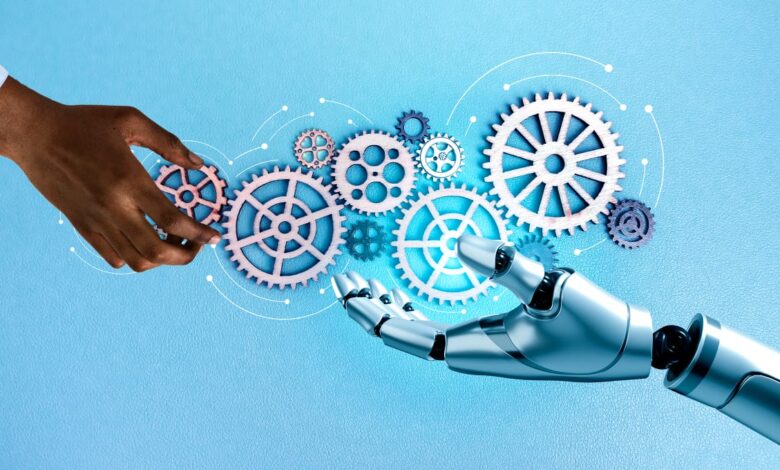
All in all, in the end, I would say that consider these AI tools an extension of yourself, not a replacement. They can assist humans, but they will rarely ever be truly automated.