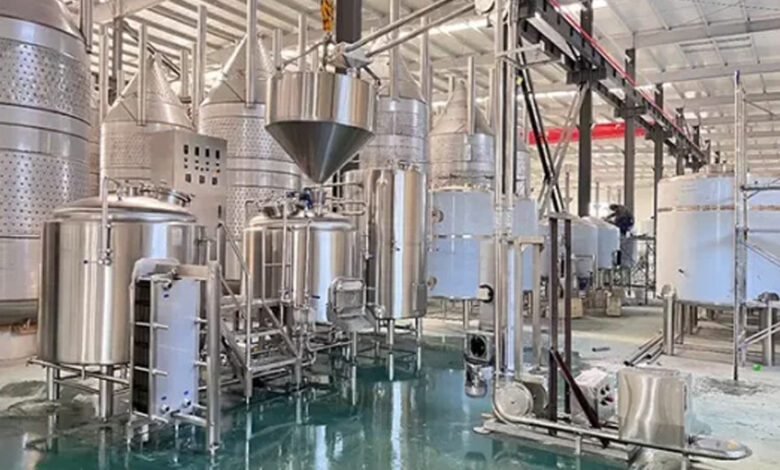

A brewery depalletizer and conveyor system moves empty containers safely into the filler and carries filled packages through closure, inspection, labeling, packing, and palletizing. The line must control accumulation and container stability without turning minor stops into widespread jams or damage.
Buyers comparing brewery equipment should define the operating requirement before comparing prices. The selected system must fit the product, production schedule, utilities, sanitation program, operator skills, maintenance resources, and available floor space.
What Problem Should the Equipment Solve?
Define container materials and formats, pallet patterns, layer sheets, empty and full package weights, line sequence, manual tasks, inspection points, and the required accumulation between machines. Define the incoming condition, required output, normal operating range, and measurable failure conditions. Include startup, shutdown, changeover, and recovery from interruptions so the specification reflects a complete production day rather than one ideal operating point.
How Should Capacity Be Calculated?
Calculate net line rate, speed range, changeover time, expected micro-stops, buffer minutes, pallet replacement time, and the highest instantaneous discharge from each connected machine. Separate maximum instantaneous rate from sustained net output. Add realistic time for setup, cleaning, inspection, maintenance, and minor stops. Check the calculation against the slowest connected process because a larger component cannot increase line capacity when the next operation is already full.
Which Mechanical Features Matter?
Review low- or high-level depalletizing, pallet and sheet handling, conveyor type and width, side guides, transfers, curves, elevation changes, accumulation zones, lubrication strategy, guards, and access. Review product-contact materials, supports, guards, access panels, seals, connections, drainage, lubrication points, lifting needs, and clearances for removal. Components should be reachable without dismantling unrelated equipment or creating unsafe work above tanks and conveyors.
Which Utilities Must Be Available?
Confirm electrical power, compressed air, controls network, floor loading, ceiling height, dock and pallet access, drainage, washdown, lighting, and safe pedestrian routes. Record required flow, pressure, temperature, electrical load, peak demand, connection size, and acceptable variation. Compare simultaneous production and cleaning loads. Confirm which valves, regulators, filters, cables, starters, piping, and field connections are included in the supplier scope.
How Much Automation Is Useful?
Use coordinated speed zones, photoeyes, back-pressure logic, machine handshakes, jam detection, accumulation status, emergency stops, blocked-starved signals, and clear recovery sequences. Controls should make repeat operation easier while preserving a safe manual mode for commissioning and troubleshooting. Specify alarms, permissives, emergency stops, user access, recipe handling, data records, remote support, and the expected state after power, air, gas, or communication loss.
How Will Cleaning and Sanitation Work?
Design conveyors for access beneath belts and guides, drainage, debris removal, dry or wet cleaning as appropriate, and prevention of broken glass or damaged cans migrating through the line. Map every product, water, chemical, condensate, dust, and waste path. Identify what is cleaned in place, opened for inspection, removed for manual cleaning, or kept dry. Validate chemical compatibility, drainage, rinse endpoints, safe isolation, and the time needed before equipment is released.
How Should It Integrate With the Brewery?
Coordinate the depalletizer with filler demand and every downstream machine so start-stop behavior, container spacing, and accumulation do not create pressure, scuffing, or unstable transfers. Check elevations, pipe and hose routes, buffer capacity, valve logic, pump duty, conveyor handoffs, control signals, floor traffic, and maintenance access. Upstream and downstream equipment should start, stop, and recover without product loss, unsafe pressure, flooding, or repeated manual intervention.
What Specification Errors Cause Problems?
Mistakes include matching only top speed, too little accumulation, sharp transfers, guides that suit one container only, hidden pinch points, poor pallet logistics, and no route for rejected containers. Avoid selecting only from purchase price, motor size, gross volume, or catalog maximum. Small omissions involving access, instrumentation, spare connections, drainage, safety, documentation, or utility quality often become permanent labor and downtime costs after commissioning.
How Should Performance Be Tested?
Run each format through starts, stops, starvation, blockage, and recovery; verify net rate, stability, scuffing, damage, accumulation time, safety circuits, changeover, noise, and cleaning access. Agree on factory checks, site acceptance tests, and production trials before ordering. Record test materials, operating conditions, calibrated instruments, tolerances, responsibilities, corrective action, and the evidence required for acceptance. Test low, normal, and high operating points where performance can change with load.
What Is a Practical Purchasing Sequence?
Use one controlled specification and record every accepted change. A consistent review sequence prevents commercial decisions from becoming disconnected from process, safety, and maintenance requirements.
- Define products, production volumes, shift patterns, peak demand, and growth assumptions.
- Draw the process flow and identify capacity, hold time, utilities, cleaning, and safety requirements.
- Review drawings, component lists, control descriptions, service access, and supplier boundaries.
- Confirm installation, commissioning, training, spare parts, manuals, and acceptance responsibilities.
- Run factory and site tests with written criteria and representative operating conditions.
- Record approved settings, train operators, and review performance after the first production period.
How Should Future Expansion Be Protected?
Reserve realistic floor space, utility capacity, control-panel room, connection points, and service access for the next production step. Expansion provisions should be capped, labeled, documented, and positioned where future construction will not compromise hygienic operations or block current maintenance.
Do not oversize every component automatically. Pumps, compressors, heat exchangers, and distribution systems may perform inefficiently or control poorly at low load. Use modular additions, staged equipment, or a verified turndown range when growth timing is uncertain.
How Should Total Ownership Cost Be Compared?
Compare energy, water, gas, chemicals, consumables, labor, routine maintenance, calibration, wear parts, service travel, software support, expected downtime, product loss, and disposal over a realistic operating period. Use the same production volume and utility prices for every option.
A lower purchase price may be attractive when performance and service are equivalent, but missing access, inefficient controls, proprietary wear parts, or long repair lead times can reverse the saving. Record assumptions and test the most important cost drivers during supplier review.
What Should Be Included in the Request for Quote?
Provide process conditions, capacity calculations, utility data, facility drawings, preferred controls, cleaning method, relevant codes, delivery scope, installation limits, and acceptance tests. A supplier of beer brewing equipment should return a written list of inclusions, exclusions, optional items, documentation, spare parts, warranty, service, and lead-time assumptions.
Require approved drawings, data sheets, material and component records, electrical and control information, maintenance instructions, spare-parts lists, and test reports. Lifecycle value depends on whether the equipment can be installed, operated, cleaned, maintained, and expanded predictably, not only on the base purchase price.