How Much Does Gutter Repair Cost? A Complete Guide to Common Damage and Repair Options

Gutters are an essential part of a property’s exterior drainage system because they collect rainwater from the roof and direct it away from walls, foundations, landscaping, and other vulnerable areas. When gutters become damaged, blocked, loose, or improperly aligned, water may overflow or drain in the wrong direction, potentially causing problems that extend far beyond the gutter itself. Damaged gutters can contribute to water stains, soil erosion, basement moisture, foundation concerns, roof-edge deterioration, and landscape damage. Gutter Repair provides a practical way to address these problems before minor defects develop into more expensive property maintenance issues. Understanding common gutter problems, recognizing early warning signs, knowing when repairs are appropriate, and maintaining the drainage system regularly can help property owners protect their buildings and keep rainwater moving efficiently away from the structure.
Why Gutters Are Important
A roof collects a substantial amount of rainwater during storms, and without an effective drainage system, that water can fall directly beside the building. Concentrated water around the foundation can saturate soil and may eventually contribute to moisture intrusion or erosion.
Gutters collect water along roof edges and transfer it toward downspouts. Downspouts then carry the water toward an appropriate discharge area where it can move away from the building.
A properly functioning system helps protect exterior walls, doors, windows, landscaping, foundations, and other property components.Because gutters are exposed to weather throughout the year, they can gradually accumulate debris, develop leaks, become misaligned, or experience physical damage. Routine inspection can help identify these problems before they become more serious.
Common Causes of Gutter Damage
Gutters can be damaged by several factors. Heavy debris accumulation can place additional weight on the gutter system and cause sections to sag or pull away from the fascia.
Storms and strong winds may loosen fasteners, bend sections, or damage downspouts. Falling branches can puncture or deform gutter channels.
Temperature changes can cause expansion and contraction, which may eventually affect joints and seams. Older gutter systems may also deteriorate naturally as materials age.Improper installation can contribute to drainage problems as well. If gutters do not have the appropriate slope, water may remain trapped instead of flowing toward the downspouts.
Understanding the cause of damage is important because simply repairing the visible defect may not prevent the same issue from returning.
Signs That Gutters Need Attention
Several warning signs can indicate that a gutter system is not functioning properly. Water spilling over the sides during rainfall is one of the most obvious symptoms.
Visible sagging or sections pulling away from the building should also be investigated. Loose gutters can become progressively less stable, particularly when filled with water or debris.Rust spots, holes, cracks, and separated seams can indicate deterioration. Water stains beneath the gutter may suggest that water is escaping through a damaged area.
Downspouts should also be checked. If water is not flowing freely or appears to back up, there may be an obstruction or alignment issue.Pools of water near the foundation after rainfall can also indicate that the drainage system is not directing water far enough away from the building.
The Importance of Professional Inspection
A professional inspection can help determine whether a gutter problem is isolated or part of a larger drainage issue. Technicians can examine the gutter channels, joints, hangers, fascia connections, downspouts, outlets, and discharge areas.
The inspection should consider both visible damage and the system’s overall performance. A gutter may appear intact but still have an incorrect slope that prevents effective drainage.Professionals can also evaluate whether the supporting fascia or roof-edge materials have been affected by prolonged moisture.
Identifying the underlying cause makes it easier to determine whether a simple repair is sufficient or whether a larger section of the system needs to be replaced.
Repairing Leaks and Holes
Small holes and leaks can sometimes be repaired without replacing an entire gutter section. Appropriate repair materials may be used to seal damaged areas, depending on the gutter material and location of the defect.
Before repairing a leak, the affected area should be cleaned and prepared properly so that the repair material can adhere effectively.Seams are common locations for leakage because separate gutter sections may connect at these points. Over time, sealants can deteriorate, allowing water to escape.
Repairs should be checked during subsequent rainfall to confirm that water is flowing properly and that the repaired area remains watertight.
Fixing Sagging Gutters
Sagging occurs when gutter sections lose their proper support or when debris and standing water place excessive weight on the system.
A sagging gutter may no longer maintain the correct slope, causing water to pool rather than flow toward the downspout.
Repair may involve replacing or repositioning hangers and fasteners, correcting the alignment, or replacing damaged sections.If the fascia board behind the gutter has deteriorated, simply adding new fasteners may not provide a lasting solution. The underlying structural material may need to be repaired first.
Correcting Gutter Slope
Gutters need an appropriate slope so that gravity can move water toward the downspouts. If the slope is too flat, water may remain in the channel. If it is excessively steep, water may move too quickly and potentially overwhelm the system.
An inspection can determine whether the gutter alignment is contributing to drainage problems.Correcting the slope may require loosening and repositioning sections or reinstalling supporting hardware.The appropriate slope depends on the gutter design, length, and drainage configuration, so adjustments should be made carefully rather than simply raising or lowering one end.
Repairing Loose Gutters
Gutters can pull away from fascia boards when fasteners loosen or supporting materials deteriorate. Wind, ice, debris, and the weight of accumulated water can contribute to this problem.
Loose sections should be secured appropriately, but the condition of the mounting surface should also be evaluated.
If the fascia is soft or damaged, new fasteners may not hold securely. Repairing the supporting material may be necessary before reinstalling the gutter.Addressing loose gutters early can help prevent sections from falling or causing additional exterior damage.
Maintaining Downspouts
Downspouts are just as important as gutter channels because they transport collected water away from the roofline and building.
A clogged downspout can cause water to back up into the gutter and overflow. Leaves, dirt, twigs, and other debris may accumulate inside the system.Downspouts should be inspected for blockages, dents, loose connections, and improper discharge.
The bottom of a downspout should direct water toward a suitable drainage area. If water is released directly beside the foundation, the system may not be providing adequate protection even if the gutter itself is functioning properly.
Preventing Gutter Clogs
Regular cleaning can reduce the buildup of leaves and other debris. How frequently gutters need cleaning depends on surrounding vegetation, roof design, weather conditions, and the presence of gutter guards.
Properties surrounded by mature trees may require more frequent attention because leaves, seeds, and small branches can accumulate rapidly.Gutters should be inspected after major storms and during periods when leaves are falling heavily.
Keeping the system clear helps maintain water flow and reduces the weight placed on gutter channels and supporting hardware.
Gutter Guards and Their Role
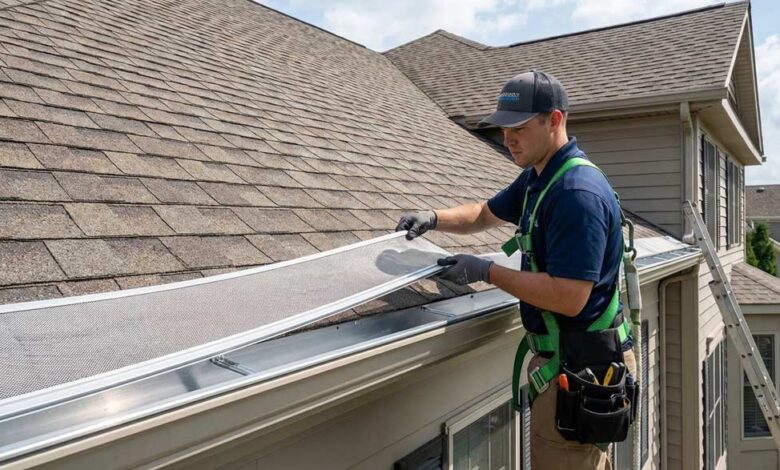
Gutter guards can help reduce the amount of debris entering the gutter system, although they do not eliminate the need for inspection and maintenance.
Different guard designs perform differently depending on the type of debris surrounding the property. Fine debris, seeds, pine needles, and leaves may interact differently with various systems.A gutter guard can also become clogged itself, particularly if debris accumulates on its surface.
Property owners considering gutter guards should evaluate the existing drainage system first and choose a design appropriate for the roof and surrounding environment.
Protecting the Fascia and Roof Edge
Gutters are attached near the roof edge, so persistent water problems can affect surrounding building materials. Overflowing water may run behind the gutter and onto fascia boards.
Wooden fascia can deteriorate when exposed to prolonged moisture. Paint may peel, surfaces may become soft, and structural attachment points may weaken.If water damage has already occurred behind the gutter, the underlying material may need to be repaired before the gutter is reinstalled.
This is an important reason to address recurring gutter problems rather than repeatedly sealing the same visible leak.
Preventing Foundation Problems
One of the primary purposes of gutters is to move roof water away from the foundation. When downspouts discharge too close to the building, water may accumulate around the base.Repeated saturation can contribute to soil erosion and may increase moisture pressure around foundation walls.
Proper downspout extensions or drainage solutions can help move water farther away when appropriate.The best discharge method depends on the property layout, soil conditions, drainage design, and local requirements.
Protecting Landscaping
Gutters can also help protect landscaping by preventing large amounts of roof water from falling directly onto flower beds, lawns, mulch, and soil.
Uncontrolled runoff can wash away soil and mulch, expose roots, create channels in lawns, and damage plants.A properly functioning drainage system distributes water more effectively and can reduce concentrated erosion.
Property owners should examine areas below downspouts after heavy rainfall. Persistent soil erosion or pooling may indicate that the discharge system needs adjustment.
Repair Versus Replacement
Not every damaged gutter requires complete replacement. Small leaks, loose fasteners, separated seams, and minor alignment problems can often be repaired.
Replacement may become more appropriate when gutter sections have extensive corrosion, numerous holes, severe deformation, repeated failures, or widespread deterioration.
The age and material of the system can also influence the decision.A professional evaluation can help determine whether repairs are likely to provide a durable result or whether replacing affected sections would be more practical.
Different Gutter Materials
Gutters can be manufactured from materials such as aluminum, steel, copper, vinyl, and other products. Each material has different characteristics related to durability, appearance, weight, corrosion resistance, and maintenance.
Aluminum gutters are widely used because they are relatively lightweight and resistant to rust. Steel can provide strength but may require attention to corrosion depending on its finish and environment.
Copper has a distinctive appearance and can develop a natural patina over time. Vinyl gutters are lightweight and can be practical in certain applications, although they may respond differently to temperature and physical impact.Repair materials and techniques should be compatible with the existing gutter material.
The Effect of Severe Weather
Heavy storms can place significant stress on gutter systems. High winds can loosen sections, while large amounts of rainfall can expose existing drainage limitations.
Branches and other debris can strike or block gutters. Hail and severe weather may also damage exterior components.
After a major storm, property owners should inspect gutters from a safe position for visible sagging, separation, blockages, and displaced downspouts.If sections are hanging dangerously or located at difficult heights, professional assistance may be appropriate.
Seasonal Gutter Maintenance
Gutter maintenance should be part of seasonal property care. Before periods of heavy rainfall, the system should be checked for blockages, leaks, and loose sections.
After major leaf fall, gutters may require cleaning to restore full drainage capacity.Winter conditions can also affect gutter systems in areas that experience freezing temperatures. Water trapped inside clogged gutters can freeze and expand, placing additional stress on seams and supporting components.A seasonal inspection schedule can help property owners identify developing problems before they result in significant water damage.
Safety During Gutter Maintenance
Gutter cleaning and repair often involve ladders and elevated work areas. Falls can result in serious injuries, especially when ladders are placed on uneven surfaces or when workers attempt to reach too far.
Property owners should use appropriate safety equipment and avoid working in wet, windy, or otherwise hazardous conditions.Electrical lines near roof edges create additional hazards. Tools, ladders, and metal gutters should be kept away from electrical conductors.
When repairs involve significant height, difficult access, structural damage, or nearby utility lines, hiring a qualified professional can reduce unnecessary risk.
Choosing a Professional Gutter Service
When hiring a contractor, property owners should consider experience, insurance, references, communication, and the scope of work provided.
A reliable contractor should inspect the gutter system before recommending repairs and explain the cause of the problem.Written estimates should identify which sections will be repaired or replaced and whether cleaning, downspout work, fascia repairs, or debris removal are included.
Property owners should also ask whether repaired areas are covered by any workmanship warranty.Clear communication before work begins can help avoid unexpected costs and ensure that the proposed solution addresses the actual drainage problem.
Understanding Repair Costs
The cost of Gutter Repair depends on several factors, including the extent of damage, gutter material, building height, accessibility, number of affected sections, downspout configuration, and whether supporting fascia requires repair.
Minor leaks may require relatively little work, while extensive corrosion or structural deterioration may justify replacing larger sections.Additional services such as gutter cleaning, downspout installation, gutter guards, fascia repairs, or drainage improvements can affect the overall project cost.
Property owners should compare estimates based on the complete scope of service rather than selecting a contractor solely because of the lowest price.
Common Gutter Maintenance Mistakes
One common mistake is ignoring small leaks because they appear harmless. Repeated water leakage can eventually affect surrounding materials.
Another mistake is cleaning gutters without checking the downspouts. A clear gutter can still overflow if the downspout is blocked.Property owners should also avoid attaching new fasteners to severely deteriorated fascia without repairing the underlying material.
Using incompatible sealants or temporary patches may provide only short-term results. Repairs should be selected based on the gutter material and type of damage.Finally, gutters should not be treated as an isolated component. Their effectiveness depends on the entire roof drainage system, including downspouts and discharge areas.
Building a Long-Term Gutter Maintenance Plan
A long-term maintenance plan should include regular visual inspections, periodic cleaning, downspout checks, and evaluation after severe weather.
Property owners should monitor areas beneath gutter joints and downspouts for staining, erosion, or unusual moisture.
Trees near the roof should also be maintained appropriately so that a professional inspection can help determine whether the issue is related to gutter design, installation, excessive branches and debris that do not continually enter the drainage system.
If recurring problems develop, a professional inspection can help determine whether the issue is related to gutter design, installation, structural support, or drainage configuration.Consistent maintenance is generally more effective than waiting for a major failure.
Final Thoughts
Gutter Repair plays an important role in maintaining an effective property drainage system. Gutters protect buildings by collecting roof runoff and directing it toward downspouts and appropriate discharge areas. When gutters leak, sag, separate, clog, or become misaligned, water can reach areas where it may cause unnecessary damage.
Recognizing warning signs early can help property owners address problems before they become more complicated. Water overflowing from gutters, loose sections, visible holes, rust, damaged seams, and foundation-area pooling are all reasons to inspect the system.
Professional evaluation can be particularly useful when repairs involve significant height, damaged fascia, difficult access, repeated drainage problems, or extensive deterioration. A professional can determine whether a repair is sufficient or whether replacing a section would provide a more durable solution.
Regular cleaning and downspout maintenance are equally important. Even a well-installed gutter system can fail when debris blocks water flow. Gutter guards may reduce debris accumulation in some situations, but they still require inspection and maintenance.
Property owners should also remember that gutters are part of a larger drainage system. Proper slope, secure mounting, functioning downspouts, appropriate discharge, and sound roof-edge materials all contribute to effective performance.
With regular inspection, timely maintenance, and appropriate Gutter Repair when problems arise, property owners can help protect roofs, walls, foundations, landscaping, and other exterior components from unnecessary water exposure. A proactive approach can extend the useful life of the drainage system and reduce the likelihood of costly repairs caused by uncontrolled rainwater.