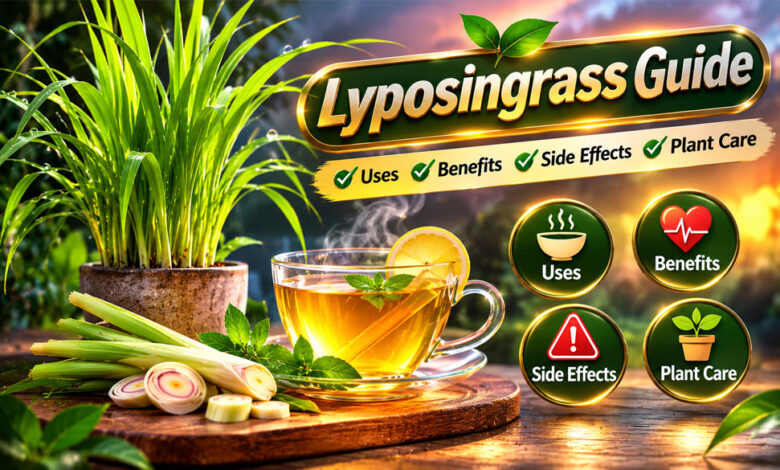

Lyposingrass is a name found in some online articles about plants, herbs, and health. It is often linked with lemongrass. However, Lyposingrass is not a recognized scientific plant name.
This can cause confusion. Some websites use the name for lemongrass, while others connect it with different plants.
This guide explains what Lyposingrass may be, its common uses, possible benefits, side effects, safety, and how to grow and care for it.
What Is Lyposingrass?
Lyposingrass is a name used online for different plants and herbal products. It is not a recognized scientific plant name.
Many descriptions of Lyposingrass sound like lemongrass. They describe a plant with long green leaves, a fresh lemon smell, and uses in food and tea.
If Lyposingrass is being used to mean real lemongrass, the scientific name to look for is Cymbopogon citratus. This plant belongs to the Poaceae grass family.
The problem is that the name Lyposingrass is not always used for the same plant. Some websites connect it with other grass-like plants.
For this reason, do not use the name alone to identify a plant.
If you want to buy Lyposingrass seeds, tea, dried leaves, oil, or supplements, check the scientific name and ingredients first.
Is Lyposingrass the Same as Lemongrass?
Some websites use Lyposingrass when talking about lemongrass. The plants described on these pages usually have long green leaves, a lemon smell, and thick clumping growth.
These features match lemongrass.
However, Lyposingrass is not an official botanical name for lemongrass. We cannot assume that every plant or product using this name is Cymbopogon citratus.
If you want edible lemongrass, check the label for its scientific name.
Smell and appearance can help, but they are not enough to safely identify an unfamiliar plant.
Lyposingrass vs. Liriope
Some websites also connect Lyposingrass with Liriope muscari or Liriope spicata.
Liriope and lemongrass are different plants.
Lemongrass is a true grass. It is commonly used in cooking and drinks.
Liriope is a grass-like plant mainly grown in gardens. It is often used as ground cover or along garden borders.
Both can have long, narrow leaves, so they may look similar from a distance.
Do not eat a plant simply because it looks like lemongrass. Check its scientific name first.
What Does Lemongrass Look Like?
Lemongrass usually grows in thick groups or clumps.
Its leaves are long, narrow, and green. New leaves often grow upward. Older leaves may bend toward the sides.
The edges of the leaves can feel rough or sharp. Wearing gloves can help when handling a large plant.
The lower stalk is thicker and lighter in color. This is the part often used for cooking.
Crushing a leaf releases a strong lemon-like smell. Much of this smell comes from a natural compound called citral.
The smell can help with identification, but a proper plant label is still important.
Where Does Lemongrass Come From?
This information applies to Cymbopogon citratus, not every plant called Lyposingrass.
Southern India and Sri Lanka are recognized as the native range of Cymbopogon citratus.
Today, lemongrass is grown in many warm parts of the world. It is common in tropical and subtropical areas across Asia, Africa, the Americas, and Pacific islands.
The plant likes warm temperatures and can grow into a large clump when conditions are good.
Common Uses of Lyposingrass
If Lyposingrass means real lemongrass, it has several common uses.
It is mainly used in cooking, herbal drinks, and gardens. Its fresh lemon smell and taste make it useful in many recipes.
Lemongrass also has a history of traditional wellness use. However, traditional use does not prove that it can treat an illness.
Cooking
Lemongrass is commonly used in soups, curries, sauces, marinades, rice dishes, seafood, chicken, and broths.
The lower stalk is usually the best part for cooking. Tough outer layers can be removed first.
The softer part can then be sliced, chopped, crushed, or finely cut.
Larger pieces can also be added to soups or broths for flavor and removed before serving.
Lemongrass works well with ginger, garlic, chili, coconut milk, and lime.
It gives food a fresh citrus taste without being the same as lemon juice.
Lemongrass Tea
Fresh or dried lemongrass can be used to make herbal tea.
The leaves or stalks are placed in hot water and left for a few minutes. Using more lemongrass or leaving it in the water longer can make the drink stronger.
Honey, ginger, mint, or lemon can also be added for taste.
Lemongrass tea can be served hot or cold. It should be enjoyed as a drink, not treated as a cure for disease.
Tea is also much different from concentrated extracts and essential oils.
What Compounds Does Lemongrass Contain?
Lemongrass contains several natural plant compounds.
One of the best known is citral. It is an important part of the plant’s strong lemon smell. Citral mainly contains two compounds called geranial and neral.
Lemongrass also contains terpenoids, flavonoids, phenolic compounds, and other natural plant chemicals.
Researchers have studied some of these compounds for possible health effects.
However, finding useful activity in a laboratory does not mean that drinking lemongrass tea will treat a disease.
Fresh lemongrass, dried leaves, tea, extracts, and essential oil can also contain very different amounts of these compounds.
Possible Lyposingrass Benefits
There are no clearly proven health benefits for an unknown ingredient simply called Lyposingrass.
Most health claims linked with this name appear to come from research on lemongrass, its extracts, or its essential oil.
Researchers have studied lemongrass for possible antioxidant, antimicrobial, and anti-inflammatory effects.
Some studies have shown interesting results. However, much of this research has been done in laboratories or with animals.
Research on people is more limited.
Studies using concentrated extracts or essential oils also do not tell us exactly what happens when someone drinks a normal cup of lemongrass tea.
A 2024 review reported only a small number of suitable clinical studies involving lemongrass essential oil. More research was still needed.
Lemongrass can be enjoyed as part of food or as herbal tea. It should not be presented as a proven treatment for disease.
Can Lyposingrass Help With Weight Loss or Detox?
Some websites may connect Lyposingrass with weight loss, fat burning, or detox benefits.
There is not enough reliable evidence to say that an unknown ingredient called Lyposingrass causes weight loss.
Claims that an herb can quickly burn or “melt” fat should be treated carefully.
Good evidence would need to study the exact ingredient, amount, and product in people. Research on another herb or a strong laboratory extract is not enough.
Detox claims also need evidence.
The word “detox” is often used without explaining what the product removes from the body or how that effect was measured.
There is no clear evidence from the information reviewed that Lyposingrass has a proven detox effect.
Losing some weight in a short time also does not prove that toxins were removed.
Digestion and Energy Claims
Lemongrass has traditionally been used for digestive comfort.
However, this does not prove that Lyposingrass can treat digestive problems.
A claim such as “improves digestion” is also very broad. It could mean less bloating, easier bowel movements, or less stomach discomfort.
The available information does not prove that Lyposingrass treats these conditions.
The same care is needed with energy claims.
Someone may feel more active after drinking herbal tea or taking a supplement. That does not prove the product caused the change.
Sleep, food, exercise, stress, medicines, and general health can all affect energy levels.
Safety and Possible Side Effects
Lyposingrass safety depends on what plant or product the name actually refers to.
If it is confirmed as culinary lemongrass, using it in normal food is very different from taking a strong extract, supplement, or essential oil.
Herbal products can still cause unwanted reactions.
The risk may depend on how much is used, the type of product, other ingredients, medicines, and the person’s health.
Stop using a product if you have an unexpected reaction. Get medical help if the reaction is serious or does not improve.
Is Lemongrass Essential Oil Safe?
Lemongrass essential oil is much stronger than fresh lemongrass or tea.
It should not be treated like normal food. Swallowing essential oil without proper advice can expose the body to a much larger amount of its active compounds.
Using it on the skin also requires care.
Lemongrass essential oil may cause skin irritation or contact dermatitis in some people.
Follow the product’s safety and dilution instructions. Keep the oil away from your eyes and other sensitive areas.
Stop using it if your skin becomes red, swollen, painful, or irritated.
Essential oils should also be stored safely away from children and pets.
Who Should Be Extra Careful?
Extra care may be needed before using concentrated lemongrass products or an unknown Lyposingrass supplement.
People who regularly take medicine or have an ongoing health condition should speak with a doctor or pharmacist before using concentrated herbal products.
The same care is useful for people preparing for surgery.
Pregnant or breastfeeding people should also ask for professional advice before using strong herbal products. Parents should be careful before giving herbal supplements to children.
If you are asking a doctor or pharmacist about a Lyposingrass product, show them the full label. The name alone may not explain what is actually inside.
Do not replace prescribed medicine with an unproven herbal product.
Is There a Recommended Lyposingrass Dose?
There is no standard dose for Lyposingrass.
This is because the name does not identify one clear plant or product.
Fresh lemongrass used in food is also very different from dried leaves, tea, extracts, supplements, and essential oils.
These products can have very different strengths.
A dose used in a research study may also be different from the amount found in a product sold online.
Do not copy a dose from an unrelated website. For concentrated products, check the actual ingredients and strength and get professional advice when needed.
What to Check Before Buying a Lyposingrass Product
Do not buy a product based only on the word Lyposingrass on the front.
Read the full label first.
If it claims to contain lemongrass, look for the scientific name Cymbopogon citratus.
Also check the ingredients, serving size, amount per serving, warnings, and the name of the manufacturer or distributor.
If it contains a plant extract, look for information about its strength or concentration.
Some products contain several herbs or ingredients. This means the effects cannot be judged from one featured herb alone.
If the seller does not clearly explain what the product contains, it may be better to wait before buying or using it.
Can You Trust Lyposingrass Reviews and Health Claims?
Customer reviews can tell you useful things about taste, packaging, delivery, or ease of use.
They cannot prove that a product has medical benefits.
Someone may believe a supplement helped them, but other things may have changed at the same time. These could include diet, sleep, exercise, stress, or medicine.
Some online reviews may also be paid or fake.
Be careful with products that promise very fast results or claim to solve many different health problems.
A countdown timer, special offer, or money-back guarantee does not prove that a product works.
Also check whether the listed price is for one purchase or starts a regular subscription.
Lemongrass and Mosquitoes
Lemongrass is sometimes promoted as a natural way to repel mosquitoes.
Part of the confusion comes from citronella. Lemongrass is related to other Cymbopogon plants that are used to produce citronella-type oils.
Researchers have studied some lemongrass oils and compounds for insect-related effects.
However, keeping a pot of lemongrass nearby should not be treated as reliable mosquito protection.
If mosquito-borne diseases are a concern, use protection recommended by health authorities.
How to Grow Lyposingrass at Home
These growing tips apply when Lyposingrass has been confirmed as Cymbopogon citratus.
Lemongrass likes warm weather and plenty of sunlight.
It grows well in fertile soil that stays moist but drains extra water.
The plant grows in clumps and becomes wider as new shoots appear. Give it enough room to grow.
In warm climates, lemongrass can live outdoors for several years if winter temperatures stay suitable.
In colder places, it can be grown as an annual or kept in a pot and moved indoors before winter.
Frost can badly damage or kill the plant.
Growing Lemongrass From Grocery Stalks
Some fresh lemongrass stalks bought from a grocery store can grow into new plants.
Choose a fresh, firm stalk with as much of the lower base left on it as possible.
Place the bottom of the stalk in clean water. Keep most of the stalk above the water and place it somewhere warm and bright.
Roots may start growing within a few weeks if the base is still healthy.
Once strong roots and new growth appear, move the stalk into potting soil.
Keep the soil moist while the young plant becomes established.
Not every grocery-store stalk will grow. Some may have been cut too short or damaged during harvesting and storage.
Sunlight, Soil, and Water
Lemongrass needs plenty of sunlight.
Full sun helps the plant produce strong leaves and healthy growth. Too little light can make the plant weak or slow-growing.
The soil should be fertile and able to hold some moisture. Organic matter or compost can help improve the soil.
Good drainage is also important.
Lemongrass likes moist soil, but its roots should not sit in water for long periods.
Plants in pots may need water more often because container soil can dry faster.
During colder months, growth may slow. The plant may also need less water during this time.
How to Care for Lyposingrass
Lemongrass is fairly easy to care for when it gets enough sun, warmth, water, and space.
Remove dead, brown, or badly damaged leaves when needed.
The leaf edges can feel rough, so gloves can help when handling a large plant.
Fertile soil can support healthy growth. A suitable fertilizer may also be used during the growing season, but adding too much will not always make the plant healthier.
Good sunlight, watering, drainage, and enough root space are more important.
In colder areas, move potted plants indoors before frost.
Indoor plants may grow slowly during winter and start growing faster again when warmer weather returns.
How to Harvest and Store It
Harvest lemongrass when the stalks are large enough to use.
Take older outer stalks first and leave younger shoots in the middle so the plant can keep growing.
Cut or carefully remove the stalk close to the base.
For cooking, remove tough outer layers if needed. The softer lower part is usually the best section to use.
The upper leaves are tougher, but they can still add flavor to tea, broth, or other drinks.
Fresh lemongrass can be stored in the refrigerator for a short time.
It can also be cut into smaller pieces and frozen for longer storage.
Dried lemongrass should be kept in a closed container away from heat, moisture, and direct sunlight.
Do not use leaves or stalks that have mold, unusual moisture, or a bad smell.
Common Growing Problems
Lemongrass normally grows well when it has enough warmth, sunlight, water, and space. Poor conditions can still cause problems.
Brown Leaf Tips
Brown leaf tips may appear because of watering problems, cold weather, or other stress.
Check the soil first. Make sure it is not extremely dry or staying wet for too long.
Also check how much sunlight and warmth the plant receives.
A few brown leaves may not be serious. If much of the plant starts turning brown, check its growing conditions more closely.
Poor or Slow Growth
Slow growth can happen when lemongrass does not receive enough sunlight, warmth, water, or growing space.
The plant naturally prefers tropical conditions.
Growth can also become slower indoors during winter.
Before adding more fertilizer, check the basic growing conditions first.
Water and Drainage Problems
Lemongrass likes regular water, but the soil should not remain soaked all the time.
Pots should have drainage holes so extra water can escape.
If the soil stays wet for too long, water less often and check the drainage.
Very dry soil can also stress the plant, especially during hot weather.
The goal is to keep the soil moist without leaving the roots in standing water.
Bottom Line
Lyposingrass is not a recognized scientific plant name. Different websites use the word in different ways.
Many descriptions appear to use Lyposingrass for Cymbopogon citratus, better known as lemongrass. Other sources connect the name with Liriope, which is a different plant.
Real lemongrass is commonly used in cooking, tea, and gardens. Researchers have also studied some of its natural compounds.
However, many health claims are still not proven in people. Claims about fast weight loss, detox, or treating diseases should be viewed carefully.
If you find a plant or product called Lyposingrass, check its scientific name and ingredients before using it. Knowing exactly what the product contains is more useful than relying on an unclear name.
Frequently Asked Questions
What is Lyposingrass?
Lyposingrass is an unclear name used online for different plants and herbal products. It is often linked with lemongrass but is not a recognized scientific plant name.
Is Lyposingrass the same as lemongrass?
Some websites use Lyposingrass for lemongrass, but this should not be assumed. Look for Cymbopogon citratus to confirm culinary lemongrass.
Is Lyposingrass the same as Liriope?
No clear definition makes them the same. Some websites connect Lyposingrass with Liriope, but Liriope and lemongrass are different plants.
What is Lyposingrass used for?
If Lyposingrass means lemongrass, common uses include cooking, herbal tea, fragrance, and gardening.
Does Lyposingrass have proven health benefits?
There are no proven health benefits for an unknown ingredient called Lyposingrass. Lemongrass has been studied, but strong human evidence for many health claims is still limited.
Can Lyposingrass help with weight loss?
There is not enough reliable evidence to say that Lyposingrass causes weight loss. Claims about fast fat burning should be treated carefully.
Can you grow lemongrass from supermarket stalks?
Yes, sometimes. Fresh stalks with enough of the lower base still attached may grow roots and can later be planted in soil.
Is Lyposingrass safe?
It depends on what the name refers to. Properly identified lemongrass used in food is different from supplements, extracts, and essential oils. Always check the actual plant or product first.
Kracensoft.com Review 2026: What It Is, Safety, Pros, and Cons