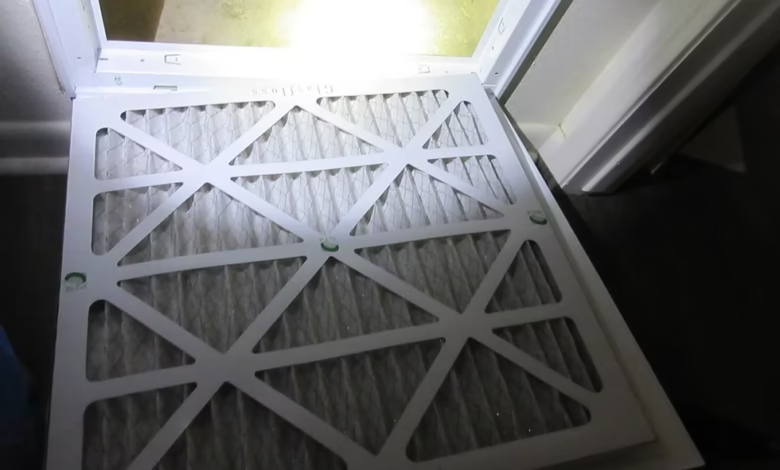

When San Fernando Valley heat arrives, many homes cool unevenly: the thermostat reads the setpoint, yet a back bedroom stubbornly stays warm. That mismatch often points to airflow, not just a struggling air conditioner. Distribution issues like high static pressure, starved return air, leaky or crushed flex ducts, and restrictive filters can rob a well-sized system of performance. Before assuming you need a larger unit, recognize the signs of airflow trouble and the practical corrections that can make a measurable difference at the supply registers and return grilles you already have.
Early Signs Pointing to Airflow, Not Just Capacity
Uneven supply temperatures from room to room, a whistling return grille, and weak velocity at far registers usually trace back to duct-system resistance or an undersized return. A frosted evaporator coil, frequent short-cycling, or lukewarm air despite a clean outdoor condenser can also indicate low cubic feet per minute (CFM) across the coil. In our hot, dry climate, attic ducts, long branch runs, and closed interior doors can intensify these symptoms. For local context on Valley housing stock and attic layouts, resources from a local HVAC Company in Van Nuys can help you spot region-specific red flags like kinks in flex duct above hallway returns.
Consider a single-story ranch with a central return in the hallway. On hot afternoons, the kids’ doors stay closed. Those bedrooms warm up even though the system runs nonstop. With no dedicated return path, closed doors trap supply air, raise room pressure, and cut off circulation to the hallway return. The result is low airflow where you need it most. Crack the doors, add transfer grilles or jump ducts to relieve pressure, and register velocity usually improves immediately.
Common Causes Inside Attics and Closets
Flex ducts get pinched over trusses, sag without proper supports, or snake through the attic with too many tight elbows. Each bend increases friction and static pressure, reducing CFM at the last runouts. At the air handler, an undersized or clogged filter grille creates a bottleneck before air even reaches the blower. High MERV filters catch tiny particles, but in a 1-inch frame they can be overly restrictive. A matted evaporator coil, mis-set blower speed tap, or a closed balancing damper hidden near the plenum can further rob airflow without obvious clues at the thermostat.
Picture a garage-conversion office tied into the nearest supply branch. A tee fitting feeds the new room, but the original trunk and return were never upsized. Now the far bedroom starves for air, and the thermostat, mounted near the kitchen, shuts the system off as soon as the main area cools. The branch add-on solved one space and created another problem. In cases like this, the fix is not a larger condenser; it is rebalancing the ductwork, opening or relocating the return path, or reconfiguring the branch takeoff so the far runs get enough static pressure to deliver design CFM.
How Pros Diagnose Airflow Problems
Technicians measure external static pressure with a manometer at the blower’s inlet and outlet test ports. Values above the manufacturer’s rating tell you the fan is pushing against excessive resistance. They also check temperature split across the evaporator coil; a typical range is often around 16 to 22 degrees Fahrenheit when charge and airflow are correct. An anemometer can assess face velocity at supply registers, while a duct blaster or smoke pencil exposes leakage at takeoffs, plenums, and boot-to-drywall joints. Homeowners can safely inspect for crushed flex, missing mastic at connections, or a filter grille smaller than the return duct, and note whether balancing dampers are partially shut.
Corrections That Actually Work
Start with the return side. Enlarge a starved return grille, add a second return in a closed-off wing, or install jump ducts or transfer grilles so air has a low-resistance path back to the blower. In the attic, support flex duct every four feet, straighten kinks, and replace sharp elbows with long-radius fittings. Seal joints with mastic rather than ordinary cloth duct tape. At the air handler, clean the evaporator coil and blower wheel, set the ECM motor to the correct airflow per ton, and balance dampers so the longest runs receive adequate pressure. Avoid “closing a few vents to force air” into a room; that spikes static pressure, can ice the coil, and often makes noise without solving the hot-spot.
Expect trade-offs. Higher MERV filtration improves smoke and fine dust capture, but in a 1-inch rack it may choke airflow; a larger filter cabinet with a 4-inch media filter reduces pressure drop while maintaining capture efficiency. Boosting blower speed can help CFM but may increase noise at small supply grilles; upsizing the grille or adding a second register lowers face velocity and sound. Sometimes the realistic fix is replacing undersized branches or adding a return, not upsizing equipment. Running the fan in On mode can even out temperatures, but it also warms air passing across attic-warm ducts between cycles and increases energy use; try Auto after balancing to compare results.
Prevention for San Fernando Valley Summers
Airflow problems grow slowly. Replace or clean filters regularly during dusty months, especially after a wind event or wildfire smoke. Vacuum return grilles, keep furniture and rugs off supply registers, and glance into the attic each spring for slipped duct straps or crushed flex. Schedule coil and blower cleaning before the first heat wave, and spray-rinse the outdoor condenser coil fins to remove lint and dust so the system can reject heat efficiently. If bedrooms run hot with doors closed, plan for undercuts, transfer grilles, or jump ducts to maintain a return path before peak season. These steps keep static pressure in check and protect the compressor from low-airflow stress.
Uneven cooling is rarely a mystery once you measure airflow and reduce resistance. By focusing on return paths, filter sizing, duct integrity, and proper balancing, you can resolve most hot-room complaints without replacing the entire system. In climates where attic runs get long and summer loads stay high, prioritizing low static pressure and verified CFM per ton pays off in comfort, quieter operation, and lower bills. Start with safe checks you can see, then use professional testing to confirm numbers before committing to major changes. Your rooms will feel the difference where it matters: at the register.