7 Things You Must Verify Before Choosing a Glass Storage Jar Factory (Most Buyers Skip #4)

Sourcing glass storage jars at volume is not a straightforward procurement exercise. Whether you are buying for a food brand, a cosmetics line, a specialty retail operation, or an industrial packaging program, the factory you choose becomes embedded in your supply chain in ways that are difficult to reverse. A jar that fails at the shelf, leaks during transit, or arrives inconsistently sized across batches does not just cost money — it disrupts operations, damages customer trust, and triggers expensive re-sourcing cycles.
Most buyers approach factory selection by reviewing product catalogs and comparing unit prices. That approach tends to surface problems only after a commitment has been made. The more useful method is to evaluate a factory against a structured set of operational criteria before any orders are placed. Each of the following points addresses a real failure mode that has affected buyers working across food production, pharmaceuticals, personal care, and retail packaging. Understanding what to look for — and why it matters — is what separates a stable supply relationship from a recurring headache.
1. Production Consistency and Quality Control Processes
The first thing worth examining is how a factory controls quality across its production runs, not just what certifications it holds on paper. A glass storage jar factory can carry an ISO certification and still produce containers with dimensional tolerances that vary enough to cause problems on automated filling lines. The certification describes a management system; it does not guarantee the precision of day-to-day output. What matters is the specific quality control infrastructure the factory operates — whether it uses inline inspection equipment, what its defect classification system looks like, and how it handles batches that fall outside acceptable parameters.
When evaluating this area, ask for data rather than descriptions. Factories with mature quality systems can provide defect rate trends, inspection frequency records, and documentation of how non-conforming products are segregated and reported. If a factory is reluctant to share process-level information, that reluctance is itself informative.
Why Dimensional Tolerance Affects More Than Aesthetics
Buyers focused on appearance often overlook dimensional consistency as a technical concern. In practice, variation in jar neck diameter, wall thickness, or base flatness directly affects how the container performs on filling and capping equipment. A jar that runs smoothly in a sample test but varies in production can slow filling lines, increase seal failure rates, and generate product waste. These are real operational costs that accumulate quietly until they become serious enough to investigate.
2. Raw Material Sourcing and Traceability
Glass composition affects everything from clarity and color consistency to thermal shock resistance and chemical durability. Factories that source raw materials from a stable, documented supply chain tend to produce more consistent output than those that switch suppliers based on price availability. Traceability matters here because when a quality issue arises — and in long supply relationships, they eventually do — a factory with documented material sourcing can identify and isolate the cause quickly. A factory without that documentation may struggle to distinguish a material issue from a production issue, which extends resolution time significantly.
Recycled Content and Compositional Consistency
Some factories incorporate recycled cullet into their glass batches, which can affect clarity and uniformity depending on the proportion used and the quality controls around it. This is not inherently a problem — many reputable factories use recycled content responsibly — but it should be declared and explained. Buyers in food or pharmaceutical packaging categories need to understand the material composition of their containers, both for regulatory reasons and to ensure that the product meets the standards their customers expect. Transparency on this point is a reasonable expectation, not an unreasonable demand.
3. Minimum Order Quantities and Production Scheduling
Minimum order quantities are easy to find in a factory’s product sheet, but the way a factory schedules production around those minimums is harder to assess and often more consequential. A factory with large minimum orders may push smaller buyers into production windows that suit the factory’s scheduling preferences rather than the buyer’s inventory cycle. This creates a situation where a buyer is nominally a customer but effectively a filler order — deprioritized when capacity is constrained.
Lead Times Under Real Conditions
Published lead times are typically stated under ideal conditions. The more relevant question is what lead times look like during periods of high demand, raw material shortages, or equipment maintenance cycles. Asking for historical lead time performance across different seasons gives a more accurate picture than a quoted standard lead time. Factories that track and share this information are generally more operationally mature than those that provide only a single number without context.
4. Mold Ownership and Customization Rights
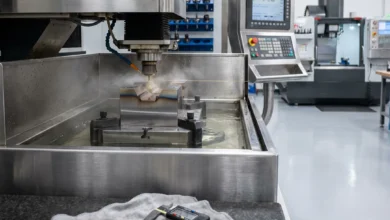
This is the point that most buyers overlook during initial sourcing, and it is often the most consequential in a long-term supply relationship. When a buyer commissions a custom jar shape — a distinct profile, an embossed logo, a proprietary neck finish — the tooling required to produce that shape must be manufactured and owned by someone. In many factory agreements, the factory retains ownership of the mold even when the buyer has paid for its production. This means that switching suppliers becomes structurally difficult: the buyer cannot take the mold to another factory, and the original factory knows it.
Negotiating Mold Ownership Before Placement
Mold ownership should be clarified in writing before any custom tooling is commissioned, not after. A factory that resists transferring ownership of paid tooling, or that prices tooling unusually low upfront only to recoup the cost through pricing restrictions later, is signaling how it intends to manage the relationship over time. Buyers who negotiate this point clearly at the outset retain real supply chain flexibility. Buyers who overlook it often discover the issue only when they need to change suppliers — at which point they face the cost of either re-tooling from scratch or continuing with a factory they no longer prefer.
5. Compliance With Destination Market Regulations
Glass containers used for food, beverage, pharmaceutical, or cosmetic applications are subject to regulatory requirements in most markets. These requirements vary by destination — what is acceptable for export to one country may not satisfy the import requirements of another. Factories that regularly export to regulated markets should be able to demonstrate familiarity with those requirements, including lead-free formulations, migration limits for heavy metals, and documentation standards for food contact compliance. Organizations such as the International Organization for Standardization publish frameworks that inform many of these regulations, and a factory operating at a professional level should be conversant with the compliance context its buyers operate in.
Documentation as a Risk Management Tool
Compliance documentation is not just a box-checking exercise. It is a form of risk management for the buyer. If a product is recalled or rejected at customs because of a container compliance failure, the buyer — not the factory — typically absorbs the commercial consequences. Having clear documentation from the factory that the containers meet the applicable standards provides a basis for accountability if something goes wrong. The absence of that documentation shifts all risk to the buyer.
6. Packaging, Palletization, and Freight Readiness
Glass is fragile, and transit damage is a genuine operational concern, particularly for international shipments. The way a factory packs, palletizes, and prepares containers for freight has a direct impact on breakage rates and on whether containers arrive in usable condition. Factories that have experience shipping to specific regions typically understand the loading requirements, vibration exposure, and humidity variations that affect glass integrity in transit. Those without that experience may pack adequately for short domestic hauls but inadequately for long-haul freight or ocean container shipment.
Assessing Packaging Quality Before Committing
Requesting packaged samples — not just product samples — is a reasonable step before finalizing a supplier. This means asking the factory to package a representative quantity in exactly the way it would for a live shipment and then evaluating whether that packaging is appropriate for the route and volume in question. Breakage rates that seem low in absolute terms can become significant at scale, and the cost of transit damage is often borne by the buyer under standard commercial shipping terms.
7. Financial Stability and Operational Continuity
A factory that cannot sustain its operations reliably is a supply chain risk regardless of its quality levels. Financial instability at a glass manufacturer can manifest as deferred equipment maintenance, reduced staffing of quality control functions, extended lead times, or, in more serious cases, sudden production shutdowns. Buyers who depend on a single factory for a core packaging component are particularly exposed to this risk.
Reading Signals Without Access to Financial Statements
Most buyers do not have access to a factory’s financial records, but operational signals are often visible without them. High staff turnover in production or management, equipment that appears dated or poorly maintained, inconsistent communication patterns, and reluctance to commit to delivery timelines are all indicators worth noting. Factories that have been operating continuously for a significant period, that can provide references from long-term buyers, and that demonstrate stable investment in their equipment and facilities tend to present lower continuity risk than newer or less established operations.
Conclusion: Due Diligence Is a Supply Chain Investment
Selecting a glass container supplier is a decision with a long operational tail. The containers themselves are a commodity in one sense — glass is glass — but the factory behind them is not. Production consistency, material traceability, compliance capability, mold ownership terms, and operational stability are all variables that affect how a supply relationship performs over time, not just at the point of initial order.
Buyers who invest time in structured evaluation before committing tend to experience fewer supply disruptions, lower total cost of ownership, and more predictable product quality. Those who prioritize price discovery over operational assessment tend to encounter the issues covered here not as hypotheticals but as expensive realities.
The seven points above are not exhaustive, but they cover the failure modes that appear most frequently in sourcing relationships that deteriorate after an initially promising start. Working through them methodically — before placing any significant volume — is one of the more practical decisions a procurement or operations team can make.