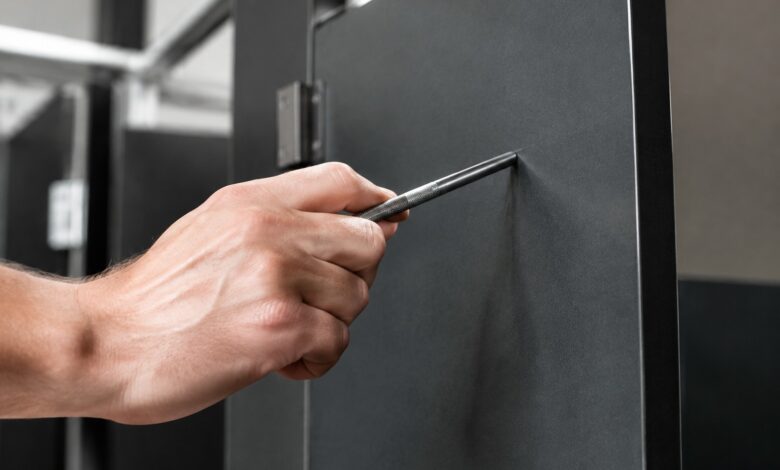
Why ASI phenolic toilet partitions hold up better against scratches and moisture than laminate

Laminate partitions look fine on delivery day. Eighteen months later, the bottom edges are puffed up like wet cardboard.
That’s the pattern a lot of installers and estimators keep running into, and it’s why asi phenolic toilet partitions are showing up on more 2026 bid lists than they did even two years back. Phenolic doesn’t soak up water. It doesn’t peel at the seams, and a key scratch doesn’t expose a mismatched core.
But here’s the thing. Most spec sheets treat “phenolic” and “laminate” like they’re close cousins, and they aren’t. One is a solid, resin-saturated panel all the way through. The other is a thin decorative skin glued over a particleboard or composite core that swells the moment moisture finds a gap (and it will find one).
So who’s paying for the callback when that happens?
Usually the sub who bid the cheaper material.
Why Phenolic Is Getting a Second Look on 2026 Bid Lists
A GC walks a finished school restroom at closeout and finds three laminate doors with lifted edges. Water crept in at the bottom, the substrate swelled, and now there’s a punch item nobody priced. Sound familiar? That scenario is pushing more estimators toward ASI phenolic toilet partitions this year.
What ASI phenolic toilet partitions are made of (solid core, resin-saturated kraft layers, no swelling substrate)
Phenolic is simple. Layers of kraft paper get saturated with resin, then pressed under heat and pressure into one dense, solid sheet. No particleboard core. Nothing for water to soak into.
That matters on the floor line, where mop water, cleaner spray, and the occasional overflow hit the panel every day. Harsh chemical wipe-downs? Bleach-based products and foaming cleaners won’t make a phenolic panel swell or delaminate. Rubber-tipped door bumpers and a scrub brush won’t scar it much either.
- Solid core: the same material edge to edge
- Moisture: no substrate to swell or ring at the bottom
- Scratches: hard surface that resists keys and markers better than a thin face
Why laminate callbacks keep showing up in punch lists
Laminate is a thin decorative skin glued to a core. Once a chip breaks that skin, water gets in. Then it’s a slow failure, and you’re back on site (usually after the warranty clock has started).
Realistically, the install is rarely the problem. The substrate is.
Check the color chart and the mounting instructions before you finalize the spec, because swapping panels later costs more than a line item on the bid.
Moisture: Where Laminate Edges Fail and Phenolic Stays Flat
Water is the enemy of any particleboard core. Phenolic doesn’t have one.
Laminate panels wrap a wood-based core in a thin skin, and the edges are where that skin gives up. With asi phenolic toilet partitions, the resin-bonded core is the same all the way through, so there’s nothing for moisture to swell.
Wet mopping, hose-downs and chemical cleaner exposure (spray, foaming and bowl cleaners)
Night crews don’t baby partitions. They mop hard, spray a disinfectant, and walk away. Some schools still hose down gang restrooms (not pretty, but it happens).
Laminate takes that abuse for a season or two. Then the seams lift. A phenolic panel shrugs off foaming cleaner, Lysol-type spray and harsh bowl cleaner splashes, because the surface and core resist chemicals and don’t soak anything up. Wipe it. Done.
Edge sealing, delamination, and how a solid core handles water at the bottom of a panel
Look at the bottom six inches of any ten-year-old laminate stall. Swollen, peeling, sometimes black. That’s where mop water sits and wicks upward.
Phenolic panels ship with sealed, self-edged finishes, so there’s no seam to open. Here’s what I check on install:
- Panel bottoms sit above the floor line, per the mounting spec, so standing water can’t pool against them.
- Rubber or stainless shoes cover the pilaster base and keep splash off the hardware.
- Cut edges stay flat and don’t need field sealing if you follow the installation instructions.
Fewer callbacks. That’s the whole pitch.
Scratches, Graffiti and Daily Abuse: What the Surface Really Takes
Ever watched a laminate panel get keyed in a school restroom — seen the brown core show through? Phenolic doesn’t do that. That’s the whole pitch for asi phenolic toilet partitions, and after 22 years of installs, I’ll say it holds up.
Color-through construction and why a gouge doesn’t show a different-colored core
Phenolic is resin-saturated kraft paper pressed solid, with the color running the full thickness. Scratch it, and the scar matches the panel. Laminate is a thin decorative skin glued over a core, so one deep gouge exposes a dark line that reads from across the room.
The edges matter too. Moisture is what kills laminate, since water creeps in at a chipped edge and the core swells. Phenolic doesn’t wick. Bobrick’s SierraSeries line, for one, carries a 25-year warranty on that basis.
Cleaning phenolic with a brush, scrub pad or remover without dulling the finish
Keep it simple. Callbacks usually come from the wrong cleaner, not the panel.
- Wipe with a mild liquid cleaner and a soft brush, then rinse with water.
- For marker or graffiti, use a graffiti remover labeled safe for phenolic. Test a hidden spot before you go wide.
- Skip abrasive scrub pads on gloss finishes (a Scotch-Brite pad can haze them).
- Avoid harsh bleach sprays near the rubber gaskets and the panel seal at the edges.
Hand the janitorial crew a simple cleaning sheet at turnover. It beats a repair visit.
Specifying and Ordering ASI Phenolic Partitions Without Schedule Surprises
Roughly 1 in 3 partition callbacks traces back to a mounting or hardware mismatch, not the panel itself. That’s been my read after 22 years in the field. The material is rarely the problem.
Mounting, hardware and rubber-bumper details that decide long-term durability
Phenolic core shrugs off water — scratches, but a weak bracket still sinks the install. Confirm the wall type before you order. Block-wall anchors and stud-wall anchors aren’t interchangeable.
- Stainless brackets and hinges suit wet, high-traffic rooms. Nylon is fine for light-duty offices (and cheaper to replace).
- Rubber bumpers on doors cushion the slam and protect the latch. Check them at closeout, because they’re the first thing to go missing.
- Follow the installation instructions for pilaster shoes and a proper seal at the floor line, so mop water doesn’t creep in.
Read the color chart, confirm lead times, and get a fast quote that matches your drawings
Pull the color chart early. Sample chips look different under restroom lighting, so get sign-off in writing. Then ask for lead times in writing too. Typical runs are 1-2 weeks, and custom colors can stretch to 3-4.
So what gets you an accurate quote quickly? Send drawings with panel counts, door swings and mounting type. A 24-business-hour turnaround only helps if the numbers match your plans.
Laminate still wins on a few jobs. Dry offices, low-traffic corridors, tight budgets on paper. But put a partition near a floor drain, a janitor’s mop bucket, and a bored teenager with a key, and the math flips fast.
That’s where asi phenolic toilet partitions earn their spot on the bid list. A solid core doesn’t swell when water creeps up from the floor, and a scratch just shows more of the same color instead of a dark stripe of substrate. Fewer punch-list items. Fewer return trips with a caulk gun and an apology.
Durability only holds if the install does, though. Stainless brackets, properly set bumpers, and anchors matched to the wall type matter as much as the panel itself.
So before the next restroom package goes out, pull the drawings, mark every wet area and high-traffic stall, and send those counts, the color selections, and your required delivery date to your supplier for a written quote and confirmed lead time. Do it before the schedule tightens, not after. Then spec phenolic where it counts and move on to the next trade.