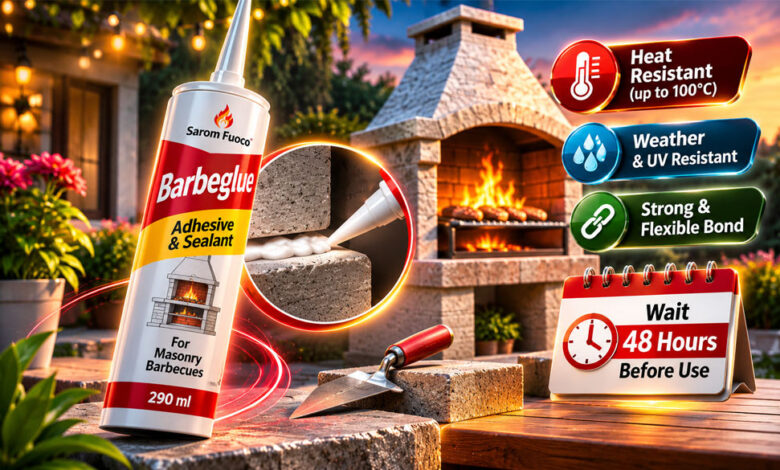

Barbeglue is a special glue and sealant used for some masonry barbecues. It is linked with Sarom Fuoco and is used to join certain barbecue parts during building or repair.
People often search for Barbeglue to find out how it works, where to use it, and how much heat it can handle. They also want to know how long it takes to dry.
This guide explains the uses, features, heat limits, drying time, benefits, and limitations of Barbeglue.
What Is Barbeglue?
Barbeglue is a special adhesive and sealant made for certain masonry barbecues.
It is linked with Sarom Fuoco, an Italian brand that sells masonry barbecues and outdoor cooking products. Sarom instructions mention Barbeglue for some approved barbecue joints.
The documented formula is called Isocoll ECO 6056. It is a one-part polymer adhesive and sealant.
This means it comes ready to use. You do not need to mix it with another product.
Barbeglue is also a product name. Not every product sold as “BBQ glue” is the same. Other barbecue glues may have different formulas, uses, and heat limits.
It is also different from normal household glue, regular silicone, and refractory mortar.
How Does Barbeglue Work?
Barbeglue comes as a thick paste inside a cartridge. You can apply it with a suitable caulking gun.
After it is applied, moisture in the air helps the glue cure. It forms a firm but flexible bond.
This flexibility is useful for outdoor barbecues. Brick, concrete, stone, and metal can move slightly when they get hot and cool down.
A flexible joint can handle some of this small movement.
However, Barbeglue cannot fix every problem. It cannot repair a badly broken barbecue or make an uneven base level. It also cannot replace brackets, screws, or other supports required by the barbecue design.
Barbeglue Features and Specifications
Barbeglue comes in a 290 ml cartridge. The documented product is described as a white or grey paste.
It uses a one-part formula, so there is no need to mix it with a hardener before use.
The documented formula is also described as solvent-free and isocyanate-free.
Barbeglue stays flexible after curing. Its technical information gives an elongation at break of about 400% under stated test conditions.
It is also resistant to weather and UV exposure. This is useful because masonry barbecues are normally kept outside.
Once cured, Barbeglue can be painted with a suitable paint. It is best to test the paint on a small area first.
Is Barbeglue Heat Resistant?
Yes, Barbeglue has documented heat resistance.
The Isocoll ECO 6056 formula has a temperature resistance range of −40°C to +100°C after curing.
The recommended temperature for applying it is +5°C to +50°C.
These two figures mean different things. The application temperature tells you when the glue can be applied. The temperature resistance tells you what the cured product can handle.
Barbeglue should not be treated as fireproof glue.
Direct flames and burning charcoal can be much hotter than 100°C. The available product information does not confirm that Barbeglue is safe for direct contact with flames or hot charcoal.
Use it only in the places approved by the barbecue manufacturer.
Some barbecue plates are also made to sit in place without glue. Always check the assembly instructions before applying Barbeglue.
What Materials Can Barbeglue Bond?
The documented formula lists several compatible materials, including:
- Brick
- Cement
- Stone
- Steel
- Aluminum
- Wood
- Glass
This does not mean Barbeglue should be used on every part made from these materials.
The joint location, heat level, surface condition, and barbecue design are also important.
Painted or coated surfaces may need extra care because the coating can affect how well the glue sticks.
Always check the product and barbecue instructions before use.
Common Uses of Barbeglue
Barbeglue is mainly used when building or repairing suitable masonry barbecues.
Joining Masonry Barbecue Sections
Barbeglue can be used to join approved sections of some prefabricated masonry barbecues.
These barbecues may include concrete supports, worktops, hearth sections, and upper parts.
Not every connection needs glue. Some parts may use another joining method.
The barbecue should also stand on a solid and level base. Barbeglue cannot fix a barbecue that is leaning because of a bad foundation.
Attaching Approved Fittings
Some barbecue designs may use Barbeglue with side sections or other approved parts.
These parts may also need brackets, screws, or supports.
The glue should not replace these parts. If the barbecue instructions show a bracket or screw, it should be installed as directed.
Fixing Loose Joints
Barbeglue may help repair an approved joint that has become loose.
Before adding new glue, check why the joint became loose.
The old adhesive may have failed, but the problem could also be damaged concrete, a bad base, or missing support.
If a large crack is growing or an important part is moving, stop using the barbecue until the problem has been checked.
What to Check Before Repairing a Barbecue Joint
Do not apply Barbeglue to every visible gap.
First, check the barbecue model and its assembly instructions. Make sure the joint is supposed to be glued.
Look for cracks, broken concrete, loose parts, or missing supports. Check brackets and screws as well.
Also think about the heat level around the joint. Areas close to direct fire may become hotter than Barbeglue’s documented limit.
The barbecue should be completely cool before you inspect or repair it.
For serious damage or unstable parts, glue alone may not be enough.
How to Prepare the Surface
Good preparation helps Barbeglue stick properly.
The surfaces should be clean and dry. Remove dust, grease, oil, dirt, loose concrete, and rust from the area.
Do not put new glue over weak or loose material.
Before opening the cartridge, place the parts together without glue. This helps you check that they fit correctly.
Also make sure you have any brackets, screws, or supports needed for the job.
Keep the barbecue cool and stable while working.
How to Apply Barbeglue
Barbeglue is normally applied with a suitable caulking gun.
Prepare the cartridge and nozzle as directed. Apply the glue only where the barbecue instructions say it should go.
Place the parts together carefully and check that they are lined up correctly.
Install any brackets, screws, or supports required by the design. Adding more glue does not replace these parts.
Do not move the joined pieces while the adhesive is curing.
Wear suitable gloves and work in a well-ventilated area. Always follow the latest safety and application instructions supplied with the product.
Barbeglue Drying and Curing Time
Barbeglue may feel dry on the outside before it is fully cured inside.
The documented tack-free time is about 30 minutes at 23°C and 50% relative humidity.
Its documented curing rate is about 3 mm every 24 hours under the same conditions.
Thicker joints may take longer. Temperature and humidity can also affect curing time.
SAROM guidance says to wait at least 48 hours before using an assembled barbecue.
Do not light the barbecue simply because the glue feels dry. Follow a longer waiting time if the current product or barbecue instructions require it.
First Use After Applying Barbeglue
Do not use the barbecue immediately after applying Barbeglue.
For the SAROM guidance reviewed, you should wait at least 48 hours after assembly.
The first fire should also be started slowly. Do not immediately create a very hot fire.
Heating masonry too quickly can put stress on the structure.
Always follow the instructions for your exact barbecue model.
Barbeglue vs Refractory Mortar
Barbeglue and refractory mortar are different products.
Barbeglue is a flexible adhesive and sealant. It comes ready to use and is made for approved barbecue joints.
Refractory mortar is used for suitable high-temperature masonry work. Different types of refractory mortar can have different heat limits.
Some SAROM instructions may allow Barbeglue or suitable refractory mortar for certain joints.
The right choice depends on the barbecue model, joint location, materials, and heat level.
Barbeglue vs Regular Silicone
Barbeglue is not the same as normal household silicone.
The documented Barbeglue formula is a silyl-terminated polymer adhesive and sealant.
Some shops may use the word “silicone” when describing barbecue glue, but this can be confusing.
SAROM instructions warn against using normal silicone glue where Barbeglue or refractory mortar is required.
Do not choose another glue only because it looks similar. Check its formula, heat limit, and approved uses first.
How Much Barbeglue Do You Need?
A documented Barbeglue cartridge contains 290 ml.
The amount you need depends on the barbecue model, number of joints, and thickness of the glue line.
One 290 ml cartridge could theoretically provide about:
- 10.3 metres with a 6 mm round bead
- 5.8 metres with an 8 mm round bead
- 3.7 metres with a 10 mm round bead
These are simple calculations, not official manufacturer coverage figures. Real coverage may be lower because some glue can be wasted or spread out.
The amount can also change between barbecue models. Check the instructions for your exact model before buying.
Painting and Outdoor Care
Barbeglue can be painted after it has cured.
Use a paint that works with the adhesive and the barbecue surface. Testing a small area first is a good idea.
The documented formula is also resistant to weather and UV exposure.
However, this does not mean the whole barbecue is fully protected from bad weather.
Keep water from collecting around the base. Protect exposed masonry as recommended by the manufacturer.
A suitable cover can also help during long periods when the barbecue is not being used.
Check the joints and structure after winter or severe weather.
Storage and Shelf Life
Barbeglue should be kept in a cool and dry place.
The documented storage temperature is 5°C to 25°C.
An unopened cartridge can be stored for up to 24 months under the stated conditions.
Check the package date and condition before use.
A partly used cartridge may not last as long. Air and moisture can affect the glue after the cartridge has been opened.
Do not use old glue if it has become hard or has clearly changed.
Where to Buy Barbeglue
Barbeglue has been sold by several European barbecue and home improvement stores.
Sources reviewed for this article mention Centro Piazzolla and Eurobrico. Other reported sellers include Weldom and Bricomarché.
Stock, prices, and delivery options can change between sellers.
Before buying, check the Sarom or Sarom Fuoco name, product formula, cartridge size, package condition, and product instructions.
The documented version covered in this guide comes in a 290 ml cartridge.
Also check your barbecue package first. The glue may already be included with some kits.
Benefits and Limitations of Barbeglue
Barbeglue has several useful features, but it also has important limits.
Benefits
- Ready to use
- No mixing needed
- Stays flexible after curing
- Works with approved barbecue joints
- Can bond several suitable materials
- Resistant to weather and UV exposure
- Documented formula is solvent-free and isocyanate-free
- Can be painted after curing
- Easy to apply with a suitable caulking gun
Limitations
- Documented upper heat limit is +100°C
- Not confirmed for direct flames
- Cannot be used on every barbecue joint
- Does not replace brackets, screws, or supports
- Cannot fix serious structural damage by itself
- Surfaces must be properly prepared
- Needs enough time to cure
- Correct use depends on the barbecue model
- Other BBQ glues may have different specifications
Common Barbeglue Mistakes and Problems
Using Barbeglue correctly can help prevent many common problems.
Applying Barbeglue to Dirty Surfaces
Dust, grease, oil, and loose concrete can make it harder for the glue to stick.
Clean and prepare both surfaces before applying Barbeglue.
Gluing a Part That Should Stay Removable
Some barbecue parts are designed to stay loose or removable.
Check the assembly instructions before adding glue.
Treating Heat Resistance as Fire Resistance
Heat resistant does not mean fireproof.
The documented upper temperature resistance is +100°C. Do not use Barbeglue directly around flames unless the manufacturer approves that location.
Replacing Barbeglue With Ordinary Silicone
Normal silicone may have different heat limits and bonding properties.
Use the product listed in the barbecue instructions.
Ignoring Brackets and Supports
Barbeglue does not replace required brackets, screws, or supports.
Install all parts shown in the barbecue assembly instructions.
Repairing Serious Cracks With Glue
A large or growing crack may mean there is a bigger problem with the barbecue.
Do not simply cover it with glue. Check the structure before using the barbecue again.
Moving Parts Before Curing
Moving a newly joined part can damage the bond.
Keep the pieces still and supported while Barbeglue cures.
Using the Barbecue Too Soon
The outside of the glue can feel dry before the inside is fully cured.
SAROM guidance says to wait at least 48 hours before using an assembled barbecue.
Using Too Much Adhesive
More glue does not always mean a stronger joint.
Use the amount shown in the assembly or product instructions.
Assuming All BBQ Glues Are the Same
Products sold as barbecue glue can have different formulas and heat limits.
Always check the exact product before using it.
Barbeglue Safety Tips
Always read the current instructions before using Barbeglue.
Make sure the barbecue is cool and stable before starting work. Wear suitable gloves and work in an area with good ventilation.
Do not use Barbeglue in direct-flame areas unless the manufacturer clearly allows it.
The product being solvent-free does not mean safety steps can be ignored.
If the barbecue has large cracks, moving sections, or serious damage, stop using it until the problem has been checked.
Also avoid using glue or paint on food-contact areas unless the product instructions say it is suitable.
Is Barbeglue Worth Using?
Barbeglue can be useful when it is recommended for a compatible masonry barbecue.
It is ready to use and stays flexible after curing. Its weather and UV resistance also make it useful for approved outdoor joints.
However, it is not a general fireproof glue.
The documented Isocoll ECO 6056 formula has an upper temperature resistance of +100°C.
Before using Barbeglue, check your barbecue model, joint location, materials, and product instructions. Use it only where it is suitable for the job.
Bottom Line
Barbeglue is a special adhesive and sealant linked with Sarom Fuoco masonry barbecues.
The documented Isocoll ECO 6056 formula is ready to use and stays flexible after curing. It is also resistant to weather and UV exposure and can be painted with a suitable coating.
However, its documented upper temperature resistance is +100°C. This does not mean it is safe for direct flames or burning charcoal.
For the best results, use Barbeglue only in approved joints. Clean the surfaces, use all required supports, and give the adhesive enough time to cure before using the barbecue.
Frequently Asked Questions
What is Barbeglue used for?
Barbeglue is used to join approved parts of compatible masonry barbecues. Check your barbecue instructions before using it.
Who makes Barbeglue?
Barbeglue is linked with Sarom Fuoco, an Italian barbecue brand. The documented formula covered here is Isocoll ECO 6056.
Is Barbeglue fireproof?
No. Its heat resistance does not mean it is fireproof or suitable for direct flames.
What temperature can Barbeglue withstand?
The documented Isocoll ECO 6056 formula has a temperature resistance of −40°C to +100°C after curing.
How long does Barbeglue take to dry?
It becomes tack-free in about 30 minutes under stated conditions. SAROM guidance says to wait at least 48 hours before using the assembled barbecue.
Can I use normal silicone instead of Barbeglue?
Normal silicone should not be used as a direct replacement unless the barbecue manufacturer approves it.
Can Barbeglue be used on metal?
Yes. The documented formula lists steel and aluminum as compatible materials, but the joint must still be suitable for Barbeglue.
Can Barbeglue be used outdoors?
Yes. The documented formula is resistant to weather and UV exposure. The barbecue itself still needs normal outdoor care.
What Is Almawadahit.com? A Guide to Its Content and Features
SparkPressFusion.com Review: Is It Safe, Useful, and Reliable?