What Happens When Everyone Uses the Office Kitchen at Once?
What Happens When Everyone Uses

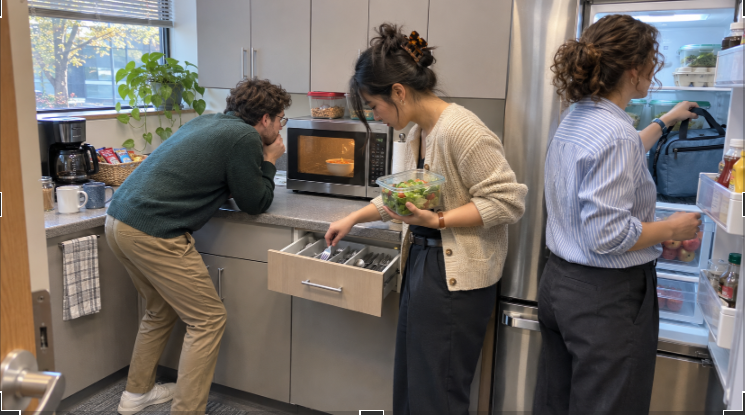
Are you waiting for the microwave?” Three people turn around. One wants a fork, one is trying to reach a lunch bag, and only one has anything to heat. From the doorway, it looks like the office needs another microwave. From inside the line, it needs a better place to keep the forks.
A busy lunch break reveals things that headcounts and supply orders miss. An office coffee and snack service might deliver enough for the whole week, yet someone on their way to a meeting can still give up on getting a coffee. To find out why, follow a few people through the kitchen at noon. Where they stop, what they’re holding, and whether they leave with what they came for will tell you what to fix first.
Why does one line form for three different things?
Picture a kitchen with the microwave above the cutlery drawer, lunch bags in the fridge beside it, and snacks on the counter in between. The person heating soup has every reason to stand there. So does the person looking for a spoon. Anyone who walks in behind them has to ask whose turn it is before doing much of anything.
When the pretzels from your office coffee and snack service sit beside the microwave, grabbing a bag can take as long as heating lunch. Move one basket to the far end of the counter for a day. Put napkins beside it. Then watch whether the next person who walks in for a snack can pick it up and leave while the soup is still turning.
Is the microwave actually too slow?
Try a little arithmetic before buying another appliance. If four coworkers arrive together with lunches that each need three minutes, the fourth meal finishes about twelve minutes after the first one goes in. That assumes everyone is ready for their turn. Moving the forks won’t shorten those cooking times. It will let everyone else get on with lunch.
Now watch what happens when the timer sounds. Does a hot bowl sit inside while its owner clears a space to set it down? Is the next person still unwrapping their lunch because there’s nowhere to put the container? Clear a patch of counter on each side if space allows. One person can get a meal ready while another collects theirs. If the microwave then runs continuously and people still spend most of lunch waiting, you have a reason to price a second unit.
Follow the coffee drinker all the way out
The coffee machine finishes pouring, but its customer is still standing in front of it. She needs milk from the fridge, a lid from the cupboard, and somewhere to put the cup while she opens a sugar packet. From behind her, it looks like the brewer is taking forever. She’s actually finished with it. During the next busy break, follow one cup from the first pour to the first sip. Move whatever pulls its owner back across the room. Keeping lids and sugar together at a clear stretch of counter gives someone a place to finish their coffee while the brewer serves the next person. Put the bin within reach of that spot and the empty packets have somewhere to go, too.
Leave room for lunch conversations. If two colleagues are halfway through a good story when their coffees finish, telling them to hurry up misses part of what the kitchen is for. A small standing table a few steps away gives them somewhere to carry on without having to move whenever the fridge door opens.
What runs out during the rush?
An empty basket at 12:20 can mean two different things. The office might genuinely have eaten the week’s supply, or an unopened box might be sitting on a high shelf. One calls for a larger order. The other calls for a refill before lunch. Check the cupboard before adding another case to the bill.
Look for things that disappear together. There may be plenty of coffee left when the last splash of milk goes into someone’s cup. A delivery of yogurt is less useful if every clean spoon is in the dishwasher. On a day when several teams are in, check the small supplies again after the first group eats. The second group has a good view of what the first group used up.
What can an office coffee and snack service change?
Bring the supplier an example from your busiest day. “We have coffee left after lunch, but run out of cups halfway through it” is specific enough to act on. Berkshire Foods offers both office coffee and pantry services, so a manager can discuss what gets brewed and what gets restocked in the same conversation. Ask which supplies come with the order and who puts them away.
If everyone wants regular coffee after the weekly staff meeting, ask about brewing a batch before the meeting ends. A dispenser can serve that group while the single-cup brewer stays available for decaf. Try it on meeting day first. A pot that empties in ten minutes on Tuesday might sit nearly full on Friday.
Give the last person through the kitchen a say
By the time the kitchen clears, the people who gave up have gone back to their desks. Ask a couple of people coming out of the room, “Did you get what you came for?” Someone carrying a coffee might tell you they also wanted lunch but couldn’t spare ten minutes to heat it. A sale count or a glance at the queue would miss that.
Run the same lunch break twice
Pick two comparable office days and change one thing between them. On the first, note who waits, what they want, and when they leave. On the second, put the forks and napkins beside the snack basket, away from the microwave. If the person with a cold salad can now sit down while the soup heats, you’ve solved a real problem for the price of moving a drawer organizer.
Frequently Asked Questions
How do you reduce queues in a small office kitchen?
Start with items people can pick up in seconds. Put cutlery, napkins, and packaged snacks somewhere people can reach without joining the line for a brewer or microwave. Watch during a busy break to see whether people can use that spot while appliance doors and cupboards are open.
How many microwaves does an office kitchen need?
Count the meals that need heating during the busiest break and note their cooking times. Compare that total with the minutes available. If one microwave runs the entire break and employees are still waiting when they need to return to work, test a second unit with facilities staff.
Where should office coffee and snacks go in a shared kitchen?
Keep the quickest pickups along the route people already use to enter and leave. A good test is whether someone can grab a snack and someone else can pour coffee while a third person takes lunch from the fridge. Check all three movements with the fridge door fully open.
Should employees stagger their lunch breaks?
Staggering can help when several teams have some choice about when to eat. Ask whether moving one recurring meeting would spread out arrivals naturally. For employees with fixed breaks, focus on how many meals the equipment can handle in that window and how easily people can reach ready-to-eat options.
Who should restock the kitchen before lunch?
Agree on the handoff between the supplier and the office. If deliveries go into a supply closet, name someone on-site to check the kitchen before the busiest break and give them a backup. Keep a short list of what to refill, including cups, milk, spoons and the most popular snacks.