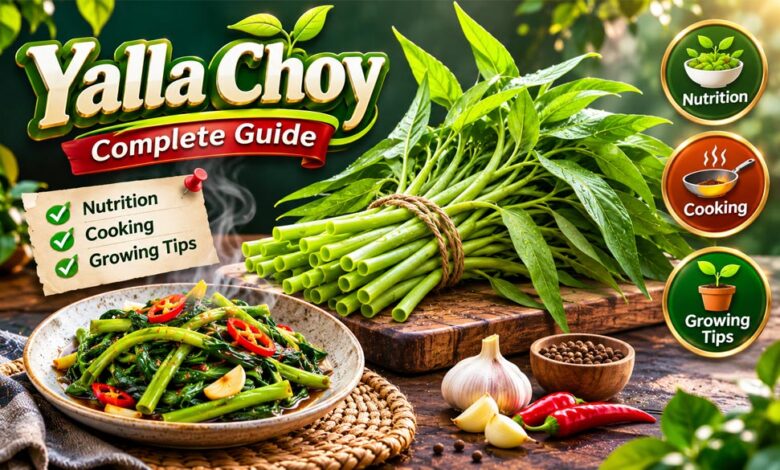

Yalla Choy is a name that appears online for water spinach, a leafy green vegetable scientifically known as Ipomoea aquatica. It is better known by names such as water spinach, ong choy, kangkong, and kangkung.
The name Yalla Choy can be confusing because it is not a standard botanical name. It does not appear to describe a separate type of vegetable. In most online uses, it refers to water spinach.
This guide explains what Yalla Choy is, how to identify it, what it tastes like, its nutrition, how to choose and prepare it, and useful cooking and growing information.
What Is Yalla Choy?
Yalla Choy is a nonstandard name generally used online for water spinach. The vegetable’s scientific name is Ipomoea aquatica. It is a leafy green commonly eaten in different parts of Asia.
The plant is easy to notice because of its long stems and green leaves. Its stems are hollow inside, which is one of its most useful identifying features. Both the leaves and younger stems can be eaten.
Water spinach grows well in warm and wet conditions. It can grow in moist soil, along wet ground, and around freshwater environments.
It is commonly cooked rather than treated like ordinary salad greens. Stir-frying is especially popular because a short cooking time softens the leaves while allowing the stems to keep some of their crisp texture.
There is no strong evidence that Yalla Choy is a separate species or special variety of water spinach. The recognized scientific identity is Ipomoea aquatica.
Is Yalla Choy the Same as Water Spinach?
In the online sources where Yalla Choy is used as a food name, it generally refers to water spinach.
However, Yalla Choy is not an established botanical name. Authoritative plant references identify the vegetable as Ipomoea aquatica and use recognized common names such as water spinach, ong choy, and kangkong.
The exact origin of the term Yalla Choy is unclear. It could be a spelling variation, a recently created term, or a name that has been repeated across websites. There is not enough reliable evidence to give the name a confirmed historical or cultural origin.
For this reason, water spinach is the safer name to use when botanical accuracy matters.
Other Names for Water Spinach
Water spinach has many names because it is eaten in different countries and communities.
Ong choy or ong choi is commonly used in Cantonese-speaking communities and Asian food markets.
Kangkong is widely used in the Philippines, while kangkung is common in Malaysia and Indonesia.
Rau muống is a Vietnamese name for the vegetable.
Other English names include water convolvulus and swamp cabbage.
If the local name is unclear, the scientific name Ipomoea aquatica is the best way to confirm the plant.
Is Water Spinach the Same as Regular Spinach?
Water spinach and regular spinach are different plants.
Water spinach is Ipomoea aquatica. It belongs to the Convolvulaceae family, also known as the morning glory family. Sweet potatoes and morning glory plants also belong to this family.
Regular spinach is Spinacia oleracea. It belongs to a different plant family.
The word “spinach” in water spinach mainly describes the way the leaves are used as a green vegetable. It does not mean the two plants are closely related.
Their textures are also different. Regular spinach has soft leaves and relatively tender stems. Water spinach has longer hollow stems that can stay slightly crisp after a quick stir-fry.
How to Identify Yalla Choy
Water spinach has a few useful features that make it easier to recognize.
Its stems are usually long, jointed, and hollow inside. Fresh stems should feel firm rather than soft or collapsed. Younger stems are usually tender, while thick lower stems can become fibrous.
The green leaves grow along the stems. Their shape can vary, but they are often narrow, pointed, spear-shaped, or similar to an arrowhead.
The plant can spread across wet ground and freshwater areas. Its stems can form new roots at their joints, allowing the plant to spread quickly in suitable conditions.
When buying water spinach, look for green leaves and firm stems. Heavy yellowing, slime, a sour smell, or badly collapsed stems can indicate that the vegetable is no longer fresh.
Yalla Choy vs Bok Choy
Yalla Choy and bok choy are not the same vegetable.
Water spinach has long, hollow stems. Bok choy has thick, solid stalks with broad, spoon-shaped leaves.
Their flavors also differ slightly. Water spinach has a mild green and slightly earthy taste. Bok choy has a mild flavor that is more similar to cabbage.
Both vegetables can be stir-fried or added to soups, but they produce different textures.
Yalla Choy vs Choy Sum
Choy sum is another Asian green that can sometimes be confused with water spinach.
Choy sum generally has slender but solid stems. It may also have small yellow flowers. Water spinach has hollow stems and leaves that can be narrow or arrow-shaped.
Both work well in stir-fries and can be blanched. Choy sum can also be used as a substitute when water spinach is unavailable, although the taste and texture will not be exactly the same.
Yalla Choy vs Regular Spinach
Regular spinach has broad, soft leaves and tender, solid stems. Water spinach has longer stems with hollow centers.
Regular spinach also becomes soft very quickly when heated. Water spinach can keep more texture in its stems when it is cooked for a short time.
Regular spinach may replace the leafy part of water spinach in some dishes, but it cannot provide the same tender-crisp stem texture.
What Does Yalla Choy Taste Like?
Yalla Choy has a mild, fresh green taste with a slightly earthy quality. It is generally not strongly bitter or peppery.
Texture is an important part of the vegetable. The leaves become soft and tender when heated, while the hollow stems can stay juicy and slightly crisp. This gives a properly cooked dish two different textures in the same bite.
Water spinach also takes on the flavors of sauces and seasonings easily. It works well with garlic, ginger, chili, soy sauce, oyster sauce, fish sauce, shrimp paste, fermented bean curd, sesame oil, and coconut milk.
Cooking time matters. If water spinach is cooked for too long, its leaves and stems can become very soft and watery.
Yalla Choy Nutrition
When Yalla Choy refers to water spinach, it can be a useful part of a varied diet. Like many leafy vegetables, water spinach provides dietary fiber and a range of vitamins, minerals, carotenoids, and other naturally occurring plant compounds.
Its exact nutritional content is not always the same. It can vary based on the variety, growing conditions, freshness, storage, serving size, and cooking method.
The way the vegetable is prepared also changes the nutrition of the final meal. A simple garlic stir-fry, for example, is different from water spinach prepared with larger amounts of oil, salty sauces, or coconut milk.
For this reason, it is better to look at water spinach as one useful leafy vegetable rather than focus on a single nutrient or describe it as a special “superfood.”
Potential Health Benefits of Yalla Choy
Water spinach can provide useful nutrients as part of a balanced diet.
Its dietary fiber supports normal digestive function. Fiber also helps add bulk to meals and is an important part of a healthy eating pattern.
The green leaves contain carotenoids and other naturally occurring plant compounds. Water spinach can also contribute vitamins and minerals, although the exact amounts depend on the vegetable and how it is prepared.
One of its practical benefits is simply adding more variety to meals. Eating different vegetables provides a wider mix of nutrients instead of relying on one type of leafy green.
Water spinach should not be treated as medicine. Claims that Yalla Choy can cure diabetes, cancer, inflammation, or other diseases are not supported simply because the plant contains nutrients and antioxidant compounds.
Its health value also depends on the whole dish. Adding large amounts of oil, salty sauces, or coconut milk changes the nutritional profile of the meal.
How to Choose Fresh Yalla Choy
Fresh water spinach should have green leaves and firm stems. The stem tips should feel crisp, and the cut ends should look reasonably fresh.
A few small holes in the leaves do not always mean the vegetable is bad. More important warning signs include widespread yellowing, slime, an unpleasant sour smell, badly wilted leaves, or collapsed stems.
The lower stems can become thick and fibrous as the plant gets older. Younger stems are normally more tender and easier to cook.
Choose a bunch that looks fresh and firm if you want the best contrast between soft leaves and crisp stems.
How to Clean Yalla Choy
Water spinach often grows in aquatic or semi-aquatic conditions, so it should be cleaned carefully before cooking.
Start by removing damaged leaves and trimming the dry or tough ends of the stems. Cut the bunch into manageable pieces if needed.
Wash the vegetable in clean, cool water. Moving the greens gently through the water can help loosen dirt, sand, and grit. Repeat the process with fresh water when necessary.
Lift the greens out of the washing bowl rather than pouring everything through a colander. This helps leave sand and heavier dirt at the bottom.
Drain the water spinach well before stir-frying it. Too much water on the leaves can lower the temperature of the pan. Instead of quickly frying, the vegetable may begin to steam and become soft or watery.
How to Store Yalla Choy
Fresh water spinach should be kept in the refrigerator and used while the leaves remain green and the stems are firm.
It is usually better to store the bunch unwashed and wash it shortly before cooking. Extra moisture during storage can encourage the leaves to lose quality more quickly.
Keep the vegetable loosely wrapped rather than tightly sealing wet leaves and stems.
Trimmed stems can also be kept upright in a small amount of clean water for short-term storage.
There is no single exact shelf life that applies to every bunch. Freshness at the time of purchase, refrigerator temperature, moisture, and storage method can all affect how long it remains usable.
How to Cook Yalla Choy
Yalla Choy cooks quickly. High heat and a short cooking time usually give the best texture.
The stems take a little longer to soften than the leaves. For this reason, add the stem-heavy pieces first. Add the leaves shortly after.
Avoid putting too much water spinach in the pan at once. An overcrowded pan loses heat and causes the vegetable to steam instead of fry.
Stir-Frying
Stir-frying is one of the simplest ways to cook water spinach. Heat a wok or wide frying pan before adding oil and ingredients such as garlic, ginger, or chili.
Add the stems first and toss them over high heat. Add the leaves shortly after. Cook only until the leaves wilt and the stems become tender but still have some bite.
Blanching and Steaming
Water spinach can also be briefly blanched in boiling water. Once tender, drain it well and serve it with a simple dressing.
Soy sauce, garlic, sesame oil, vinegar, and chili oil are common choices.
Steaming is another simple option. Keep the cooking time short so the leaves do not become too soft.
Soups, Curries, and Coconut Milk Dishes
Yalla Choy can be added to clear soups, noodle soups, curries, and coconut milk dishes.
Add it near the end because it does not need a long cooking time. The hollow stems can take in some of the broth or sauce while still keeping their shape.
Simple Garlic Yalla Choy Recipe
A garlic stir-fry is an easy way to prepare water spinach at home.
Ingredients
- 1 bunch of water spinach
- 3 to 4 garlic cloves, sliced or chopped
- 1 to 2 tablespoons cooking oil
- Soy sauce or salt to taste
- Fresh chili, optional
- Sesame oil, optional
Oyster sauce, fermented tofu, ginger, or a small amount of citrus juice can also be added according to taste.
Cooking Method
Wash the water spinach carefully and drain it well. Remove any tough lower stems and damaged leaves.
Cut the vegetable into manageable lengths. Keep the thicker stems separate from the leafy pieces.
Heat the oil in a wok or wide frying pan. Add the garlic and cook briefly without letting it burn.
Add the stems first and stir-fry them over high heat. Add the leaves shortly afterward.
Season with a small amount of soy sauce or salt. Continue tossing until the leaves have wilted and the stems are tender-crisp.
Remove the pan from the heat and serve immediately.
Other Ways to Cook Yalla Choy
Water spinach works with many simple cooking methods.
It can be stir-fried with garlic and chili or cooked with oyster sauce for a stronger savory flavor. Coconut milk can be used for a richer dish.
Water spinach also works in vegetable curries, clear broths, noodle soups, and omelets. When using it in soup or curry, add it near the end so it does not become too soft.
Another option is to blanch the vegetable and serve it with a dressing made from soy sauce, garlic, sesame oil, vinegar, or chili oil.
These are general ways to prepare water spinach. They should not be described as traditional “Yalla Choy recipes” unless there is reliable evidence connecting a specific recipe to that name.
Common Yalla Choy Cooking Problems
Why Does Yalla Choy Become Soggy?
Water spinach can become soggy when it is cooked for too long or when the pan is not hot enough.
Water left on the vegetable after washing can also lower the temperature of the pan. An overcrowded pan creates the same problem.
Drain the greens well before cooking. Use a hot, wide pan and cook in smaller batches when necessary. Stop cooking once the leaves wilt and the stems are tender.
Why Are the Stems Tough?
Older water spinach can have thick and fibrous lower stems. These parts may remain tough even after the leaves have cooked.
Trim away very thick or hard lower sections before cooking. Add the remaining stems to the pan before the leaves so they have slightly more time to soften.
Why Is the Dish Watery?
A watery dish is often caused by wet vegetables, too much sauce, or a pan that is overcrowded.
Drain the water spinach thoroughly after washing. Keep the pan hot and avoid adding more liquid than the recipe needs.
Can You Eat Yalla Choy Raw?
Young water spinach is eaten raw in some food traditions. However, extra care is needed because the plant can grow in aquatic or semi-aquatic environments.
Buy it from a reliable food supplier and wash it carefully with clean water. Water spinach collected from unknown ponds, canals, or other waterways should not be treated as safe food simply because the plant looks familiar.
Washing helps remove dirt and surface contamination, but it cannot guarantee that every possible food safety risk is removed.
Cooking is therefore the more cautious general option, especially when the growing conditions or source of the vegetable are uncertain.
Is Yalla Choy Vegetarian or Vegan?
Plain Yalla Choy is a vegetable, so it is naturally suitable for vegetarian and vegan diets.
The finished dish may not be vegetarian or vegan, however. Some water spinach recipes use fish sauce, oyster sauce, shrimp paste, meat broth, or other animal-based ingredients.
For a plant-based version, use ingredients such as soy sauce, vegetable stock, vegetable oil, or a vegetarian oyster-style sauce.
Is Yalla Choy Gluten-Free?
Plain water spinach is naturally gluten-free.
The sauces used with it may contain gluten. Regular soy sauce, for example, often contains wheat. Some oyster sauces, stocks, and packaged seasoning mixes may also contain gluten-containing ingredients.
People who need to follow a strict gluten-free diet should check product labels. Gluten-free tamari or another suitable sauce can replace regular soy sauce when needed.
Where to Buy Yalla Choy
Water spinach is commonly found at Asian supermarkets and specialist produce stores. Chinese, Filipino, Vietnamese, and Southeast Asian grocery stores are good places to check.
It may also appear at farmers’ markets in places where growing and selling it is permitted.
The label may not say “Yalla Choy.” Look for names such as:
- Water spinach
- Ong choy or ong choi
- Kangkong
- Kangkung
- Rau muống
- Water convolvulus
The scientific name Ipomoea aquatica can also help confirm that you have found the correct vegetable.
Availability and price depend on the country, season, local supply, and regulations. There is no single standard price for water spinach.
Best Yalla Choy Substitutes
If water spinach is unavailable, the best substitute depends on the dish and the texture you want.
Choy Sum
Choy sum is a leafy Asian vegetable with slender stems and tender leaves. It is commonly used in stir-fries and can also be blanched.
It is a useful alternative when you want a vegetable with both stems and leaves. However, its stems are solid rather than hollow, and its flavor is slightly different from water spinach.
Bok Choy
Bok choy has broad green leaves and thick, crunchy stalks. It works well in stir-fries, soups, and braised dishes.
It is a good choice when you want a vegetable that keeps some crunch after cooking. However, its stalks are much thicker than water spinach stems, and its flavor is more cabbage-like.
Regular Spinach
Regular spinach is useful when the soft green leaves are more important than the stems.
It cooks very quickly and works in soups, curries, and simple sautés. However, it does not provide the hollow, slightly crisp stems that make water spinach different.
Ornamental morning glory plants should not be used as a substitute simply because they belong to the same botanical family. Only use plants that are correctly identified and sold for food.
Can You Grow Yalla Choy at Home?
Water spinach grows well in warm and wet conditions. It is an aquatic or semi-aquatic plant and can grow quickly when it has enough moisture and suitable temperatures.
Its stems can form roots at their joints. This allows the plant to spread across wet soil and freshwater areas.
These same qualities can make water spinach difficult to control if it escapes cultivation. For this reason, growing it is regulated in some places.
Before buying seeds, live plants, or cuttings, check the rules where you live. Do not assume that water spinach can legally be planted everywhere simply because it is sold as a vegetable.
Is Yalla Choy Invasive?
Water spinach can spread quickly in suitable warm and wet environments.
Its long stems can grow across water and form roots at their joints. If growth is not controlled, dense patches may develop.
In areas where it becomes invasive, water spinach may compete with native plants, interfere with drainage, and create thick growth in waterways.
This ability to spread is one reason some governments regulate the cultivation and movement of Ipomoea aquatica.
Is Yalla Choy Legal to Grow in the United States?
Water spinach, or Ipomoea aquatica, is federally regulated in the United States as a noxious weed.
Its import and interstate movement are controlled, and permits may be required. Individual states can also have their own rules about growing, possessing, selling, or transporting the plant.
Florida, for example, has restrictions on water spinach as an aquatic plant.
This does not mean that every bunch of water spinach sold for food in the United States is illegal. Regulated production and legal commercial sales can exist under applicable rules.
Anyone planning to buy seeds, grow live plants, or transport water spinach should check current federal requirements and the rules of their state first. Regulations can change, so current government guidance is more reliable than an old growing guide or seed listing.
Why the Name Yalla Choy Can Be Confusing
The main problem with the name Yalla Choy is that it can make the vegetable sound like a separate or newly discovered type of Asian green.
Available botanical information does not support that idea.
The recognized plant is Ipomoea aquatica, commonly called water spinach. Ong choy, kangkong, kangkung, and rau muống are also established names used in different communities.
Yalla Choy appears mainly as a nonstandard name in recent online content. There is not enough reliable evidence to give it a confirmed traditional meaning or historical origin.
Using “Yalla Choy” together with “water spinach” makes the topic easier to understand without presenting the uncertain name as an official botanical term.
It also helps avoid confusion with bok choy, choy sum, regular spinach, and other leafy vegetables.
Bottom Line
Yalla Choy is a nonstandard online name generally used for water spinach (Ipomoea aquatica). The vegetable is also widely known as ong choy, kangkong, and kangkung.
Water spinach has long hollow stems, tender green leaves, and a mild, slightly earthy taste. It works well in stir-fries, soups, curries, and other simple dishes.
Choose fresh, firm bunches, wash them carefully, and avoid overcooking them. If you want to grow water spinach, check local laws first because the plant is regulated in some places due to its ability to spread quickly.
Frequently Asked Questions
What is Yalla Choy?
Yalla Choy is a nonstandard online name generally used for water spinach, scientifically known as Ipomoea aquatica.
Is Yalla Choy the same as ong choy?
Yes, when Yalla Choy refers to water spinach. Ong choy is an established culinary and market name for the same vegetable.
Is Yalla Choy the same as bok choy?
No. Water spinach has long, hollow stems, while bok choy has thick, solid stalks and broader leaves.
What does Yalla Choy taste like?
It has a mild, slightly earthy green taste. The leaves become tender when cooked, while the stems can stay slightly crisp.
Are Yalla Choy stems edible?
Yes. The tender stems are edible. Very thick or older lower stems can become fibrous and may be better trimmed away.
Can you eat Yalla Choy raw?
Young water spinach is eaten raw in some food traditions. However, careful sourcing and washing are important, and cooking is the safer general choice when its growing conditions are unknown.
What is the best substitute for Yalla Choy?
Choy sum is a useful substitute when you want tender leaves and slightly crisp stems. Bok choy or regular spinach can also work depending on the recipe.
Is Yalla Choy legal to grow in the United States?
Water spinach is federally regulated as a noxious weed in the United States. Growing and transporting it may require permission or be restricted depending on federal and state rules.
Methatreams Review: Live Sports, Safety Risks, and Legal Options
Image Search Techniques for Beginners: Tools, Tips, and Best Practices