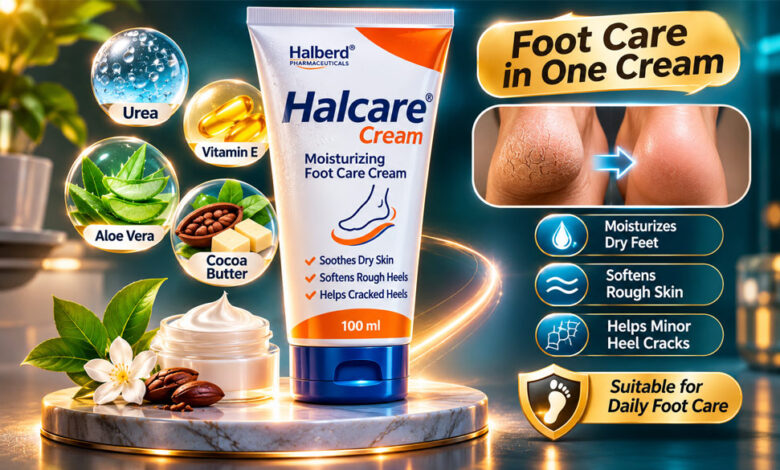

Halcare Cream is a moisturizing cream mainly used for foot care. It is linked with Halberd Pharmaceuticals. The cream is made for dry feet, rough skin, hard heels, and small cracks caused by dryness.
Halcare is also sold for diabetic foot care. However, it is important to understand its limits. It can moisturize dry, healthy skin, but it does not treat diabetes, infections, open wounds, or diabetic foot ulcers.
This guide explains Halcare Cream, its uses, ingredients, benefits, side effects, price, and how to use it safely.
What Is Halcare?
Halcare Cream is a moisturizing foot-care product from Halberd Pharmaceuticals, an Indian pharmaceutical company. It is mainly made for dry, rough, and hard skin on the feet.
Feet can become dry because they face pressure and rubbing every day. Walking, standing, footwear, and dry weather can make the heels rough. The skin may become hard, tight, or flaky. Small cracks can also appear.
Halcare helps add moisture to dry skin and keep that moisture from escaping. Its ingredients can also help make rough skin feel softer.
Halcare is mainly a foot moisturizer. It should not be treated as medicine for wounds, infections, diabetic ulcers, or other serious foot problems.
What Is Halcare Cream Used For?
Halcare Cream is mainly used for dry and rough feet. It may also help soften hard skin and make dry heels feel more comfortable.
Dry Feet
Dry feet may feel rough, tight, flaky, or uncomfortable. This happens when the skin loses too much moisture.
Halcare contains urea and glycerin. These ingredients help the skin hold water. Regular use may make dry areas softer and more comfortable.
However, cream cannot solve every cause of dry feet. Shoes, repeated pressure, skin conditions, and some health problems can also affect the skin.
Rough and Thick Skin
Pressure and rubbing can make some parts of the feet hard and thick. This often happens around the heels.
Halcare contains urea, which is commonly used in creams for rough and thick skin. It can help soften dry areas and make the skin easier to care for.
Very thick calluses may need professional foot care. This is especially important for people with diabetes. Do not cut hard skin with sharp tools because this can cause an injury.
Cracked Heels
Heels can crack when the skin becomes very dry, hard, and less flexible. Standing for long periods, walking barefoot, and some types of footwear may make the problem worse.
Halcare may help with small cracks caused by dryness. Moisturizing the area can make the skin softer and less stiff.
However, deep, painful, bleeding, open, or infected cracks need medical care. A moisturizer alone is not enough for these problems.
Diabetic Foot Dryness
People with diabetes may develop dry skin on their feet. Diabetes can also affect the nerves and reduce feeling in the feet.
Halcare is sold for diabetic foot care because it can moisturize dry, healthy skin. It may be used as one part of a regular foot-care routine.
However, Halcare does not treat diabetes. It cannot control blood sugar, repair nerve damage, improve poor blood flow, or heal diabetic foot ulcers.
People with diabetes who have reduced feeling, wounds, or a history of foot ulcers should ask a healthcare professional before choosing foot-care products.
Halcare Cream Ingredients
Halcare contains different ingredients that help moisturize, soften, and protect dry skin.
| Ingredient | Main Purpose |
|---|---|
| Urea | Helps moisturize and soften thick, dry skin |
| Glycerin | Helps the skin hold water |
| Aloe vera | Helps soothe and condition skin |
| Cocoa butter | Helps soften rough skin |
| Propylene glycol | Helps keep skin moist |
| Light liquid paraffin | Helps reduce moisture loss |
| White petroleum jelly | Helps keep moisture in the skin |
| Zinc oxide | Helps protect the skin |
| Vitamin E | Used for skin care and conditioning |
| L-arginine | An amino acid included in the formula |
| Dimethicone | Helps form a protective layer on the skin |
| Cetyl alcohol | Helps soften skin and improve cream texture |
| Stearyl alcohol | Helps soften skin and improve cream texture |
The formula also contains preservatives and perfume. People with sensitive skin or fragrance allergies should check the full ingredient list before using Halcare.
Urea is an important ingredient in the cream. It helps the skin hold moisture and can soften thick, rough areas.
However, the exact amount of urea in Halcare is not confirmed in the information available. This means it should not automatically be compared with another urea cream that has a known percentage.
How Does Halcare Cream Work?
Halcare works by helping dry skin get and keep moisture.
Its ingredients work in different ways.
Urea and glycerin help attract and hold water in the skin.
Cocoa butter and fatty alcohols help soften rough skin and make it feel smoother.
Petroleum jelly, liquid paraffin, and dimethicone help form a protective layer. This slows down moisture loss from the skin.
Together, these ingredients may make dry and rough feet feel softer and more comfortable.
Results can be different for each person. They depend on how dry the skin is, the full formula of the cream, and how the product is used.
There is no confirmed number of days in which Halcare should start working. There is also no clear evidence showing that Halcare works better than every other foot cream.
Benefits of Halcare Cream
The main benefit of Halcare is keeping dry skin moisturized.
Urea and glycerin help the skin hold water. Petroleum jelly and liquid paraffin help stop moisture from leaving the skin too quickly.
Regular use may make rough heels softer. It may also reduce the tight or hard feeling caused by very dry skin.
Urea may also help soften thick areas of dry skin. This can make everyday foot care easier.
Halcare may help support the skin’s natural moisture barrier. Healthy moisture levels can help stop the skin from becoming very dry and stiff.
Some people with diabetes may also use Halcare to moisturize healthy, unbroken skin. However, this does not mean the cream prevents or treats diabetic foot problems.
Halcare is mainly a moisturizer. It cannot fix pressure from badly fitting shoes or treat a medical condition causing foot problems.
Halcare Cream for Cracked Heels
Cracked heels often develop when the skin becomes very dry, thick, and hard. Pressure on the heel can then cause the skin to split.
Standing for long periods can make the problem worse. Walking barefoot and wearing open footwear may also increase dryness in some people.
Halcare contains urea and glycerin to help keep the skin moist. Cocoa butter helps soften rough skin. Petroleum jelly and similar ingredients help keep moisture inside.
This may help with small cracks caused by dry skin. Regular moisturizing can make the heel softer and more flexible.
Deep cracks are different. A painful, bleeding, open, swollen, or infected crack needs medical attention. This is especially important for people with diabetes.
Halcare Cream for Diabetic Foot Care
People with diabetes need to take extra care of their feet.
Diabetes can damage nerves and reduce feeling in the feet. Because of this, a person may not notice a small cut, blister, or other injury.
Some people with diabetes may also have poor blood flow. This can make foot injuries harder to heal.
Halcare may help moisturize dry, healthy skin, but moisturizing is only one part of diabetic foot care.
People with diabetes should check their feet every day. Look for cuts, cracks, blisters, redness, swelling, warmth, or other changes.
Shoes should fit properly and should not rub against the skin.
Cream should normally not be applied between the toes unless a healthcare professional recommends it. These areas should be kept dry.
Halcare cannot control blood sugar, repair nerve damage, improve poor blood flow, or treat an infection. It should never replace proper treatment for a diabetic foot ulcer.
Anyone with diabetes who has a wound, reduced feeling, swelling, redness, or previous foot ulcers should get professional advice.
How to Use Halcare Cream
Before using Halcare Cream, check your feet. Look for cuts, blisters, redness, swelling, cracks, or broken skin.
Wash your feet gently with warm water and mild soap. Dry them carefully with a clean towel. Make sure the areas between your toes are dry.
Apply Halcare to suitable dry areas, such as the heels and other rough parts of the feet. Gently spread it over healthy, unbroken skin.
Follow the instructions on the product pack for how much cream to use and how often to apply it. A confirmed application schedule was not available in the information reviewed.
Using extra cream does not mean you will get faster results.
Allow the cream to settle before walking, especially if your feet feel slippery.
Stop using Halcare if it causes redness, itching, burning, or irritation. Get medical advice if the problem continues.
Where Should You Not Apply Halcare?
Halcare is mainly for dry and healthy skin.
Avoid using it on:
- Open wounds.
- Deep cuts.
- Diabetic foot ulcers.
- Infected skin without medical advice.
- Deep or bleeding cracks without professional advice.
- Skin that becomes irritated after using the cream.
You should also normally avoid putting moisturizer between your toes unless a healthcare professional tells you otherwise.
Possible Side Effects of Halcare Cream
Not everyone reacts to skincare products in the same way.
Possible side effects of Halcare may include redness, itching, burning, stinging, irritation, or a rash.
The cream also contains perfume and preservatives. People with sensitive skin or known allergies should check the ingredients carefully.
Creams containing urea may sting when used on badly cracked or damaged skin.
Stop using Halcare if it causes irritation. If the problem continues, speak with a doctor, pharmacist, or another healthcare professional.
Get urgent medical help if you have signs of a serious allergic reaction, such as trouble breathing or swelling of the face, mouth, or throat.
Precautions Before Using Halcare
Always read the product label before using Halcare Cream.
Check the ingredients if you have sensitive skin or known allergies.
Do not apply the cream to open wounds, infected areas, or diabetic foot ulcers unless a healthcare professional specifically tells you to do so.
People with diabetes should take extra care. If you have poor blood flow, reduced feeling, previous ulcers, or a current wound, ask a healthcare professional before using foot-care products.
Children and people with existing skin conditions should also get advice if they are unsure about using Halcare.
There is not enough detailed information about using Halcare during pregnancy or breastfeeding. Anyone who is pregnant or breastfeeding and is unsure should ask a healthcare professional.
Who Can Use Halcare Cream?
Halcare may be useful for people with dry feet, rough heels, thick dry skin, or small cracks caused by dryness.
Some people with diabetes may also use it on dry, healthy skin.
However, people with open wounds, serious cracks, infections, poor blood flow, or reduced feeling in their feet should get medical advice.
When Is Halcare Cream Not Enough?
Halcare may help normal dryness, but it cannot treat every foot problem.
Get medical advice if you have a deep or bleeding crack, open sore, discharge, swelling, spreading redness, or signs of infection.
Changes in the color or temperature of your foot should also be checked.
If your skin continues to get worse even after regular care, another problem may be causing it.
This is especially important for people with diabetes. Reduced feeling can make an injury difficult to notice. A wound can still be serious even when it does not hurt.
Very hard or thick skin may also be caused by repeated pressure. Better footwear or professional foot care may be needed instead of simply applying more cream.
Halcare Cream Price and Availability
Halcare Cream is linked with Halberd Pharmaceuticals in India.
A 100 ml pack has been reported in online product listings. Halcare has also been reported on Indian pharmacy platforms such as Tata 1mg and MedPlus.
There is no single fixed price. The cost may change depending on the seller, location, stock, and available discounts.
Check the latest price with a trusted pharmacy or medical retailer before buying.
Availability outside India is less clear. Buyers in other countries should make sure they are buying from a reliable seller.
How to Buy Halcare Safely
Buy Halcare from a trusted pharmacy or medical retailer.
Check the product seal before using it. Make sure the packaging is not damaged.
Also check the expiry date, batch information, manufacturer details, and ingredient list.
Do not use an expired product. Avoid packs with broken seals, damaged packaging, or unclear labels.
Take extra care when buying from an unfamiliar online seller.
Halcare vs Regular Foot Cream
Halcare works in a similar way to many other moisturizing foot creams.
Regular foot creams may contain glycerin, petroleum jelly, oils, or other moisturizing ingredients.
Halcare also contains urea. Urea can be useful for dry, thick, and rough skin because it helps hold moisture and soften hard areas.
Halcare combines urea with glycerin, cocoa butter, dimethicone, petroleum jelly, and other ingredients.
A simple moisturizer may be enough for mild dryness. People with sensitive skin may prefer a fragrance-free product.
There is no clear evidence showing that Halcare is better than every other foot cream. The best product depends on your skin, the ingredients, and your individual needs.
Tips for Better Foot Care
A foot cream works best when it is part of a simple foot-care routine.
Wash your feet regularly with mild soap and warm water. Dry them well, especially between your toes.
Use a suitable moisturizer on dry and healthy areas of the feet.
Wear clean socks and comfortable shoes that fit properly. If your shoes keep rubbing the same area, changing the footwear may help more than simply using extra cream.
Avoid walking barefoot on rough surfaces when there is a risk of injury.
Do not cut calluses or hard skin with blades or other sharp tools. This is especially important if you have diabetes or reduced feeling in your feet.
Check your feet for cuts, cracks, blisters, redness, and swelling. People with diabetes should check their feet every day.
Bottom Line
Halcare Cream is a moisturizing foot-care product from Halberd Pharmaceuticals. It contains urea, glycerin, cocoa butter, aloe vera, petroleum jelly, dimethicone, and other ingredients that help keep dry skin soft and moist.
It is mainly used for dry feet, rough heels, thick skin, and small cracks caused by dryness. Some people with diabetes may also use it to moisturize dry, healthy skin.
However, Halcare does not treat diabetes, infections, poor blood flow, nerve damage, open wounds, or diabetic foot ulcers.
Follow the instructions on the product pack and pay attention to how your skin reacts. Proper shoes, regular foot checks, washing, drying, and moisturizing are also important parts of foot care.
Frequently Asked Questions
What is Halcare Cream used for?
Halcare Cream is used to moisturize dry feet and soften rough or thick skin. It may also help with small heel cracks caused by dryness.
Does Halcare Cream contain urea?
Yes. Halcare contains urea, but the exact amount was not confirmed in the information reviewed.
Is Halcare Cream good for cracked heels?
It may help small cracks caused by dry skin. Deep, painful, bleeding, or infected cracks need medical care.
Can people with diabetes use Halcare Cream?
Some people with diabetes may use it on dry, healthy skin. People with wounds, poor blood flow, reduced feeling, or previous ulcers should get professional advice.
Can Halcare Cream treat diabetic foot ulcers?
No. Halcare is a moisturizer and should not be used as a treatment for diabetic foot ulcers.
What are the side effects of Halcare Cream?
Possible side effects include redness, itching, burning, stinging, irritation, or a rash.
Can Halcare Cream be used every day?
Follow the instructions on the product packaging or advice from a healthcare professional. A confirmed daily schedule was not available in the information reviewed.
What is the price of Halcare Cream?
A 100 ml pack has been reported, but the price can vary by seller, pharmacy, location, and availability.
Cross-Platform Software: Features, Uses, Frameworks, and Benefits