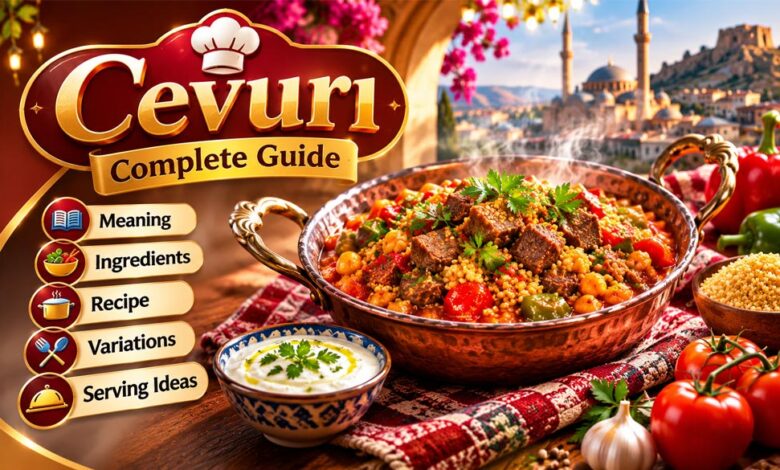

Cevurı is a food name found in some online articles about Turkish and Anatolian-style cooking. Some sources describe it as a meal made with grains, vegetables, beans, and meat. Others describe it as a meat dish cooked with tomatoes and peppers.
However, there is no clearly confirmed traditional recipe under the exact name Cevurı. Its exact origin is also unclear.
This guide explains what Cevurı is, the ingredients linked with it, how it may taste, and how you can make a Cevurı-inspired meal at home.
What Is Cevurı?
Cevurı is a food name that is mostly found online. It is usually linked with Turkish or Anatolian-style home cooking.
There is no single agreed recipe for it.
Some sources describe Cevurı as a filling meal made with bulgur or another grain, vegetables, chickpeas or lentils, and sometimes meat. These versions are usually cooked slowly with water or broth.
Other sources describe something quite different. Their Cevurı is made mainly with lamb or beef, onions, peppers, tomatoes, and spices. The meat may be cooked quickly in a hot pan or slowly cooked until soft.
Because the descriptions are so different, it is difficult to give Cevurı one exact meaning.
Is Cevurı a Traditional Turkish Dish?
Some websites call Cevurı a traditional Turkish dish. Others say it comes from rural Anatolia.
However, there is not enough strong evidence to confirm these claims under the exact name Cevurı.
The sources reviewed for this guide do not clearly connect the dish with one Turkish province, town, village, or community.
There is also no standard recipe. Some versions use grains and legumes, while others are mainly based on meat.
The ingredients themselves are common in Turkish cooking. Bulgur, meat, tomatoes, peppers, onions, legumes, and yoghurt are used in many Turkish dishes.
The unclear part is the name Cevurı and its history.
For this reason, it is safer to call home recipes Cevurı-inspired instead of saying they are authentic traditional recipes.
Why Is Cevurı Difficult to Define?
Different websites describe Cevurı in different ways.
One recipe may use bulgur, lentils, chickpeas, vegetables, herbs, and some meat. Another may mainly use lamb or beef with tomatoes and peppers.
The cooking methods are also different.
A grain version may be slowly cooked until the bulgur becomes soft. A stew uses more liquid and usually needs more cooking time. A meat sauté uses higher heat and less liquid.
Traditional foods can have different versions. However, they usually have a basic recipe, known local name, or clear connection with a certain place.
That information is still unclear for Cevurı.
Cevurı and Similar Turkish Dishes
Some foods in Turkish cuisine use ingredients and cooking methods similar to those linked with Cevurı.
This does not mean these dishes are the same as Cevurı. They are useful comparisons that help explain the type of food being described.
Keşkek
Keşkek is a documented Turkish dish made mainly with wheat and meat. Different areas have their own versions. Some also include chickpeas and fat.
It is usually cooked slowly until the wheat and meat become very soft.
Some descriptions of Cevurı sound similar because they also use wheat or bulgur, meat, and slow cooking.
However, there is no good evidence that Cevurı is another name for keşkek. Keşkek has its own name, recipes, and cultural history.
Sac Kavurma
Sac kavurma is closer to the meat-based descriptions of Cevurı.
Some versions use small pieces of meat with onions, peppers, tomatoes, fat, and seasoning. They are cooked together on a hot cooking surface.
This sounds similar to descriptions of Cevurı made with meat and vegetables.
However, this does not mean they are the same dish.
Kilis Tava and Other Regional Foods
Kilis tava is another Turkish dish that combines meat and vegetables. It commonly uses minced meat, onions, peppers, tomatoes, and spices.
Eşki lahana is another regional food. It can include cabbage, meat or kavurma, bulgur, onion, and tomato paste.
Çömlekte güveç can include meat with aubergines, peppers, tomatoes, and garlic.
These examples show that many ingredients linked with Cevurı are also used in Turkish cooking. However, they do not prove the history of Cevurı itself.
Common Cevurı Ingredients
There is no fixed Cevurı ingredient list. The ingredients depend on the type of version being made.
Grains and Legumes
Bulgur is one of the grains often linked with Cevurı. Cracked wheat and rice may also be used.
Chickpeas and lentils are common choices for legumes.
They can make the meal more filling and can also be used instead of meat.
There is no proof that every Cevurı recipe must use one certain grain or legume.
Meat
Lamb and beef are common in meat-based versions. Chicken may also be used.
The type of meat affects the cooking time. Tough meat needs slower cooking to become soft. Tender meat can be cooked more quickly.
Meat is not needed in every Cevurı-inspired recipe.
Vegetables
Onions, tomatoes, peppers, and garlic are some of the most common vegetables.
Aubergine and courgette can also be added.
Tomatoes add moisture and a slightly sharp taste. Cooked onions and peppers add mild sweetness. Garlic gives the meal more flavor.
Herbs, Spices, and Fats
Common seasonings include black pepper, paprika, red pepper, cumin, dried mint, and parsley.
There is no confirmed Cevurı spice mix.
Olive oil can be used for cooking. Some versions may also use butter or animal fat.
Start with a small amount of seasoning. You can always add more after tasting the food.
What Does Cevurı Taste Like?
The taste depends on how Cevurı is made.
A grain and vegetable version can taste savory and earthy. Onions and peppers add some sweetness, while tomatoes add a slightly sharp taste.
Bulgur has a mild, nutty taste. Chickpeas and lentils make the dish thicker and more filling.
Mint and parsley can add freshness. Paprika, cumin, and red pepper can add warmth without making the food very spicy.
A version made with lamb or beef will usually have a richer taste.
The texture also changes with the amount of liquid. Less liquid can make a bulgur version similar to a soft pilaf. More liquid can make it more like a thick stew.
How to Make Cevurı at Home
There is no confirmed traditional Cevurı recipe. The recipes below are best described as Cevurı-inspired.
You can make a grain and legume version or a meat and vegetable version.
Grain and Legume Version
For about four servings, you can use:
- 1 cup coarse bulgur
- 1 cup cooked chickpeas or green lentils
- 1 medium onion
- 2 garlic cloves
- 1 green or red pepper
- 2 chopped tomatoes
- 2 tablespoons olive oil
- About 3 cups water or broth
- Dried mint
- Paprika or red pepper
- Black pepper
- Salt
- Diced lamb or beef, if wanted
Heat the olive oil in a large pan. Add the onion and pepper. Cook until they start to become soft.
Add the garlic and tomatoes.
If you are using meat, brown it before adding the bulgur and liquid.
Add the bulgur, chickpeas or lentils, and water or broth. Bring everything to a gentle simmer.
Cook until the bulgur is soft and most of the liquid has been absorbed.
Taste before serving and add more seasoning if needed.
Meat and Vegetable Version
For about four servings, use around 500g of diced lamb or beef.
You can also use onion, peppers, garlic, chopped tomatoes, tomato purée, olive oil, cumin, paprika, black pepper, salt, and water or stock.
Heat the oil and brown the meat in small batches.
Remove the meat and lower the heat. Add the onion and peppers and cook until they start to soften.
Add the garlic, tomato purée, and spices.
Put the meat back into the pan. Add the tomatoes and enough water or stock to almost cover the meat.
Cover the pan and cook gently until the meat is soft.
Stewing meat may need around 1½ to 2 hours. The exact time depends on the type and size of the meat.
If the sauce is too thin, remove the lid and cook for a little longer.
Cevurı Cooking Methods
There are several ways to prepare a Cevurı-inspired meal.
Slow Cooking
Slow cooking works well with tougher lamb or beef.
The meat cooks gently in liquid until it becomes soft. The onions, tomatoes, and peppers also soften and become part of the sauce.
Check the pan during cooking. Add a little more water or stock if it becomes too dry.
Sautéing
A sautéed version uses higher heat and less liquid.
Small pieces of meat are browned in a hot pan. Vegetables are then added and cooked until soft.
This method gives the meat more browning and creates a less saucy meal.
Grain-Based Simmering
Bulgur, lentils, and chickpeas can be cooked slowly with water or broth.
Less liquid gives the dish a texture closer to a soft pilaf. More liquid makes it more like a thick stew.
Bulgur absorbs liquid while cooking, so add more water only when needed.
Popular Cevurı Variations
Because there is no standard recipe, Cevurı can be made in several different ways.
Lamb Cevurı
Lamb can be cooked with onions, peppers, tomatoes, garlic, and mild spices.
Tougher lamb is better for slow cooking. Tender pieces can be cooked more quickly in a pan.
Beef Cevurı
Beef can be used instead of lamb.
Stewing beef needs more cooking time. Tender beef works better for a quick sauté.
Bulgur and Chickpea Cevurı
Bulgur and chickpeas make a simple and filling combination.
Tomatoes, onions, peppers, garlic, mint, and mild spices can add flavor. Meat can be added or left out.
Lentil and Vegetable Cevurı
Lentils can be cooked with tomatoes, onions, peppers, garlic, and other vegetables.
This is a simple meat-free option. Cooking time will depend on the type of lentils used.
Aubergine and Chickpea Version
Aubergine and chickpeas can also be used together.
Add tomatoes, onions, peppers, and seasoning to make a thick vegetable dish.
This version normally cooks faster than a recipe made with tough beef or lamb.
What to Serve With Cevurı
Warm bread or flatbread is a simple side, especially with a stew-style version.
Rice can be served with meat and vegetables. Bulgur is another option if it is not already part of the main dish.
Plain yoghurt adds a cool and slightly sharp taste. It works well with tomatoes, meat, and spices.
A simple cucumber and tomato salad can add freshness. Fresh parsley or cooked vegetables can also be served on the side.
These are serving ideas rather than traditional rules because there is no confirmed standard way to serve Cevurı.
Is Cevurı Vegetarian?
Cevurı can be made without meat.
Chickpeas and lentils can be combined with bulgur and vegetables to make a filling meal.
Aubergine, courgette, tomatoes, peppers, onions, and garlic are good vegetable choices.
It is better to call this a vegetarian Cevurı-inspired recipe because there is no confirmed traditional version.
Is Cevurı Gluten-Free?
Cevurı is not always gluten-free.
Bulgur and cracked wheat contain gluten because they are made from wheat.
Rice can be used instead in a gluten-free-inspired version. Broth, spices, and other packaged ingredients should also be checked if you need to avoid gluten.
Whether the meal is gluten-free depends on the ingredients used.
Is Cevurı Healthy?
There is no single answer because Cevurı does not have one fixed recipe.
Vegetables, lentils, chickpeas, and bulgur can provide fibre and other useful nutrients. Lentils and chickpeas also provide plant protein.
Meat can provide protein, but the calories and fat depend on the type and cut of meat.
The amount of oil, butter, bread, rice, yoghurt, and other sides also changes the nutrition of the meal.
For a lighter version, use more vegetables, use a smaller amount of oil, and choose lean meat when suitable. You can also replace some meat with chickpeas or lentils.
There is no good evidence that Cevurı has any special health benefits. Its nutrition depends on the actual ingredients.
Cevurı vs Çeviri
Cevurı can be confusing to search for because the Turkish word çeviri looks similar.
Çeviri is commonly connected with translation in Turkish.
There is no clear evidence showing that Cevurı and çeviri are the same word or that one came from the other.
The similar spelling can simply make search results confusing.
Why Is Cevurı Appearing Online?
Many English-language articles about Cevurı appear to be fairly recent.
Some connect the name with rural Anatolia, family recipes, simple food, and old traditions.
However, their recipes can be very different.
One website may describe a grain and legume dish. Another may describe meat cooked with vegetables.
When many websites repeat the same information, it can start to look like a confirmed fact. But repeated information is not always proof.
Cevurı may have a local, family, or spelling connection that has not been properly recorded. At the moment, there is not enough evidence to say this for certain.
How to Check Cevurı Claims Online
Be careful when a website makes very specific claims about the history of Cevurı without giving a good source.
A stronger food history should usually have a clear local name and connection with a province, town, village, or community.
It also helps when different reliable sources describe a similar basic recipe.
Regional food records, historical cookbooks, cultural organizations, academic research, local archives, and people from the community can provide stronger evidence.
Claims about ancient origins, festivals, weddings, or recipes passed down for hundreds of years need especially strong evidence.
Several of these details are still missing for Cevurı. It is better to say that its history is unclear than to create an origin that cannot be confirmed.
Bottom Line
Cevurı is a food name found online and linked with Turkish and Anatolian-style cooking. However, there is no clearly confirmed traditional recipe or regional history under this exact name.
Some descriptions use bulgur, chickpeas, lentils, vegetables, and optional meat. Others describe a meat dish made with tomatoes, onions, and peppers.
These ingredients are common in Turkish cooking, but this does not prove that Cevurı is another name for an established Turkish dish.
You can still make a Cevurı-inspired meal at home. Just remember that the recipe is an interpretation while the exact history and meaning of Cevurı remain unclear.
Frequently Asked Questions
What is Cevurı?
Cevurı is a food term found online. It is usually linked with Turkish or Anatolian-style dishes made with grains, vegetables, legumes, and sometimes meat.
Is Cevurı really a Turkish dish?
Some websites describe it as Turkish or Anatolian. However, a traditional dish under the exact name Cevurı has not been clearly confirmed.
What ingredients are used in Cevurı?
Common ingredients include bulgur, chickpeas, lentils, onions, tomatoes, peppers, garlic, herbs, and spices. Some versions also include lamb, beef, or chicken.
Is Cevurı made with meat?
Not always. Some versions use lamb, beef, or chicken. Others use grains, legumes, and vegetables without meat.
What does Cevurı taste like?
It depends on the recipe. Grain versions can have a mild, earthy, and slightly nutty taste. Meat versions are usually richer and more savory.
Can Cevurı be vegetarian?
Yes. A Cevurı-inspired vegetarian version can use bulgur, lentils, chickpeas, aubergine, tomatoes, peppers, and other vegetables.
Is Cevurı gluten-free?
Not always. Bulgur and cracked wheat contain gluten. Rice can be used for a gluten-free-inspired version.
What is the difference between Cevurı and keşkek?
Keşkek is a documented Turkish dish made mainly with wheat and meat. Cevurı is less clearly defined, and there is no reliable evidence that Cevurı is another name for keşkek.
What Is content://cz.mobilesoft.appblock.fileprovider/cache/blank.html? Is It Safe?
Platform Event Trap: Meaning, Security Uses, Benefits, and Limitations