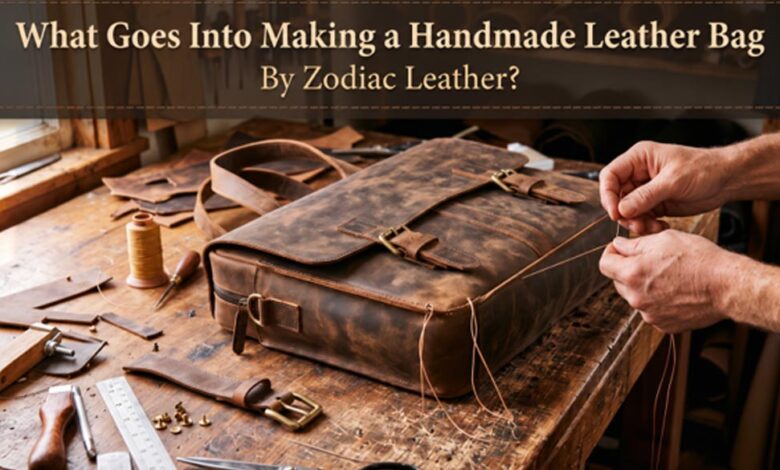

You are comparing two brown leather bags for work. Both have a front flap, metal buckles, and neatly stitched handles. One is described as handmade, but the product photographs reveal little about how it was put together. Before choosing, you want to know what is actually worth checking.
A handmade leather bag is built through material selection, pattern cutting, panel preparation, stitching, assembly, and finishing. The quality of the result depends on how those decisions work together. Inspect the leather, seams, handle attachments, hardware, and interior construction. These details reveal more about workmanship than the word handmade alone.
Executive Full Grain Leather Laptop Briefcase in brown, by Zodiac Leather.
How a Handmade Leather Bag Is Made?
A finished bag may look simple, but its construction involves several separate decisions. The maker must determine its shape, dimensions, materials, attachment points, and how the different components will fit together.
These decisions affect how the bag looks, feels, and functions.
1. Selecting the Right Leather
Leather selection affects the structure and appearance of the finished bag.
Buffalo, cowhide, and goat leather are different sources of hide or skin. They should not be confused with leather grades or surface treatments. Even leather from the same animal can vary in thickness, flexibility, and finish.
Full-grain leather retains its natural grain surface without corrective mechanical removal. This describes a characteristic of the material, not the strength of the stitching or hardware used in a finished product.
For example, a full grain leather bag may have a desirable surface appearance but still be poorly constructed if its handles or seams are weak.
When examining leather, look for a surface appropriate to the bag’s design. A structured briefcase may need different characteristics from a soft shoulder bag.
Ask the seller to identify the leather and explain how its finish should be maintained.
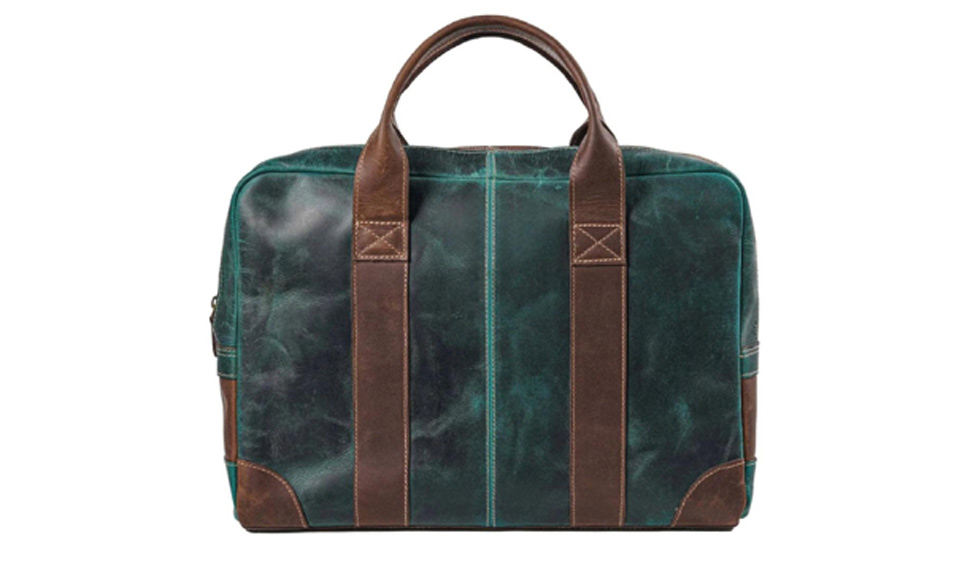 Leo Full Grain Leather Laptop Briefcase in green, by Zodiac Leather.
2. Cutting and Preparing the Panels
A leather bag consists of individual components that must fit together.
Depending on the design, these can include front and back panels, side gussets, a base, handles, straps, pockets, and a flap.
Accurate cutting helps the components align during assembly. Poorly matched panels can create uneven seams, a crooked flap, or an irregular shape.
You can inspect this even when shopping online.
Look at a straight-on photograph of the bag. Compare the position of its handles, pockets, and closure fittings.
Check whether the flap sits evenly and whether the two sides appear balanced.
A handmade product can have small visual variations. However, obvious misalignment should not automatically be accepted as a feature of handwork.
3. Stitching the Components Together
Stitching joins many of the components that give a bag its shape.
The visible appearance of stitching matters, but it is only part of the evaluation.
Thread, seam construction, stitch placement, and reinforcement all influence how well a stitched area performs.
Inspect the stitching around pockets, flaps, side panels, and the bag’s base.
Look for loose thread ends, skipped stitches, large gaps, or visible separation between components.
An even stitch pattern is a useful sign of careful finishing. It is not proof that the seam can withstand every type of load.
This distinction matters when comparing handmade leather bags. A product can look neat in photographs while leaving important construction details unexplained.
Ask the seller about reinforcement at attachment points rather than judging workmanship from stitching alone.
Why Handles and Straps Matter So Much?
Handles and shoulder straps deserve particular attention because they transfer the weight of a loaded bag to the person carrying it.
When a bag is lifted, the attachment points experience force. Over repeated use, these areas may face pulling, movement, and friction.
That makes their construction especially important.
Inspect the Load-Bearing Areas
Start with the places where handles meet the bag’s main body.
Check for secure attachment, suitable reinforcement, and visible signs of separation.
Where rivets or other mechanical fasteners are used, examine their placement and how they interact with the stitched components.
Not every bag requires the same reinforcement method. A lightweight personal bag and a work bag intended to carry heavier contents may have different structural needs.
For shoulder straps, examine the connection between the strap, its metal fittings, and the body of the bag.
If those areas are not shown in product photographs, request a close-up image.
A useful question is whether damaged straps or attachment fittings can be repaired or replaced.
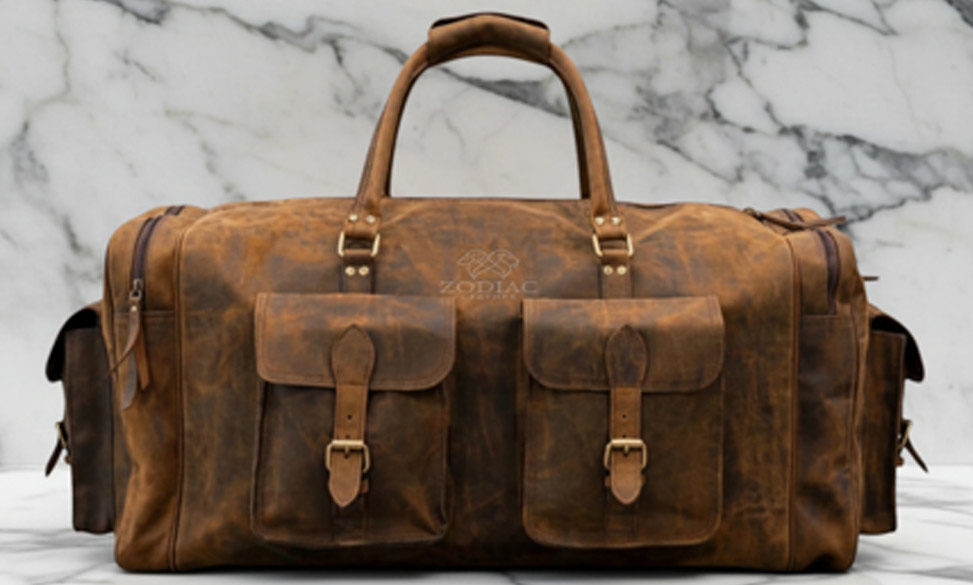
Amelia Vintage Rough Leather Duffle Bag in brown, by Zodiac Leather.
Hardware and Edge Finishing Complete the Construction
Buckles, zippers, rivets, and other fittings may seem like minor details. In daily use, however, they determine how easily the bag opens, closes, adjusts, and carries its contents.
Check How the Hardware Functions
If examining a bag in person, open and close its fasteners several times.
A zipper should move smoothly without repeatedly catching. A buckle should close securely and align with its corresponding strap.
For online purchases, look for clear photographs of the fasteners and ask what materials are used.
A shiny finish does not identify the metal beneath it or guarantee durability.
Hardware should be assessed by its function, material, and attachment, not simply its appearance.
Understand Leather Edge Finishing
Cut leather edges can be treated in different ways, including burnishing, painting, or folding.
The appropriate method depends on the leather and the construction.
Inspect the edges of handles, pockets, straps, and flaps.
Look for peeling coatings, obvious gaps, or inconsistent finishing along areas that are intended to have the same treatment.
A decorative edge finish should be neat, but appearance is not the only consideration. Areas exposed to repeated bending and friction also need suitable construction.
Rajasthan’s Place in Handcrafted Leather Goods
Knowing where a bag is made gives buyers useful information about its origin. It also provides an opportunity to learn about the people and production decisions behind an accessory.
Rajasthan, India, is the production location for Zodiac Leather, a brand offering handcrafted leather bags made using materials that include buffalo, cowhide, and goat leather.
This geographic connection gives the brand a clear part of its identity. However, a production location alone does not establish the quality of a finished product.
For buyers interested in handcrafted leather bags, a better approach is to consider origin alongside construction, material descriptions, product specifications, and seller transparency.
Ask where the bag is made, what leather is used, and what information is available about its construction.
A credible product description should help answer those questions without relying entirely on broad claims about heritage or craftsmanship.
The Interior Matters as Much as the Exterior
A well-finished exterior can attract attention, but the interior determines much of a bag’s everyday usefulness.
The lining, internal compartments, pocket construction, and usable dimensions all deserve inspection.
Look Beyond the Laptop Size Label
A leather Laptop bag advertised for a 15-inch laptop may not fit every laptop with a 15-inch screen.
Screen measurements do not tell you the exact external width, depth, and thickness of the device.
Measure your laptop and compare those dimensions with the usable internal space of the intended compartment.
Allow room for the device to enter and leave the bag comfortably.
Also check whether the laptop compartment offers the protection you need. A leather exterior does not automatically mean the interior has adequate padding.
Examine the Interior Construction
Look at photographs of the lining, pocket edges, seams, and compartments.
Check whether the available organization suits what you carry.
A bag with many pockets is not necessarily more useful than one with fewer, better-positioned compartments.
If the interior is not clearly shown, request additional photographs before purchasing.
Handmade Does Not Automatically Mean Better
The word handmade describes how some or all of a product is made. It is not a guarantee of superior construction.
Machine-assisted production can also achieve precise cutting, consistent stitching, and dependable assembly.
Both approaches depend on appropriate materials, design, and execution.
There are situations where leather may not be the most practical choice.
Someone regularly exposed to heavy rain may be better served by a purpose-built waterproof bag. A person carrying heavy equipment over long walking distances may prefer a lightweight technical backpack.
Leather also needs care suited to its surface treatment and use conditions.
The right material is the one that meets the buyer’s needs, not necessarily the one with the most appealing description.
A Practical Checklist Before Buying
A good buying decision should combine appearance with observable details.
Before choosing a handmade leather bag, check the following:
- Leather identification: Does the seller explain the material and finish?
- Panel alignment: Are the flap, pockets, handles, and seams positioned consistently?
- Stitching: Are there skipped stitches, loose threads, or visible gaps?
- Load-bearing points: Are handles and straps securely attached and suitably reinforced?
- Hardware: Do the fittings appear functional and appropriate for their purpose?
- Edge finishing: Are exposed edges treated consistently?
- Interior fit: Do the compartments accommodate the items you actually carry?
- Seller information: Are care instructions, warranty terms, and repair options clearly explained?
When shopping online, use close-up photographs, measurements, and direct questions to resolve uncertainties.
A handmade label may describe part of the production process. It is the combination of materials, construction details, and practical design that helps you judge whether a bag is suitable for everyday use.