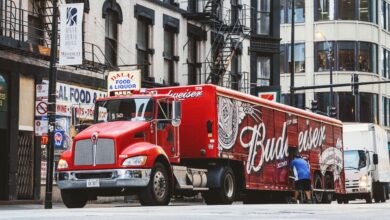

Brand stills tend to fail in the same way. The picture looks fine as a thumbnail, and the headline is wrong. A letter is missing, a date is garbled, or the product name is nearly right. When the type is baked into the image, a caption box can’t fix it. You have to generate again or rebuild the file in a layout tool.
PixelDojo’s Seedream page at /seedream-4, fetched 18 November 2026, is a short tool page for Seedream 4.5 rather than a long marketing article. The H1 and the page title both say Seedream 4.5. Its one line of product copy is short too: “Seedream 4.5 makes beautiful images and gets the words in them right.” That’s the vendor’s claim about its own tool, so the honest test is your real headline, in quotation marks, read letter by letter when the file comes back. This article sticks to what that page and PixelDojo’s pricing page show. It isn’t a lab review, and it doesn’t add features the tool page doesn’t document.
What the live page actually shows
The generator is set to Auto 2K, and the cost shown on the page is 1.25 credits per image. There’s an image input labeled “Add image,” and a random seed control. The page also links to a Seedream 4.5 prompting guide. This article doesn’t borrow recipes from that guide. It’s enough to know the guide is there if you want PixelDojo’s own prompting patterns.
A 2K still is a practical size for social posts, a newsletter header or a slide. On its own it isn’t a poster-sized print file. If you need print, work out the inches from the pixel dimensions you actually get, at 300 dpi, before anything goes to a printer.
The tool page doesn’t publish a longer list of sizes, reference limits or edit modes, so read those details off the on-screen controls when you open the tool. Don’t assume a feature documented for a different Seedream version applies here.
The prompting habit that still helps, on any model sold on lettering, is simple. Say what the piece is first (a pack shot, a poster, a square announcement). Put every word that must print in quotation marks, and say where it goes. Keep the line short; a product name and one date stand a better chance than a paragraph. Then proofread the file, including the small line you’d normally skim past.
What 1.25 credits means on a monthly plan
Seedream 4.5 is listed among the image models on PixelDojo’s pricing page. Plans are Lite at $10 a month for 160 credits, Pro at $25 for 500 and Pro Max at $50 for 1,100. Credits roll over while you stay subscribed. A credit on Pro is 5 cents, so 1.25 credits comes to 6.25 cents an image. On Lite, at 6.25 cents a credit, 1.25 credits is about 8 cents (7.8125 cents). The tool shows the credit cost before you generate.
On the $25 plan, 500 credits cover 400 images at 1.25 credits each. On Lite, 160 credits cover 128 images. Those figures assume you keep every still, which nobody does. A more realistic pattern is to generate a few versions of one brief, pick the one with correct lettering, and stop. A handful of retries is cheap at this rate, and that’s the practical reason to proofread instead of hoping the first file is right.
A free PixelDojo account gets three photo or video effects a day, with a small watermark. That isn’t the same as free Seedream 4.5 stills. The 1.25 credit price starts with the paid plans.
If a still needs a different model, PixelDojo’s pricing page is where to compare credit rates. This article doesn’t borrow those rates for Seedream 4.5, because the live /seedream-4 page is the one showing 1.25 credits and Auto 2K.
Rights, labeling and a clean first test
PixelDojo’s terms, version 6, effective 4 November 2026, assign you whatever rights the company holds in the output. The terms don’t promise the result is unique or free of other people’s rights, and you are responsible for how you use it. Where a platform or the law requires you to label synthetic media you publish, you must label it. For a brand still, that also means not presenting a generated person as a real customer, and not putting a real person’s face into a campaign without the rights and consents the law requires.
A sensible first test is one Auto 2K image at 1.25 credits, with your real product name and a short line in quotation marks, set in a clearly imaginary scene or on a pack shot you already have the rights to use. Read every letter. If a word comes out wrong, change one thing in the prompt and run it again rather than piling on more text. PixelDojo is the live tool page for that pass, and the credit cost is visible before you generate.
A 2K still with correct type won’t replace a designer, a font license or a final brand check. At 1.25 credits an image, though, it’s a cheap way to find out whether the words hold before you build a whole set of posts around a file nobody has proofread.