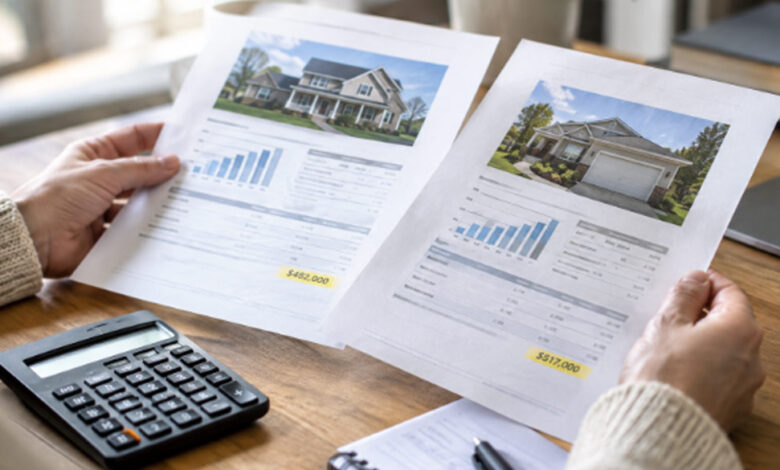
Why Online Home Estimates Rarely Match: A Practical Guide to Building a Realistic Value Range

Checking your home’s value online is fast, but seeing several different numbers for the same address can be confusing. A review of Kelley Blue Book Homes estimator accuracy helps illustrate an important point: an online estimate is a useful research tool, not a promise of what a buyer will pay or what a home will appraise for.
The most productive goal is not to hunt for one perfect number. It is to create a reasonable value range by comparing estimates, confirming property details, studying recent closed sales, and considering the condition and competition surrounding your home.
Why Online Home Estimates Rarely Match
Different real estate websites may rely on different public records, sales databases, update schedules, and formulas. One model may place more weight on the newest nearby sale, while another may put greater emphasis on square footage, tax records, or broader neighborhood trends. A home that is currently listed can also have more current market data available than an off-market property.
Small percentage differences can produce a meaningful dollar gap. For example, a 5 percent difference between two estimates on a $500,000 home equals $25,000. That does not automatically mean one website is wrong. It may mean that the tools are working from incomplete, outdated, or differently weighted information.
How Automated Valuation Models Work
An automated valuation model, often called an AVM, is software that estimates a property’s likely market value from available data. It may analyze a home’s prior sales, public records, location, size, basic features, and recent transactions involving nearby properties.
AVMs are helpful for getting a quick starting range, especially in neighborhoods with many recent sales of similar homes. They are less dependable when a property is unusual, recently renovated, located in an area with few sales, or affected by details that public data does not capture. The limited transparency around model inputs and methods can also make it harder for consumers to understand why a particular estimate changed.
What Data Can Change a Home Estimate
Before relying on any estimate, confirm that the property record is reasonably accurate. Common details that can affect the result include:
- Living area, lot size, bedroom count, and bathroom count
- Year built, construction style, and number of stories
- Garage spaces, finished basements, attics, decks, pools, or accessory units
- Recorded permits, ownership history, and property tax updates
- Recent nearby sales and the supply of competing homes for sale
- Local buyer demand and changes in market activity
A missing bathroom, an unrecorded addition, or an incorrect square footage figure can distort the comparison set an online model uses.
Why Property Condition Still Matters
Two homes can have the same layout, age, and approximate size but command different prices. Buyers often react strongly to condition, maintenance, natural light, views, landscaping, kitchen and bathroom updates, roof age, flooring, windows, and major mechanical systems.
For instance, two similar houses on the same block may appear to be the same in public records. If one has a renovated kitchen, updated bathrooms, and a recently replaced roof while the other needs substantial work, their likely sale prices may differ. Online systems may not fully recognize those distinctions, particularly when renovations were not recorded in data sources they use.
How to Compare Online Estimates
Do not simply average every number you find. Instead, use a deliberate review process:
- Record each estimate and the date you checked it.
- Verify the address, square footage, beds, baths, lot size, and other core facts.
- Note whether the home is listed for sale or off the market.
- Review any confidence range or estimate range the service provides.
- Identify large gaps between the results.
- Look for incorrect property data or weak comparable sales that may explain the gap.
How Recent Comparable Sales Help
Comparable sales, often called comps, are recently closed transactions involving homes that resemble yours. Closed-sale prices generally provide stronger evidence than asking prices because an asking price shows a seller’s expectation, while a closed price reflects an actual completed transaction.
Look for several sales with similar size, age, layout, lot characteristics, location, and condition. A nearby sale is not automatically a good comp if it is much larger, fully remodeled, located on a busier street, or involved a distressed sale. Reviewing three to five reasonably similar transactions is usually more useful than focusing on one sale.
When Local Market Trends Matter Most
Local conditions can influence how buyers respond to a home. Inventory levels, days on market, price reductions, and recent buyer activity may affect the amount of competition a seller faces. Still, neighborhood-wide trends do not apply identically to every property.
Use older sales carefully when the market is moving quickly. A sale from many months ago may provide context, but more recent comparable transactions usually deserve closer attention. Compare the market data with your home’s own features, condition, and likely buyer appeal.
When to Request a Professional Appraisal
An online estimate, a real estate agent’s comparative market analysis, and a formal appraisal serve different purposes. An online estimate provides a quick automated reference point. A comparative market analysis can help with pricing and marketing decisions. A licensed appraiser develops a professional opinion of value for a defined purpose and date.
A formal appraisal may be appropriate for refinancing, estate planning, divorce, tax disputes, certain legal matters, or other decisions with significant financial consequences. As discussion of AI home value estimates and appraisals makes clear, speed and data analysis do not replace property-specific professional judgment when an official or independent opinion is needed.
A Simple Home Value Check
- Gather at least two current online estimates.
- Check public records for inaccurate property details.
- List upgrades, repairs, and condition concerns.
- Review three to five recent nearby comparable sales.
- Check local inventory and typical time on market.
- Create a realistic range rather than selecting one exact figure.
- Seek professional input when the decision carries substantial financial or legal risk.
Common Questions About Online Home Estimates
Why do home estimates differ by website?
Each service may use different data sources, update schedules, comparable sales, and assumptions about your property and neighborhood.
Can an online estimate be used as a listing price?
It can help establish an initial range, but it should be checked against recent local sales, property condition, and active competition before setting a listing price.
What makes an online estimate less reliable?
Unusual properties, rural locations, few recent sales, rapidly shifting markets, inaccurate records, and unreported renovations can all reduce reliability.
Is a professional appraisal always more accurate?
An appraisal is a structured professional opinion for a specific purpose. Its quality still depends on the available market evidence and the appraiser’s analysis of the property.
How often should a homeowner check property value?
A value review can be useful before selling, refinancing, appealing an assessment, planning a move, or making a major financial decision involving home equity.
Conclusion
Online home estimates are most useful when treated as the beginning of research, not the final answer. Combine multiple estimates with accurate property information, recent comparable sales, current local conditions, and professional guidance when necessary. A well-supported range is more realistic and more useful than a single number viewed without context.