When Your Garage Door Hesitates or Reverses: A Practical Diagnostic Guide for North Texas Homes

A garage door that shudders, reverses at the floor, or refuses to budge is more than an inconvenience. In North Texas, daily temperature swings, dust, and humidity shifts amplify small issues inside door systems. Metal contracts overnight, lubricants thicken, and photo eye lenses collect a fine film that confuses safety sensors. Before you assume the opener has failed, a few targeted observations can reveal whether the trouble stems from torsion springs, rollers and tracks, lift cables, travel limits, or the sensors that prevent the door from closing on obstacles. Use the steps below to identify patterns, act safely, and decide when hands off professional repair is the right move.
-
Early signs you can observe without tools
Homeowners in Keller TX often first notice hesitation on cold mornings, when metal contracts and thickened grease makes rollers drag in the tracks. Another early sign is a door that starts closing, then reopens with blinking LEDs on the opener head, indicating the photo eyes think something is in the way. Listen for a grinding rumble that grows louder near the halfway point; flat spotted steel rollers or dry hinges commonly cause this. Watch the bottom seal as the door lands. If one side touches the slab while the other side floats, the door may be out of level or the lift cables are stretching unevenly. A sudden loud bang from the garage followed by a door that is extremely heavy to lift often points to a broken torsion spring.
-
What those symptoms often mean at the component level
Heaviness and a door that will not stay halfway open usually indicate weakened or broken torsion springs. The springs are designed to counterbalance the door weight through drums and lift cables; when tension is off, the opener strains and safety systems may trip. Reversals at the floor with no visible obstruction often trace to misaligned photo eyes, dirty lenses, or travel limits set too short after a new bottom seal was installed. A chattering sound near the opener rail can signal a loose trolley, worn sprocket, or a chain that needs adjustment, while sharp scraping during travel may come from a track that has shifted on its lag bolts. If you see frayed lift cables near the bottom brackets, stop using the door; a cable can unravel at the drum and leave the door crooked in the tracks.
-
Safe checks you can perform in minutes
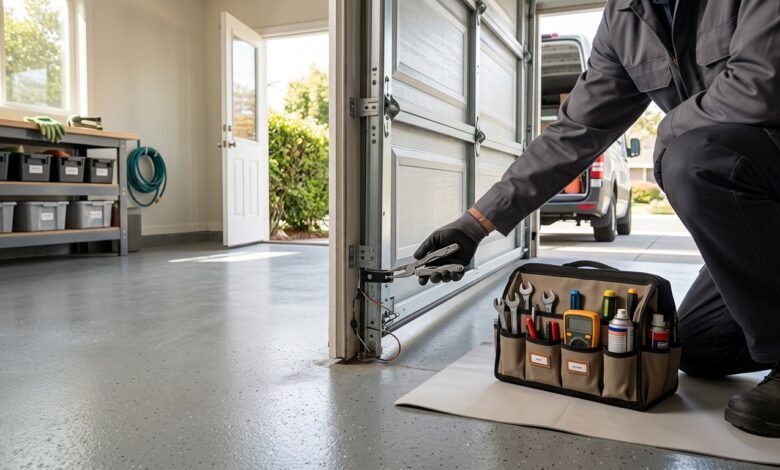
Start with the photo eyes. Each unit should have a steady indicator light when aligned and powered; if one flashes, gently nudge the bracket until the lights match. Wipe both lenses with a soft microfiber cloth to remove dust. Next, pull the emergency release cord with the door fully down and try a manual lift. A healthy, balanced door should come up smoothly and stay roughly at mid height without flying up or crashing down. Inspect the tracks for pebbles and the rollers for flat spots or missing bearings. Lightly lubricate roller stems, hinges, and the torsion spring coils with a garage door safe spray; avoid household degreasers that wash away grease. Do not loosen set screws or touch the winding cones on the spring shaft. If you recently replaced weatherstripping, recheck the opener’s travel limit rather than increasing close force to overcome new friction.
-
When to stop troubleshooting and call a technician
Stop immediately if you see a gap in a torsion spring, a cable that has jumped the drum, the top section bowing near the center strut, or the door tilting in the opening. These conditions can escalate quickly and put fingers and property at risk. Adjusting torsion springs, drums, and bearing plates requires specialized bars and procedures; DIY attempts commonly round set screws or allow the shaft to spin unexpectedly. If only one of a matched pair of torsion springs has failed, many homeowners elect to replace both so cycle counts and lift characteristics remain even. Likewise, an opener that only closes when you hold the wall console button often points to a sensor circuit issue that needs proper diagnosis rather than a bypass. Children and pets in the home raise the urgency: unreliable safety sensors should be corrected before the next use.
Seasonal maintenance that prevents repeat issues in North Texas
Timing small tasks to the local climate helps doors run smoothly year round. Before the first heat wave, clean the photo eyes and reapply a silicone or lithium based garage door lubricant to rollers, hinges, and spring coils so thickened grease does not slow the door on cooler mornings. As high humidity arrives, watch for swelling in wooden jambs that can pinch tracks; snug lag bolts if brackets loosen. After windy days, sweep the tracks and check the bottom seal for tears that let grit collect along the slab. If you upgrade from steel to nylon rollers, you will typically reduce vibration and noise at the trade off of a higher upfront part cost. Finally, a quick fastener check on hinges, top fixtures, and bearing plates each season can prevent panel cracks along hinge lines and keep the opener from masking developing balance problems.
Two realistic situations highlight why targeted checks matter. First: your door starts down at night, reverses, and the opener light blinks. Cleaning the photo eye lenses and realigning the brackets usually resolves it without touching force settings. Second: you hear a pop on a weekday morning and the door will not lift more than a few inches. That break likely occurred in the torsion spring; leave the door closed and schedule service to avoid straining the opener motor or warping the top section. Small, safe observations like these shorten repair time, reduce risk, and keep daily routines on track.
<iframe src=”https://www.google.com/maps/embed?pb=!1m18!1m12!1m3!1d3348.648841033587!2d-97.2121074!3d32.9338749!2m3!1f0!2f0!3f0!3m2!1i1024!2i768!4f13.1!3m3!1m2!1s0x864dd7737a04b991%3A0x94d9133237cd4b2c!2sWelborn%20Garage%20Door%20Repair!5e0!3m2!1sen!2s!4v1785688380558!5m2!1sen!2s” width=”600″ height=”450″ style=”border:0;” allowfullscreen=”” loading=”lazy” referrerpolicy=”strict-origin-when-cross-origin”></iframe>