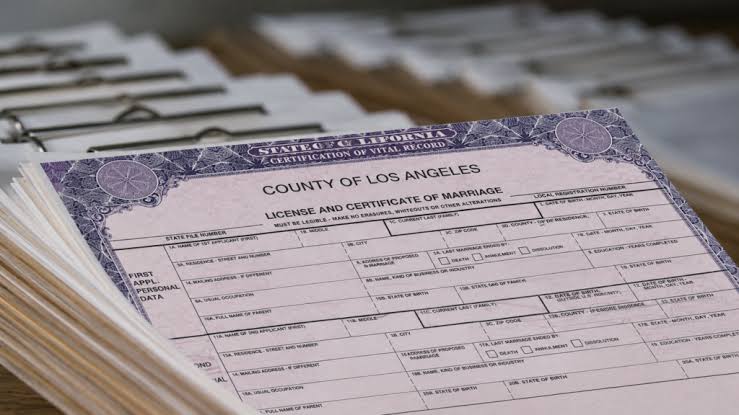

A California birth or marriage record may need to pass through two offices before it can be used overseas. The office holding the record issues the certified copy, while the California apostille from the Secretary of State authenticates the official’s signature on that copy, rather than the information it contains.
The main risk is reaching the apostille stage with a copy that cannot be accepted abroad. The process below follows the key steps, from confirming the required record and obtaining a certified copy to preparing the submission, arranging any necessary translation, and avoiding common reasons for rejection.
Ask the Receiving Authority Which Records It Accepts
The consulate, registry, or ministry that will receive the record determines which documents it accepts. The California Secretary of State authenticates eligible signatures but does not determine whether the record meets the destination’s requirements.
Four questions help clarify what you need for documents for residency abroad:
- Record type. Does the receiving authority require a birth certificate, a marriage certificate, or both? Will it accept an authorized certified copy, or does it specify another type?
- Names. Must the names on the record match the spelling used in the overseas application, particularly if a maiden name and a married name both appear?
- Issue date. How recently must the record have been issued? California does not set the receiving authority’s deadline.
- Destination instructions. Does the authority require a translation, further consular legalization, or a specific number of copies?
Obtain the Correct California Certified Copy
Where to request a record depends on how long ago the event took place. For birth certificates, California recommends contacting the county health department or county recorder during the first three months; for marriage certificates, the county recorder during the first six months. State-level records may become available later.
Before submitting a copy for apostille, check its certification format and the signature it bears. The two points below explain what to look for in each case.
Certified Copies and Ordinary Photocopies
A certified copy is issued by the office holding the record and bears its official certification. The California Secretary of State does not accept ordinary photocopies for apostille processing.
California issues two types of certified copies. An authorized copy can be used to establish the identity of the person named on the certificate. An informational copy contains the same information, although certain details may be redacted, and bears the stamp.
If you are eligible, request an authorized copy when the receiving authority requires one. For mail-in requests to the California Department of Public Health, include the notarized sworn statement; applications submitted without it are returned unprocessed.
When Additional County Certification May Be Needed
Sacramento holds specimen signatures for some California officials and not others. For birth and death certificates, it can certify county clerks, county recorders, their deputies and the State Registrar, and that list governs a birth certificate apostille in California.
Read the foot of the certificate, where the official’s signature, name, and title appear. A copy signed by a health officer or a county registrar falls outside the list, and two routes fix it: certification by the county clerk in the county of issue, or a fresh copy from the county recorder.
A marriage certificate apostille needs its own inquiry, since the published list covers birth and death certificates. Confirm the route before posting, particularly for a confidential marriage, whose certificate the county clerk holds and releases to the couple.
Prepare the Apostille Submission
A mail submission to the Notary Public Section carries four things: the document, a cover sheet, payment, and a return envelope. A package lodged through California apostille services carries the same four.
The fee is $20 for each apostille requested, by check or money order to the Secretary of State, and an in-person request adds $6 for each different official’s signature authenticated.
Two parts need separate attention: what the paperwork states, and how the document travels in each direction. Let’s begin with what the request has to say.
Request Information and Destination Country
The cover sheet carries the destination. It names the country in which the document will be used, and a California vital records apostille request with that field blank gives Sacramento no way to issue the right certificate.
Delivery and Return Arrangements
Return postage is the applicant’s arrangement. The request includes a self-addressed envelope, and without prepaid postage the document comes back by regular mail, untracked.
The address depends on the carrier: Postal Service mail to P.O. Box 942877, Sacramento, CA 94277-0001, and couriers to 1500 11th Street, Sacramento, CA 95814.
Mailed requests are processed in the order received, while same-day service is available in person at the Sacramento and Los Angeles offices.
Coordinate Translation With Authentication
Translation belongs to the destination, and California plays no part in approving it. The Secretary of State certifies the signature on the document in front of it, so a translation is a document of its own.
Sequence is the decision, so ask the receiving authority two things before anything is translated:
- Whether the certificate, the apostille, or both have to be translated.
- Whether the translation itself needs notarizing and certifying.
Translating too early is a common waste. A certificate translated before the apostille leaves the apostille untranslated, and a destination wanting both asks for the work twice.
Avoid Errors That Delay an Overseas Application
The common failures are visible before a package is posted:
- The wrong copy. An informational copy, a photocopy, or one signed by an official whose signature Sacramento does not hold.
- A mismatched name. A maiden name on the certificate against a married name on the application, with nothing linking them.
- An incomplete request. A missing cover sheet, a country left unnamed, payment that does not match the number of apostilles, or no return envelope.
- A missing sworn statement. A mail request for an authorized copy lodged without the notarized statement.
The state vital records office averages five to seven weeks for a certified copy, so re-ordering after a refusal is a detour rather than a correction.
Clearing this list obliges nobody abroad to accept the file. The receiving authority applies its own rules on recency, format, and translation, which a correctly apostilled record still has to meet.