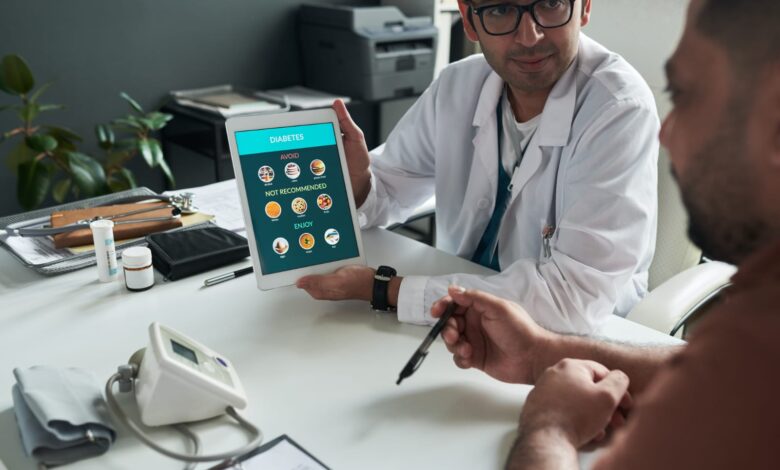

A chronic care management platform is a platform that is designed to facilitate the management of chronic conditions over time, coordinating for healthcare providers. It integrates care planning, patient communication, clinical monitoring, documentation, and team coordination into a cohesive process.
Chronic care management can be more proactive and consistent with the right platform for practices dealing with increasing patient populations like diabetes, hypertension, heart disease, and COPD. In an unconnected approach to calls, spreadsheets, and manual documentation, care teams can find and take action on patient needs earlier with a centralized system.
What Is a Chronic Care Management Platform?
A chronic care management platform is an online tool that can assist in the continuous care of patients with chronic conditions. It generally provides care teams a single view of patient info, care plans, outreach activity, clinical tasks, and follow-up needs.
The best platforms don’t just store information! They enable the conversion of patient information and health care team interactions into actionable workflows, helping to facilitate communication, coordination, and risk identification between patient visits.
Why Healthcare Providers Use CCM Platforms
Important information in EHR notes, calls, patient messages, and separate monitoring systems makes chronic disease management challenging. A centralized platform allows the care team to have a more organized approach to repeat activities.
The following are typical motivations for providers to use these platforms:
- Multiple clinician or specialist coordination of care
- Having personalised care plans
- Automatizing things that are done manually in the administrative process.
- Supporting proactive patient reach-out
- Monitoring of non-clinical (clinical) care activities
- Improving documentation consistency
- Linking remote monitoring to chronic care processes.
- Determining who to intervene in the patient’s recovery
It’s not about just adding another software system. A helpful platform should decrease splintering and make it simpler for care teams to keep a consistent process on patient needs.
Core Features of a Chronic Care Management Platform
Comprehensive Care Planning
The best platform should enable care teams to develop and take care of specific care plans. These plans may contain diagnoses, goals, interventions, information about medications, symptoms, follow-up needs and more.
It is also important that care plans are easily modifiable. Chronic conditions can vary over time, meaning that a document that is static will not be as useful as a living plan in keeping track of the patient’s current clinical condition.
Patient Engagement and Outreach
Chronic care management centers around regular patient-engagement. Platforms can support care teams in coordinating outreach, recording interactions, keeping track of unmet needs, and communicating to follow up. But, automation must be meant to assist clinical staff and not supplant meaningful patient interaction.
EHR Integration
Another important factor to consider is EHR integration. A seamlessly connected platform can help streamline relevant patient data and minimize redundant data entry. Organizations should check the list of EHRs supported and the information that can be shared before choosing a solution.
Task and Workflow Management
Chronic care requires repetitive activities like outreach, medication reviews, appointment coordination, referrals, and follow-up calls. These activities should be seen by the appropriate team members through a platform.
Task ownership is important, as an unassigned task can be more than an administrative inconvenience. It may put off an intervention that might stave off an unnecessary escalation of care.
Reporting and Documentation
Healthcare organizations must have a view of patient care and program performance. Reporting capabilities can enable managers to track outreach, activities completed, issues remaining, patient engagement, and more.
Documentation also helps to provide a clearer picture of the care activities that have been undertaken by the care team. This is especially applicable to organisations that are running reimbursable care management services.
How a CCM Platform can help with pro-active care
Traditional care typically focuses on the care provided at appointment times. Chronic care management takes that connection to visits that much further by providing care teams with a structure to follow when monitoring and engaging patients.
This provides a great example of the difference between data and better care: data alone does not equal better care. The added value lies in bringing data to a set clinical endpoint, in assigning a responsibility and in assessing whether or not the problem has been solved.
Benefits for Care Teams and Patients
A well-designed platform can provide operational benefits all the way along the care journey.
Improved consistency in follow-up by patients
Keeping patients from slipping through the cracks between appointments can be avoided with automated workflows and task management. Outreach can be seen by care teams and necessary outreach can be provided.
Better Care Coordination
Patients with multiple chronic conditions may see primary care providers, specialists, pharmacies, hospitals, etc.Patients with multiple chronic conditions may consult their primary care providers, specialists, pharmacies, hospitals, etc. Communication and follow-up may be more coordinated with a centralized workflow.
Earlier Identification of Risk
By having patient information reviewed regularly, not just at meetings, then changes that are occurring may be seen earlier. This can provide chances for intervention without a problem becoming a bigger event.
Improved Scalability
As the number of students participating in a manual CCM program grows, managing the program can become challenging. Technology can standardize the workflow and provide organizations with a blueprint to extend chronic care without completely overhauling workflows.
Understanding Medicare CCM Requirements
Technology can be used to assist in CCM operations, but it is not a criterion for Medicare reimbursement. Providers are still required to comply with any applicable CMS requirements and documentation standards.
Medicare will generally provide coverage for CCM services when the two or more chronic conditions are likely to persist at least 12 months or until the patient dies and cause a substantial risk of death, acute exacerbation or decompensation, or functional decline.
The CCM workflow may include care planning, patient consent, structured communications, medication management, care coordination, and staff time to various degrees, depending on the service. Before planning a program based on a specific workflow, organizations should check existing CMS guidance, billing needs, and payer-specific rules.
Combining CCM With Remote Patient Monitoring
CCM is more effective when it’s paired with remote patient monitoring. RPM can deliver physiological data between visits, and CCM workflows can support care teams’ response to the data and meet the care needs.
What to Look for When Choosing a CCM Platform
These are not all platforms for the same clinical setting. Healthcare organisations should analyze both technology and the business model of the technology before choosing one.
Look for:
- Implementing interoperability and integration of EHR systems
- Plans and processes are customizable to suit the individual
- Patient communication capabilities
- Automated task management
- Remote monitoring integration
- Clear escalation workflows
- Tools for Documentation and Reporting
- Access and security to roles
Help more patients as the population grows.Help more patients with growing populations.
Conclusion
The right chronic care management platform should help providers move from fragmented, reactive workflows to more coordinated and proactive care for chronic care diseases. Features that are extremely important in key capabilities are care planning, patient engagement, EHR integration, workflow management, documentation, reporting, and remote monitoring connections.
In cases where organizations are looking for an integrated solution to CCM and RPM, Tellihealth offers a comprehensive solution that blends technology and continuous care support.
FAQs
So what is a chronic care management platform?
A chronic care management platform aids health care teams to manage chronically ill patients. Can be used for care planning, patient engagement, documentation, task management, reporting, and clinical coordination.
Who would be interested in a CCM platform?
CCM technology can be used by primary care practices, health systems, specialty practices, and other organizations that have chronic disease populations. It can be especially beneficial when the care teams are responsible for frequent patient interactions in an expanding population.
Is it possible to combine remote patient monitoring with a CCM platform?
Yes, there are platforms that combine chronic care management and RPM. This provides the opportunity to incorporate physiological data gathered at home as part of a larger care process rather than isolated from outreach and care coordination efforts.
Will a CCM platform ensure Medicare reimbursement?
No. While a platform can help with documentation and workflow, it is patient eligibility, services rendered, time requirements, documentation, consent, and other Medicare rules that determine reimbursement. Providers to adhere to the current guidance provided by CMS and payers.