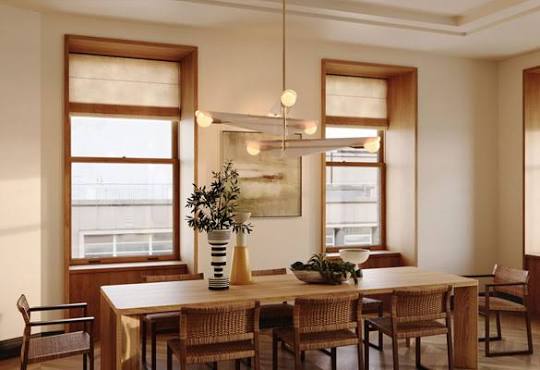

Designer lighting fixtures will provide functionality and aesthetics above a dining table. The proper positioning will influence the level of comfort, the presence of glare, and the overall design of a room. It is quite common to see a linear fixture chosen by homeowners due to its elegant design and balanced lighting. Proper height, length, and positioning will influence the performance of the light above a table. This article discusses the main guidelines for placing linear fixtures above dining tables.
Fixture Length and Table Size
A fixture that is close in length to the table will be the most aesthetically pleasing. A piece of furniture that is too small over a long table makes the ends look dark and imbalanced. A piece that is too large over a small table dominates the area and limits the ability to move around the table. The right size will make the table look proportionate to its surroundings and furniture underneath it. Lighting from online platforms like the designer linear lighting from Visual Comfort: make sure you choose the right fixture length for your table before making your purchase.
- A brief size guide will help you find the right match for your table before you buy it.
- Tables under 60 inches go well with fixtures from 36 to 48 inches in length.
- Tables from 60 to 84 inches should have fixtures of 48 to 60 inches in length.
- Tables over 84 inches need two smaller fixtures installed side by side to cover the whole table.
- Fixture width must be a few inches shorter on each side compared to table width.
Correct Height Above the Table
In the case of a linear art piece, the hanging distance from the tabletop should be 30 to 36 inches, given that the ceiling is eight feet high. Rooms with higher ceilings require additional clearance distance; hence, it would be wise to add three inches per foot of ceiling height. If the art piece hangs too low, the line of sight between individuals sitting opposite one another gets blocked. In case the piece hangs too high, the lighting effect on the table will not be effective since the light will illuminate the entire room.
Center Alignment and Symmetry
A linear fixture needs to be hung over the center of the table and not over the center of the room. This is because the center of the room and the center of the table can vary depending on factors such as the layout of the room or whether there is a window off-center. Hanging the piece of fixture over the center of the table provides balance to all chairs around the table. An incorrectly hung fixture leaves space between the center and the fixture that causes an imbalance.
Bulb Type and Light Temperature
The type of bulb used will alter the ambiance and functionality of the area over a table. Temperature and accurate color reproduction will ensure that your food and skin will have a natural appearance under the luminaire.
Warm Bulbs for Dinner
Warm-tone bulbs in the 2700k – 3000k range are the best to use for dinner time. The cool bulbs in the 4000k+ range can be used in kitchens where you need a lot of activity but will not provide a good ambience while eating dinner.
CRI and Color Accuracy
CRI (Color Rendering Index) is an important measure when it comes to how well foods will look under the luminaire. Any CRI value over 90 will provide an accurate color of foods and skin.
Dimmers and Light Control
A dimmer will provide an option for controlling the brightness level depending on the time of the day. Bright lighting is suitable for daylight activities like doing homework or paying bills at the table. Soft lighting will set a relaxed atmosphere for hosting dinner parties or having a cozy meal. Modern smart dimmers and designer linear lighting from Visual Comfort can be linked with a smartphone app or a voice assistant. In addition, a dimmer will prolong the life of a lamp because reduced brightness means less heat and pressure on the fixture. Almost all linear fixtures can be installed with ordinary dimmers without any additional wire modifications.
Room Layout and Ceiling Height
The shape of the room and its ceiling height are the determining factors, just as the table is when making the final choice about the fixture position. A long room requires a thin fixture that will not make the area near the table too crowded. A high ceiling gives an opportunity to have a larger distance between the ceiling and a fixture. A low ceiling requires a fixture that will have either flush or semi-flush installation. Checking adjacent doorways and passages should be done before mounting the fixture.
Correct placement turns a simple fixture into a strong design feature above a table. Height, length, center alignment, bulb choice, and room shape each play a part in the final result. A simple tip stands out above the rest: measure the table first, then match fixture length and height to that number before any purchase decision. This step alone prevents most common placement mistakes and creates a balanced, friendly meal space for years to come.