Georgia LLC Formation Rules: Important Details for First-Time Business Owners

Georgia LLC formation follows a short set of state rules, but first-time owners often trip over the details around them. A name that is missing the right ending, a registered agent without a Georgia street address or a trade name that was never registered can all cause delays or problems later.
The state filing is only one part of the process. You also need a federal tax number, the right state tax accounts and, in most cases, a local license.
The rules below follow the order you meet them: before you file, right after you file and every year after that.
Follow the filing rules for Georgia LLC formation
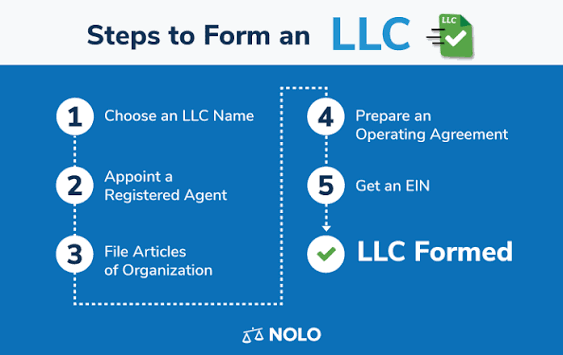
You form a Georgia LLC by filing Articles of Organization with the Secretary of State’s Corporations Division. Before you file, you need four things ready: a name, a principal office mailing address, a registered agent and at least one organizer.
Meet the name rules
Your LLC name has to be available and distinguishable from other businesses on the state’s records. The name also has to show that the business is a limited liability company, usually with an ending such as “LLC”, “L.L.C.” or “Limited Liability Company”.
Search the state’s business records before you commit to a name. If you need time to prepare your filing, you can reserve a name for US$35. The reservation lasts 30 days, or until you submit your formation filing, whichever comes first. If you reserve a name, enter the reservation number when you file.
State approval does not protect your brand on its own. A name that passes the state’s check can still conflict with someone else’s trademark.
Appoint a registered agent and an organizer
The registered agent receives legal papers and official notices for your LLC. The agent must have a physical address in Georgia, and a post office box does not qualify.
The organizer is the person who signs and submits the filing. The organizer does not have to be an owner. A lawyer, accountant or formation service can act as organizer for you.
Owners do not need to live in Georgia or in the United States. The registered agent is the only party that must be in the state.
Choose how you file
The state offers three ways to file, and the fee is the same for each. Processing time is what changes:
| Filing method | State fee | Typical processing time |
| Online, with articles generated by the system | US$110 | About 7 business days |
| Online, uploading your own articles | US$110 | About 10 to 14 business days |
| By mail, with the Transmittal Form (CD 231) | US$110 | About 15 business days |
If you need a faster response, expedited review costs an extra US120fortwobusinessdays,US275 for the same business day or US$1,200 for one hour. Submission methods, business hours and cut-off times apply, and same-day requests must arrive before noon. Expedited review speeds up the state’s response, which can be an approval or a rejection.
Some first-time owners use a service for Georgia LLC formation, so the filing, registered agent and follow-up steps sit with one provider. That route suits owners who live out of state or want to avoid filing errors.
If you prefer to file yourself, the Secretary of State’s guide to registering a domestic entity lists the information you need and walks through each filing option.
Complete the registrations that follow Georgia LLC formation
The state’s approval creates your LLC. That approval does not register you with the tax authorities or your local government, so a few more steps follow.
Get an EIN from the IRS
Many LLCs need an Employer Identification Number (EIN) for payroll, federal filings or a business bank account. Some single-member LLCs without employees or excise tax duties do not need a separate EIN for federal tax, though your bank can still ask for one. If your LLC has a US principal place of business and the responsible person has a Social Security number or ITIN, you can apply online and receive the EIN immediately.
If you cannot use the online service, you apply with Form SS-4 by fax or mail. International applicants can also apply by phone. Fax applications usually take about four business days, and mail about four weeks.
Register a trade name if you use one
Some LLCs trade under a name that differs from their registered name. A bakery registered as “Peach Street Foods LLC” might sell under “Peach Street Bakery”.
Georgia handles trade names at the county level, not through the Secretary of State. Under Georgia’s trade name law, a business using a name that does not show its owner registers with the clerk of superior court in its county and publishes a notice in the local legal newspaper once a week for two weeks.
Check the exact process with your county clerk before you start using the trade name. Some counties publish their own forms and fees.
Open your state tax accounts
If your business meets Georgia’s definition of a dealer, you need a sales and use tax account. Registration can be required even when some or all of your sales are exempt, wholesale or online. If you pay employees, you need a Georgia withholding account. You register for both through the Georgia Tax Center, run by the Department of Revenue.
Check your unemployment insurance duties with the Georgia Department of Labor when you start hiring. Most employers become liable once they pay US$1,500 in wages in a calendar quarter, or employ at least one worker in 20 different weeks of a year. Register as soon as you meet the rule that applies to you.
Get your local license
Georgia does not issue a statewide general business license. Many cities and counties instead require an occupation tax certificate or local business license.
The rules and fees depend on your location and activity. Contact your city or county business license office before you open, especially if you plan to see customers on site.
Some trades also need a state license. Contractors, electricians, cosmetologists and many health professionals are examples. Check with the relevant licensing board before you take on paid work.
Follow the rules that keep your Georgia LLC active
Your LLC stays in good standing only if you meet a few yearly duties. Missing them can lead to penalties and, in the end, dissolution.
File the annual registration
Every Georgia LLC files an annual registration between January 1 and April 1. Your first one is due in the calendar year after you form the LLC, not in the year of formation.
The fee is US60,andalatefilingaddsaUS25 penalty. You can prepay up to three calendar years in advance online, which removes two future deadlines.
Keep your registered agent and address current
Your LLC must always have a registered agent and registered office in Georgia. If you change agents or move, you update the details through your annual registration or an amended annual registration.
An out-of-date agent is a real risk. State notices, including dissolution warnings, go to the registered agent or principal office on file.
Know how dissolution and reinstatement work
If your LLC does not file its annual registration, the Secretary of State can administratively dissolve it. The state sends a notice first, and you have 60 days from the notice date to file and pay.
After dissolution, you can apply for reinstatement within five years. The application costs US$260, and you also have to bring your missed filings and fees up to date. The state holds your LLC name for that period, but another business can take it once the five years pass.
Use a first-year checklist
First-time owners find it easier to keep the rules straight with a simple list:
- Check your name and reserve it if you need time.
- Appoint a Georgia registered agent with a street address.
- File your Articles of Organization online.
- Get your EIN from the IRS.
- Register any trade name with your county clerk.
- Open your state sales tax, withholding and unemployment accounts if they apply.
- Get your city or county license and any trade license.
- Put January 1 to April 1 of next year in your calendar for the annual registration.
Georgia LLC formation is straightforward when you know the rules in advance. Follow them in order, and your LLC starts and stays in good standing.