Why Most California Renters Are Underinsured After a Wildfire (And How to Fix It)

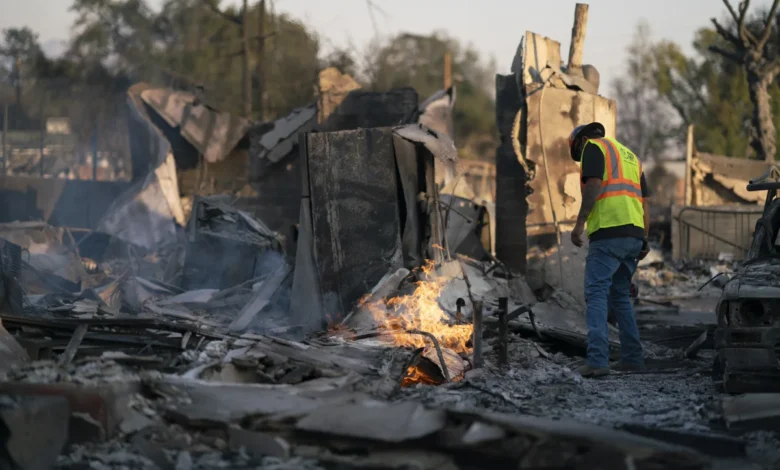
When a wildfire moves through a California neighborhood, the destruction it leaves behind rarely matches what most renters expected to face. The homes burn, but so do the cars parked outside, the storage units nearby, and the belongings stacked in garages. For homeowners, the conversation about coverage gaps has grown louder over the past decade. For renters, that conversation has been much quieter — and the consequences of that silence show up in the weeks and months after a fire, when people try to rebuild their daily lives with far less financial support than they anticipated.
California’s wildfire risk is not a seasonal inconvenience. It is a structural feature of living in a state where dry conditions, wind patterns, and dense residential development create persistent exposure for millions of people. Yet the way most renters approach insurance — if they have it at all — doesn’t reflect that reality. Policies are chosen quickly, often based on price alone, and rarely revisited until something goes wrong. By then, the gaps in coverage have already become financial problems.
What Renters Insurance Actually Covers — and Where the Assumptions Break Down
For anyone evaluating renters insurance california options, the standard policy framework is worth understanding before a loss event, not after. A typical renters policy is built around three core components: personal property coverage, liability protection, and additional living expenses. On paper, this sounds comprehensive. In practice, how those components apply after a wildfire depends heavily on the limits chosen, the exclusions embedded in the policy language, and the valuation method used to settle claims.
The most common misunderstanding involves the difference between actual cash value and replacement cost coverage. Actual cash value accounts for depreciation, meaning a five-year-old laptop or a sofa purchased years ago will be compensated at a fraction of what it would cost to replace those items today. Many renters select the lower-premium option without fully registering that distinction, and the difference only becomes apparent during a claim. In a wildfire scenario, where entire households of belongings are destroyed simultaneously, that gap between what was paid and what replacement actually costs can be significant.
The Inventory Problem Most Renters Never Address
Filing a personal property claim after a wildfire requires documenting what was lost. For most renters, that means trying to reconstruct an inventory of everything they owned — from furniture and electronics to clothing, kitchen equipment, and items stored out of sight — from memory, without receipts, and while managing the stress of displacement. Insurance adjusters work from documentation, and claims without supporting evidence often result in settlements that fall well below the actual loss.
The practical solution is straightforward, though rarely done in advance: a home inventory recorded on video or in a detailed written document, stored somewhere accessible outside the residence. Cloud storage, an email to yourself, or a document shared with a family member all work. The issue isn’t the method. It’s that most renters never create the inventory in the first place, operating under the assumption that the process will somehow be easier after the fact than it actually is.
Coverage Limits Set During a Different Phase of Life
Many renters set their personal property coverage limit when they first signed a lease — sometimes years before a loss event. Life accumulates. People buy more furniture, upgrade electronics, acquire tools, build out home offices, and collect items that have real replacement value. A coverage limit that was adequate at one point in life may be substantially inadequate several years later, simply because no one revisited the policy during that time.
This is one of the quieter reasons renters end up underinsured. It’s not a dramatic oversight. It’s the ordinary result of treating insurance as a one-time administrative task rather than a periodic financial review. In a wildfire state, where the stakes of being undercovered are particularly high, that passive approach carries real cost.
Additional Living Expenses: The Coverage That Gets Overlooked Until It’s Needed
After a wildfire displaces a household, the immediate financial pressure isn’t just about replacing belongings. It’s about finding somewhere to live, often in a rental market that’s been tightened by the same event that caused the displacement. California’s housing markets in fire-affected areas have, on repeated occasions, seen rapid rent increases in the weeks following a major wildfire, as thousands of displaced residents compete for a limited supply of temporary housing.
Additional living expenses coverage — sometimes called loss of use — is designed to cover the cost of temporary housing, meals, and other necessary expenditures that exceed what a renter would normally spend. But the limit on this coverage matters, and so does the duration. A policy that caps additional living expenses at a low dollar amount or limits coverage to a short period may leave a displaced renter without adequate support well before they’re able to return home or secure permanent housing elsewhere.
How Wildfire Displacement Differs From Other Loss Events
A burst pipe or a kitchen fire might displace a household for days or weeks. A wildfire that destroys the rental property entirely — or damages the surrounding neighborhood to the point where utilities are cut and the area is uninhabitable — can lead to displacement lasting months. Reconstruction timelines in California’s fire-affected communities have historically extended far beyond initial estimates, and renters waiting for their landlord’s property to be rebuilt have found themselves dependent on additional living expenses coverage for far longer than the policy was designed to accommodate.
This is a meaningful gap. Renters who understood the three standard components of their policy still found that the scale of wildfire displacement didn’t match the coverage framework they’d been operating under. The lesson is that standard policy limits — set with typical loss events in mind — may not be calibrated for the specific risk profile of living in a high-fire-hazard area of California.
High-Value Items and the Limits of Standard Policies
Standard renters insurance policies place sub-limits on certain categories of personal property. Jewelry, collectibles, musical instruments, cameras, and firearms are common examples — categories where the actual value of what a renter owns may substantially exceed what the base policy will pay. These sub-limits exist because high-value items represent a different risk profile, and insurers price their standard policies accordingly.
For renters who own items in these categories, a scheduled personal property endorsement — sometimes called a floater — provides coverage for specific items at their documented value. This requires a current appraisal or receipt and involves an additional premium, but it eliminates the sub-limit problem for the covered items. Without it, a renter who loses a valuable instrument or a significant piece of jewelry in a wildfire will receive only a fraction of the item’s actual worth under the base policy.
Electronics and Home Office Equipment in the Modern Household
The shift toward remote and hybrid work has changed what many renters keep in their homes. A household that includes high-end computers, monitors, specialized peripherals, and recording or production equipment may have substantially more value in electronics alone than the overall personal property limit on their policy reflects. This is particularly relevant for freelancers, remote employees, and anyone whose work depends on equipment kept at home.
California’s Department of Insurance offers public resources on policy types and consumer rights, including guidance on how to read policy documents and understand coverage options — a useful reference for anyone who hasn’t reviewed their policy terms in detail. Understanding what the base policy covers, what it excludes, and where sub-limits apply is the starting point for identifying whether the current coverage actually matches what’s at stake.
The Underinsurance Pattern and How to Address It Systematically
Underinsurance among California renters after wildfires isn’t primarily the result of bad decisions. It’s the result of decisions made without complete information, in low-attention moments, and then left unreviewed as circumstances changed. The fix is procedural rather than complicated: treat the renters policy as a document that requires periodic review, not a one-time transaction.
A practical review cycle looks like this:
- Review the personal property limit annually and adjust it to reflect what it would actually cost to replace everything in the home at current prices, not what was paid for items originally.
- Confirm whether the policy uses actual cash value or replacement cost valuation, and consider upgrading if the current method would result in significantly reduced claim payments.
- Assess the additional living expenses limit in the context of local rental markets — particularly in areas with documented wildfire exposure — and determine whether the limit and duration are realistic for an extended displacement scenario.
- Identify any high-value items that may exceed sub-limits and evaluate whether scheduled endorsements are appropriate.
- Create or update a home inventory and store it somewhere outside the physical residence.
These steps don’t require professional expertise to initiate. They do require treating the policy as a living document rather than a static administrative checkbox.
Closing Perspective
The gap between what California renters think their insurance covers and what it actually provides isn’t unique to any one insurer or policy type. It’s a gap that emerges from the way most people engage with insurance — infrequently, at low-attention moments, and without a clear picture of the specific risks their environment presents. Wildfires change that calculus in ways that other household risks don’t. The scale of loss, the length of displacement, and the competitive pressure on housing in affected areas all push the limits of standard coverage assumptions.
Getting to the right coverage isn’t a complicated process, but it does require deliberate attention to the details of an existing policy — what it pays, how it calculates value, and where the limits sit relative to what’s actually at stake. For renters in California, where fire risk is a persistent and documented feature of the environment, that review is not optional in any practical sense. It’s the difference between having a policy and having protection that actually works when it’s needed most.