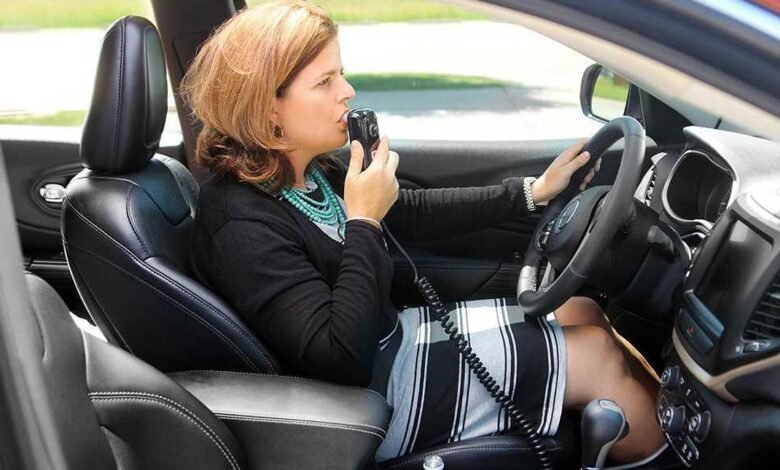

Interlock hardware has a number of critical components that must function properly for an ignition interlock program to succeed. Most problems that result in violations have nothing to do with the interlock itself or the offender’s level of alcohol intoxication. Problems typically occur as a result of faulty wiring, inadequate or late calibration, and neglect of the interlock and associated items by the offender or others. These problems result in administrative time for the program, the offender, the offender’s attorney, the licensed driver, family members and others in the offender’s household, and for fleet managers and the service center for the interlock. The interlock’s wiring points, the service interval, and who is responsible for problems that arise between installations are of chief concern to those who manage compliance caseloads, develop and implement a fleet policy regarding repeat offenders, and service center personnel.
What a compliant installation actually involves
Note that the interlock device is not a simple plug-in device. There is a main unit behind the dash that interrupts the starter circuit of the vehicle. Therefore, the handheld unit must be connected to a control module that is connected to the ignition switched power (constant 12V supply to memory and clock), the ground and the starter signal. Some newer vehicles require a connection to the CAN bus (as opposed to physical switches for items such as running lights) to determine whether the engine is running or not.
The camera on an ignition interlock is used to take a photo of the driver prior to a breath test. The camera must be able to take a clear photo of the driver’s face under both daylight and headlight conditions. A poor aim of the camera can result in a number of rejected samples being recorded against the driver.
Why professional fitting is not optional
Normally ignition interlock devices are installed by a locally resident service center that has been authorized by the monitoring authority for the jurisdiction. Prior to installation the authorized service center would generally install tamper sealers on the ignition interlock module housing and at any connection points that have been spliced. After installation of the device photographs would be taken of the installed device and the surrounding area. Prior to handing over the installed device to the driver of the vehicle the service center technician would explain the practical use of the handset. The service center would log the installation and advise the monitoring authority of the installation having taken place. The monitoring authority in turn would update the program database with details of the installed device such as the serial number of the unit, and the Vehicle Identification Number (VIN) of the vehicle on which it has been installed.
Installation time for typical car models is approximately 60-90 minutes. Installation time for Hybrid models, as well as commercial vehicles, will be longer. Drivers in Northern California who need a certified provider should book breathalyzer device installation in San Jose with a shop that is already approved by the monitoring authority. We also service vehicles equipped with aftermarket alarm systems. Installation time for such vehicles will be longer as we must first locate existing wiring to the alarm system. Final orientation of driver to usage of the hand-held unit is also an important part of our Installation Service.
Calibration and the service interval
Sensors drift due to natural phenomena with ethanol sensitive fuel cell sensors. Current produced by the cell size varies with use and is affected by temperature, contaminants etc. And must be calibrated against a reference of known concentration such as a wet bath simulator or dry gas standard at a known concentration.
Typically the service visit includes calibration of the fuel cell as well as download of all data from the alcohol ignition lock, seal check and firmware check. A service visit that is missed within a time frame of 5 to 7 days after the due date will cause a lockout from the igniter after the set time frame has expired.
| Activity | Typical interval | Performed by | Consequence of missing it |
| Calibration against reference standard | 30 to 60 days | Certified service center | Device lockout, reported violation |
| Data log download and reporting | Same visit as calibration | Service center to monitoring authority | Gap in compliance record |
| Tamper seal and wiring inspection | Every service visit | Technician | Suspected circumvention finding |
| Mouthpiece replacement | Monthly, or as needed | Driver | Hygiene issues, sample rejection |
| Firmware update | As released | Service center | Reporting incompatibility |
Faults, false readings, and diagnostics
Note that not all breath sample failures will be triggered by alcohol consumption. Staff should follow a standard process to troubleshoot sample failures before recording them as violation events.
- Residual mouth alcohol from mouthwash, breath spray, or certain medications, which clears within about fifteen minutes.
- Fermentation products from bread, ripe fruit, or energy drinks producing low-level readings.
- Low battery voltage causing the handset to reset mid-sequence.
- Cold soak conditions where the unit needs to warm before it will accept a sample.
- A blocked or damaged mouthpiece giving an insufficient sample error rather than a fail.
Rolling retests
Missed retests are typically logged as events and in the vast majority of cases will sound the horn and/or flash the lights until the ignition is switched off. Most problems arise from disputes over in vehicle retests, typically prompted at random times and the driver given a time frame (e.g. 5 minutes) within which to provide a breath sample.
Where driver responsibility begins
The Program Conditions must be clearly outlined to the driver to enable him/her to comply with the Ignition Interlock Program and avoid further incidence of Recordings of Alcohol Related Offenses (ARO’s).
- Attend every scheduled service appointment, and rebook before the lockout window if travel interferes.
- Never allow another person to provide a sample, which counts as circumvention regardless of intent.
- Report any dash warning light, battery replacement, or garage work that involves disconnecting power.
- Keep spare mouthpieces in the vehicle and rinse with water before testing.
- Do not attempt to repair or reposition the handset or its cabling.
When the program is completed, the removal of the interlock device is a procedure that needs to be clearly documented. Once the interlock has been removed from the vehicle, the interlock wires need to be unwired from the vehicle wiring in reverse of the procedure used for the installation. The starter circuit will then need to be restored to its pre-installation condition. The seals on the interlock device will also need to be removed and the interlock technician will need to complete a removal certificate which is then sent to the appropriate monitoring authority and copies sent to the driver and the offender’s license holder.