
Stopping alcohol after heavy, prolonged drinking is not simply a matter of willpower. The body adapts to the constant presence of alcohol over time, and when that substance is suddenly removed, the central nervous system can react in ways that range from deeply uncomfortable to genuinely life-threatening. Understanding what withdrawal actually involves, why it happens, and what medical support looks like can help people make safer, more informed decisions for themselves or someone they care about.
Why Alcohol Withdrawal Happens
Alcohol is a central nervous system depressant. When someone drinks heavily over weeks, months, or years, the brain compensates by increasing the activity of excitatory neurotransmitters like glutamate and reducing the sensitivity of inhibitory ones like GABA. The brain is essentially working harder to stay alert against the dulling effect of alcohol.
When alcohol is removed, all that compensatory excitatory activity remains, but there is no longer a depressant to counterbalance it. The result is a state of neurological hyperactivity. This is why withdrawal symptoms often feel like the opposite of intoxication: anxiety instead of calm, insomnia instead of sedation, elevated heart rate instead of the relaxed feeling alcohol can produce.
The severity of withdrawal depends heavily on how much a person has been drinking, for how long, whether they have gone through withdrawal before, and individual biological factors. Someone who drinks a few beers on weekends is unlikely to experience serious withdrawal. Someone who has been drinking a fifth of liquor daily for a decade faces a very different physiological situation.
The Three Stages of Alcohol Withdrawal
Withdrawal does not happen all at once. It typically unfolds in recognizable stages over several days. The timeline below reflects common patterns, though individual experiences vary.
| Stage | Typical Onset After Last Drink | Common Symptoms |
| Stage 1 (Mild) | 6 to 12 hours | Anxiety, tremors, headache, nausea, sweating, insomnia |
| Stage 2 (Moderate) | 12 to 48 hours | Elevated blood pressure, rapid heart rate, confusion, fever, heightened Stage 1 symptoms |
| Stage 3 (Severe) | 48 to 72 hours | Seizures, hallucinations, delirium tremens (DTs), extreme agitation |
Stage 1: Mild Withdrawal
The first symptoms often appear within six to twelve hours of the last drink, sometimes even while a person still has measurable alcohol in their system. Shakiness, sweating, mild anxiety, and nausea are typical. Many people are surprised that symptoms begin so quickly. For people with lighter drinking histories, this stage may be the full extent of what they experience.
Stage 2: Moderate Withdrawal
Between twelve and forty-eight hours, symptoms often intensify. Blood pressure and heart rate can climb significantly. Confusion may set in. Some individuals begin to experience minor perceptual disturbances, such as seeing shadows or hearing faint sounds that are not there. This stage requires monitoring because it can escalate quickly.
Stage 3: Severe Withdrawal and Delirium Tremens
The most dangerous phase typically peaks between forty-eight and seventy-two hours. Seizures can occur at any point in this window, and delirium tremens (commonly called DTs) represents the most severe form of alcohol withdrawal. According to the New England Journal of Medicine, DTs occur in approximately 3 to 5 percent of people experiencing alcohol withdrawal, but without medical treatment, the mortality rate from DTs can be as high as 37 percent. With proper medical care, that rate drops to under 5 percent. That difference is not trivial. It is the reason medical supervision matters so much during this phase.
Recognizing the Warning Signs That Require Emergency Care
Not every person going through withdrawal will reach the severe stage, but knowing which symptoms signal a medical emergency can save a life. Anyone supporting someone through withdrawal should know this list.
- Seizures of any kind, including brief ones that seem to resolve on their own
- Severe confusion or disorientation that worsens over time
- Visual or auditory hallucinations, especially ones that feel completely real
- High fever, typically above 101 degrees Fahrenheit
- Rapid or irregular heartbeat
- Uncontrollable tremors that prevent normal movement
- Profuse sweating combined with extreme agitation
Any of these symptoms warrant a call to emergency services or immediate transport to a hospital. Alcohol withdrawal is one of the few substance withdrawal syndromes that can be directly fatal. Opioid withdrawal, by contrast, is rarely fatal on its own in otherwise healthy adults. Alcohol withdrawal can kill, and that distinction matters when someone is deciding whether to tough it out at home.
How Medical Detox Manages Withdrawal
Medical detox is the supervised process of clearing alcohol from the body while managing the physiological storm that follows. The goals are straightforward: keep the patient safe, reduce suffering, and prevent complications.
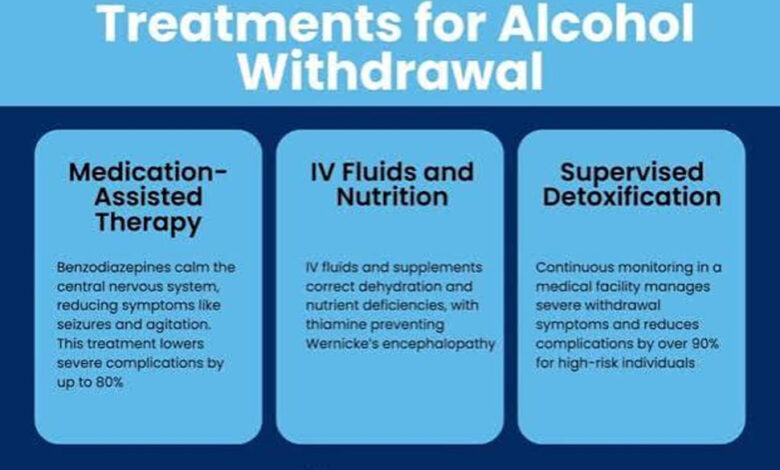
Benzodiazepines are the most commonly used medications in alcohol detox. Drugs like diazepam (Valium) and lorazepam (Ativan) work on the same GABA receptors that alcohol affects, essentially calming the overactive nervous system and dramatically reducing the risk of seizures. Dosing is typically adjusted based on a clinical assessment tool called the CIWA-Ar scale, which scores the severity of withdrawal symptoms and guides how much medication a patient needs at any given point.
Beyond medication, medical detox involves monitoring vital signs frequently, correcting fluid and electrolyte imbalances, and addressing nutritional deficiencies. Chronic heavy drinkers are commonly deficient in thiamine (vitamin B1), and untreated thiamine deficiency during withdrawal can lead to Wernicke’s encephalopathy, a serious neurological condition. Thiamine supplementation is a standard part of alcohol detox protocols for this reason.
Some facilities also use other medications, including carbamazepine, gabapentin, or beta-blockers, to manage specific symptoms or as adjuncts to benzodiazepines. The exact protocol depends on the individual’s history, the severity of their withdrawal, and any co-occurring medical conditions.
Resources like touchstonerecoverycenter.com can give people a starting point for understanding what professional treatment looks like and what questions to ask when evaluating a detox or residential program.
What Happens After Detox
Detox is not treatment. This is a distinction that gets overlooked more often than it should be. Clearing alcohol from the body addresses the physical dependence, but it does not address the psychological, social, and behavioral factors that sustain alcohol use disorder over time. Without follow-up care, relapse rates after detox alone are very high.
The National Institute on Alcohol Abuse and Alcoholism (NIAAA) has noted that alcohol use disorder is a chronic, relapsing condition for many people, and that the most effective outcomes involve continued behavioral treatment after the acute withdrawal phase. Options vary widely depending on a person’s circumstances.
- Residential treatment: A structured inpatient program that typically runs 28 to 90 days and addresses both psychological and behavioral aspects of alcohol use disorder.
- Partial hospitalization programs (PHP): Day programs where patients attend treatment for several hours each day but sleep at home or in a sober living environment.
- Intensive outpatient programs (IOP): Similar to PHP but with fewer hours per week, designed for people with strong support systems and moderate-severity cases.
- Medication-assisted treatment (MAT): FDA-approved medications like naltrexone, acamprosate, or disulfiram can reduce cravings and support long-term sobriety when combined with counseling.
- Peer support and mutual aid: Programs like Alcoholics Anonymous or SMART Recovery provide ongoing community connection, which research consistently links to better long-term outcomes.
The path through withdrawal and into sustained recovery looks different for every person. Someone with a supportive home environment, no co-occurring mental health conditions, and a shorter history of heavy drinking may do well with outpatient care after a brief medical detox. Someone with decades of heavy use, past withdrawal seizures, or untreated depression or trauma may need a more intensive, longer-term approach.
The Question of Tapering Versus Quitting Cold Turkey
One question that comes up frequently is whether a gradual reduction in drinking, often called tapering, is safer than stopping abruptly. In theory, a controlled taper gives the nervous system time to adjust, reducing the severity of withdrawal. In practice, tapering is extremely difficult to execute without medical supervision because it requires a level of control over drinking that most people with severe alcohol dependence do not have.
Medical tapering using benzodiazepines, done in a clinical setting, is essentially what a supervised detox accomplishes. Home tapering on alcohol itself is unpredictable and can be dangerous if a person underestimates how quickly they need to reduce or misjudges their own tolerance. For anyone with a history of withdrawal seizures, previous DTs, or significant daily drinking, a medically supervised approach is consistently recommended over any form of unassisted tapering or cold-turkey cessation.
Alcohol withdrawal is one of those situations where the safest course of action is also the one that feels the most logistically difficult. Arranging medical care, taking time away from work, and asking for help all have real barriers. But the physiological reality of severe withdrawal does not adjust itself to accommodate those barriers. Getting proper support during this phase is not just a comfort measure. For people at high risk, it is a basic safety requirement.