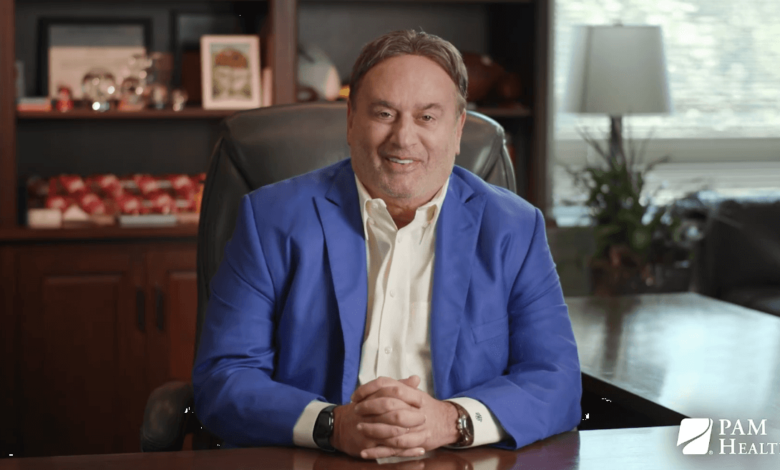
Anthony Misitano’s Acquisition Model Keeps Existing Hospital Buildings In Service So Communities Do Not Lose Local Care

Across the country, neighborhoods are grappling with a frustrating trend: the sudden closure of neighborhood medical centers and regional hospitals. When these facilities shut their doors, residents are forced to travel much further for essential treatments, putting vulnerable populations at serious risk and straining already burdened emergency transport systems. Instead of watching these vital community pillars fade away into empty lots, innovative leaders are finding sustainable ways to revive them. The strategy pioneered by Anthony Misitano revolves around an acquisition model that specifically targets existing hospital buildings, keeping them fully operational so that local communities never have to lose their immediate access to high-quality care.
Why Repurposing Outweighs Building from Scratch
Constructing a brand-new medical facility from the ground up requires massive capital, complex zoning approvals, and years of logistical planning. During that waiting period, patients are left with severely limited options, often delaying preventive care due to the inconvenience of travel. By focusing on the acquisition and revitalization of physical buildings that are already standing, the turnaround time for delivering critical services is drastically reduced.
This approach not only sidesteps the inflated costs and material delays of modern commercial construction but also preserves the foundational healthcare infrastructure that so many towns already rely on for their daily well-being. It is a highly practical solution that prioritizes immediate patient needs over flashy, ground-up real estate developments.
Implementing the Strategy
The takeover of a facility that has been struggling or closed is a part of a larger puzzle regarding the operation of those facilities. The true challenge in such a situation is to transform those facilities into locations that can provide for the complex needs of patients who visit them. Through the structure established at PAM Health, those facilities have been transformed into specialized rehabilitation and long-term acute care centers.
These transformations have allowed for the revitalization of aging infrastructure, enabling patients to receive the best in physical therapy, wound care, and post-surgical rehabilitation without having to travel to a major metropolitan area. Overall, such efforts help to keep medicine within the communities where it is needed.
Protecting Local Jobs and Economic Stability
The benefits of a medical building being open are far beyond direct patient care; it is a huge stabilizing force for the entire regional economy. When a neighborhood clinic or regional hospital closes, hundreds of good-paying jobs are lost overnight, from specialized nursing staff to administrative, culinary, and custodial workers. Keeping a facility open through strategic acquisitions stops this horrible financial ripple effect from ripping through a town.
In fact, recent evaluations of rural and regional economies show that medical facilities often act as the primary employer for an entire county. Saving these buildings essentially means protecting the financial livelihood of the families who live nearby and keeping local tax revenues intact.
A Vision Anchored in Community Preservation
The philosophy that informs this business model is based on a core belief that healthcare must always be local and highly personalized. Anthony Misitano saw from the beginning that corporate consolidation was taking away the independence of towns. It was pushing patients into distant health systems that felt cold and impersonal. He knew that when health care moves from home, it disconnects people from the care they need.
That is why he made a choice—to acquire and keep health facilities in the neighborhoods where people live. This keeps the focus on protecting the place where people call home and making treatment easy to reach. His leadership shows that you don’t have to give up a community’s history or its convenience to run an operation. Instead, it’s possible to combine business with a true and steady dedication to public well-being.
The Environmental Benefit of Adaptive Reuse
Beyond the obvious social and economic advantages, this model of acquiring existing structures champions a highly sustainable approach to commercial real estate management. Commercial demolition and new construction generate an overwhelming amount of landfill waste, noise pollution, and carbon emissions that can disrupt a neighborhood for years.
By practicing adaptive reuse—taking an existing structure and upgrading its internal systems to operate efficiently—the massive environmental toll of new development is completely avoided. It is a quiet but powerful green initiative that benefits the planet while simultaneously fulfilling the urgent, everyday medical requirements of a growing and aging population.
Conclusion: Securing the Future of Regional Healthcare
One of the most effective methods of ensuring the long-term health of communities throughout the country is by keeping the doors open at medical centers. These institutions have been bought and upgraded by people who are dedicated to providing the best possible care for those who require it most. By doing so, these communities have been protected from the emergence of healthcare deserts. Also, these efforts have allowed medical treatments to remain within reach of residents, ensuring that their medical care remains strong for future generations.