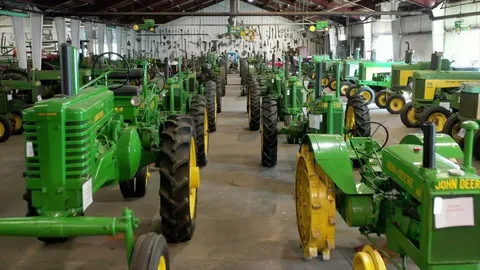
Buying a Used Tractor at Auction in the UK: What Farmers and Smallholders Should Check

A tractor is the kind of purchase that can make or break a small farm’s year. New machines are priced for large operations, and even good second-hand ones from dealers carry a margin that smallholders feel. So it is no surprise that more people are looking at agricultural machinery auctions, where tractors, implements and trailers from working farms are sold online to the highest bidder.
Done well, it can save real money. Done badly, it can leave you with a machine that is expensive to fix and awkward to move. Here is what to think about.
Where Farm Machinery Comes From
Auction stock tends to have a few clear sources. Some comes from on-farm dispersals, when a farmer retires or scales back. Some comes from agricultural contractors changing their fleets between seasons. Estates sell machines they no longer use, dealers and traders list stock, and occasionally a business closure or insolvency puts machinery on the market through a liquidation auction UK, where it is sold as seen like any other lot.
Each source says something about the machine’s likely history. A contractor’s tractor may have done long hours. A retired farmer’s may have done few, but may not have been serviced to a schedule.
What You Can Expect to Find
Listings change with the season, but they commonly include compact, yard and field tractors, telehandlers and loaders, ploughs, cultivators, drills, mowers, balers and wrappers, sprayers, and grain, silage and livestock trailers. Each lot is described from the seller’s own information and photographs, so the quality of the detail varies from lot to lot.
Reading the Listing
Look for make, model, year, hours, transmission type, linkage and PTO details, hydraulic services, tyres and attachments. Check what is included, because a loader, weights or a front linkage can change the price a lot. Study the photographs for leaks, rust, cracked panels and uneven tyre wear, and treat the hour reading as a clue rather than a promise.
If a detail matters to you and it is not in the listing, assume it is not there and price accordingly.
Checks That Matter on a Tractor
You may not be able to start the machine before bidding, so look hard at what you can see. Oil around the engine, transmission and hydraulic lines tells you about leaks. Worn pedals, a sagging seat and a loose steering wheel can suggest more hours than the meter shows. Check the tyres for even wear and the linkage and PTO for damage. If you are buying a sprayer, find out whether its testing under the National Sprayer Testing Scheme is up to date, and if you plan to use any machine on the road, check its brakes, lighting and registration.
Working Out the Real Price
The hammer price is only part of the cost. Add the buyer’s premium, VAT where it applies, transport and any repairs you expect. Then compare the total with a dealer’s price for a similar machine. A good saving is worth the effort of checking. A small one is not.
Collection From a Farm
Farm equipment can be large, wide and awkward to load, and it is often sitting on a working farm with access that depends on the weather. Payment is usually due quickly and collection is arranged afterwards by appointment, so check the location, the ground conditions, the loading arrangements and the machine’s dimensions before you bid. Have a suitable haulier ready, and make sure your vehicle and trailer can legally carry the load.
A Quick Example
Imagine a smallholder with forty acres of grass and a handful of cattle, who needs a compact tractor with a front loader for winter feeding and a mower for summer. A dealer’s price for something similar is more than the business can carry. The smallholder watches a few sales, writes down the three machines that fit the yard, and checks the photographs of each for leaks, tyre wear and the condition of the loader. One goes out of range. The second is won by a higher bid. The third is hammered at a figure under the maximum, and the loader turns out to be included. The saving paid for a service, a set of tyres and a lot of feed.
It was not luck. It was patience and a written number.
Mistakes to Avoid
The usual ones are bidding on hours alone, forgetting the buyer’s premium and VAT, assuming a machine runs because the photographs look clean, and leaving transport until after the auction. Another is chasing a lot past a sensible maximum. A tractor you overpaid for will not become a better tractor. Another one will come up, probably within a few weeks.
Frequently Asked Questions
Can smallholders buy at agricultural machinery auctions? Yes. Stock comes from farms, contractors, estates and dealers, and buyers range from large farms to smallholders.
What should I check on a used tractor? Oil leaks, tyre wear, linkage and PTO condition, hydraulics, and whether the wear matches the hours. Treat the hour reading as a clue.
Does a sprayer need testing? If you are buying one, find out whether its National Sprayer Testing Scheme testing is up to date, since it may matter for how you use it.
How is farm machinery collected? By appointment after payment clears, from the seller’s farm or site. Check access, ground conditions and dimensions, and bring a suitable haulier.
Is It Right for You?
If you are comfortable reading a listing carefully, have an eye for wear and can arrange collection quickly, auction can make a tractor affordable. If you want a warranty and a demonstration, a dealer is simpler. Either way, set your maximum before the lot opens and stay out once it is passed. There will be another tractor.