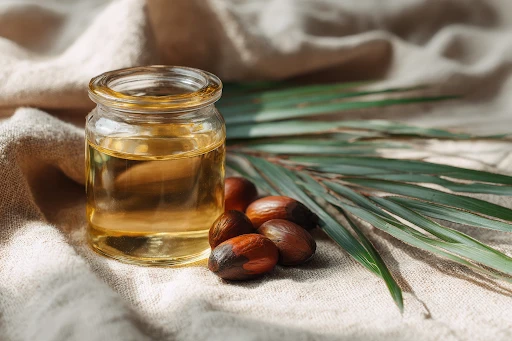
How Batana Oil Became the Internet’s Favorite Hair Fix, and What the Science Says

Every year or so, the internet picks a new hair oil. A while back it was rosemary oil, sold in tiny spray bottles with promises of a fuller hairline. Then a darker, stickier contender showed up in feeds: batana oil, a smoky brown paste from Honduras that creators began massaging into their scalps on camera.
The videos follow a familiar script. A slow scalp massage, a jump cut, a “three months later” reveal. Comments fill with people asking where to buy it. Within months, the same jars were all over online shops and marketplace listings.
So how did a traditional oil from a remote rainforest end up as a viral beauty product, and what happens when you ask the boring question: does batana oil regrow hair? Short version: the story is real, the oil is real, and the regrowth claims are not backed by clinical evidence.
The origin story is the hook
Batana comes from the nuts of the American oil palm, Elaeis oleifera, which grows in La Mosquitia, in eastern Honduras. The Miskito people there have used it on hair and skin for generations. They’re often described as the Tawira, usually translated as “people of beautiful hair.”
That detail does a lot of marketing work. A product with a place, a people and a centuries-old tradition feels more trustworthy than a lab-made serum. It also gives creators a ready-made story to tell in 30 seconds. “Indigenous women with long hair have used this forever” is a far stickier caption than “rich in oleic acid.”
The tradition is genuine. The leap from “this community values this oil” to “this oil will regrow your hairline” is where the story stretches.
Why it spread so fast
A few ingredients made batana almost designed for short-form video:
- It looks different. A dark, almost chocolate-like paste stands out in a feed full of clear serums.
- Before-and-after content. Hair photos are easy to stage. Lighting, angle, styling and a fresh wash can change how thick hair looks.
- Shoppable platforms. Social shopping features turned “where do I get this?” into a single tap.
- Hair anxiety is huge. Thinning hair affects people of every gender and age, and a cheap, natural fix is an easy sell.
The name game
Look at listings and you’ll see another pattern: borrowed authority. Many products carry the name of Dr. Sebi, the late Honduran-born herbalist whose following online has grown well beyond his lifetime. Others lean on founders, athletes or influencers with big audiences, which gives a jar of oil a familiar face.
A recognizable name tells you who is selling the product. It tells you nothing about what the product does. And in the US, paid influencer posts are supposed to disclose the relationship under FTC rules, so it’s worth looking for tags like “ad” or “paid partnership” before trusting a glowing review.
What the evidence actually says
Here is the unglamorous part. There are no published clinical trials showing that batana oil regrows hair, wakes up dormant follicles or reverses pattern hair loss. The growth claims rest on personal stories and the Miskito tradition, not on controlled studies.
What we do know is its makeup. Batana is rich in oleic and linoleic fatty acids, along with vitamin E compounds and carotenoids. That makes it a heavy conditioning oil. It can soften hair, add shine and reduce breakage, and less breakage can mean hair keeps more of its length. In a before-and-after video, that can easily pass for “growth.”
For actual hair loss, the treatments with real evidence look much less exciting on camera. Minoxidil and finasteride are FDA-approved for pattern hair loss, and a dermatologist can sort out other causes, such as thyroid problems, low iron, stress-related shedding or autoimmune conditions.
The trend has a cost
Viral demand brings two predictable problems. First, adulteration: some products labeled “batana” are mostly cheaper oils with little or no Elaeis oleifera in them. Second, pressure on the source. Traditional batana is made slowly, by hand, in a small region, and a global rush can push prices up and quality down.
There’s also the plain physical side. Batana is heavy, smells strongly roasted, and often takes two rounds of shampoo to wash out. Fine hair can look greasy fast. And like any oil, it can irritate skin, so a patch test before slathering it on your scalp is a good idea.
How to read the next hair-oil trend
Batana won’t be the last oil to go viral. A quick filter helps:
- Is there a published human trial, or only videos?
- Is the poster paid, gifted or selling their own brand?
- Is the promise “softer, shinier hair” or “new hair in weeks”?
Enjoy batana for what it is: a rich, traditional conditioning oil with a real cultural history. Buy from sellers that list Elaeis oleifera on the label, judge it on softness and breakage, and if you’re losing hair, see a dermatologist instead of waiting for a jar to do something it has never been shown to do.