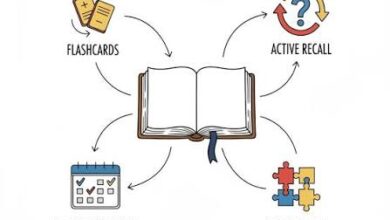

You cannot expect to have one or two hours for self-study. Occasionally, you get 20 minutes to leave before work, or a minute between classes, or a small break. The challenge lies within the management of that narrow window.
Hacks for Canvas Study: If it is hacks in the sense of simple time management making online coursework more manageable, then good study habits matter equally.
Just 20 minutes in an effective short plan can also help you to grasp a concept, revise a challenging topic, or prepare yourself for your next session of study.
Start With One Small Goal
The most common mistake of a quick study session is to take on too much.
If you take time to spare Idon’t tell yourself, “I need to finish this whole module in 20 minutes. That goal may be too large. Instead, choose one clear task.
For example:
- Read one lesson
- Review five key terms
- Work through one difficult topic
- Use review notes from the previous lesson
- The question from a random dentist on top of the lesson you have just finished
- Make a summary
Having a small objective gives your session a target. This also makes it easier to see what you really achieved.
Take a couple of seconds to think about what you want to accomplish before opening Canvas. This saves you from wasting the first 5 minutes figuring out what to study.
Use the First Two Minutes to Plan
You don’t have a complex study schedule.
Use the first 2 minutes to check your Canvas course and then determine where your focus that week should be. Review Upcoming Work, Uncompleted Lessons, and Trouble Areas
Then choose one priority.
Here is what a simple 20-minute plan could look like:
Minutes 1-2: Pick the lesson or topic.
Class 3-12: for the main fabric
13–17: Test your knowledge
18-20 mins: Note what may still need more work.
This will help keep the session on track. You are not attempting to learn everything all at once. You are working on part of the course only.
Read for Understanding, Not Just Completion
When time is short, it can be too easy to rush through each page just for the lesson to register as finished.
However, the above does not imply that you learnt the material.
Instead, try to find the basic concept. Do question: What is this lesson trying to teach, and why does it even matter?
For instance, if your lesson includes three kinds of research methods, before memorizing all the sentences, understand what differentiates them in the first place.
Next, you close the material for a moment and write down the differences in your own words.
This is one of the most powerful Hacks For Canvas Study because it transforms a passive reading session into active learning.
Turn Difficult Questions Into Study Practice
A single question can fill most of your study time at times.
Look at the lesson related to each question if you do not comprehend a question. Look up the definitions, examples, or concepts that relate to the problem
Before you consider the answer, try to explain what the question is asking first.
When a question states “And which — if any — caused the event,” identify first what the event is and then what is the cause. The question becomes so much easier to read when you break it down into components.
Study tools such as AI-based tools can also prove to be helpful when your course rules permit their usage. They can clarify an idea, define a new word, or create additional practice problems. They should help you learn, not do it all for you.
When hacking for Canvas Study, the most effective way to examine an answer is to try to look at the reason it is right instead of searching just a result.
Keep Your Notes Extremely Short
Do not sit through a 20-minute session only for pages of notes.
Only write information that you will likely refer to in the future.
A useful note might contain:
- One important definition
- One difficult idea
- One example
- One question you still have
For example:
Topic: Supply and demand
Core Idea: Price of things can influence demand.
This is still unclear: what happens when supply drops?
That small note has something of value to study later. It also tells you exactly where to start your next study session.
Use the Last Five Minutes to Test Yourself
It feels good to reread, but that is often the worst thing you can do for testing yourself gives you a better idea of what you actually remembered.
After putting the lesson aside, ask three or four questions at the end of your session.
For example:
- What was the main idea?
- What were the key terms?
- What example explains the concept?
- What part do I still find confusing?
Answer without referring back to the lesson; give it a go!
That is actually a helpful piece of information if you cannot explain something. It brands name what to review subsequently as opposed to making you reread the entirety.
This simple review step is another practical Hacks For Canvas Study tip because it allows you to own weak parts before they turn into more significant issues.
Remove Small Distractions
Twenty minutes can quickly evaporate when you open up a message or click on unrelated pages or stop every few seconds.
Before you get started, delete everything that you do not need.
Keep the Canvas lesson open. If you can, put your phone away. If you have a ton of unrelated tabs open, close them down and mute notifications from non-urgent sources (e.g., messenger channels).
If things are not perfect in your study place, you just need fewer interruptions.
If you use a browser-based study tool, make sure that you understand what it is doing and whether the course allows it. Each instructor and each school can have their own rules, especially when it comes to graded assignments and assessments.
Do Not Attempt To Complete Everything
Finishing off an assignment does not need to be the end of a short study session.
And often, that knowledge of next steps is the most one can ask for.
You read 10 pages or so. You can understand one hard thing. Sometimes you will find that you require assistance with a certain topic.
That is still useful progress.
Learning one of the better Hacks For Canvas Study is distinguished today’s goal from the whole course. It should be a 20-minute session setting for a realistic target.
Make Your Next Session Easier
Use your last minute in Canvas to pick where you want to start next.
Write something simple such as:
The next time, review the differences between these two concepts.
When you come back later, you won’t have to waste a few minutes remembering where you left off.
That can form a simple study schedule if spaces of time are short and repeated over days. You cannot wait until you have an entirely schedule-free afternoon to make some headway.
A 20-Minute Canvas Routine You Can Reuse
If you often don’t have a lot of time, follow the same basic routine:
2 minutes: Pick one goal.
10 minutes: Repeat the lesson
5 minutes: Have a go without peeking at your notes.
2 minutes: Go through mistakes or anything you don’t understand.
1 min: Select task to work on next
Depending on the lesson, you can alter this timing. Their rules are simply to have a clear initial section, time for focused study, and a brief review.
Hacks for Canvas Study should not be about searching for ways that let you avoid learning itself and get around the course rules. The better goal is getting rid of wasted time and making each study session more productive.
Final Thoughts
20 mins might not be long enough to get through an entire Canvas module, but it may well be long enough to pick up one key idea.
Choose one task. Focus on the material. Test yourself before you finish. Highlight what needs attention and leaves to be worked on.
Because your study time is limited, consistency and continuity outweigh trying to do it all in one sitting. A focused 20-minute session with your eyes will produce an obvious next step, allowing the second session to be quickly commenced.
The most effective Hacks For Canvas Study are generally quite simple habits that enable you to cut down on the time spent deciding what task to do next and dedicate more time to learning.