Gravel Installation: A Practical Guide to Creating Durable and Attractive Outdoor Surfaces

Gravel is one of the most versatile materials available for improving outdoor spaces. It can be used to create driveways, walkways, patios, garden paths, drainage areas, borders, parking surfaces, and decorative landscape features. Its natural appearance, relatively simple maintenance requirements, and flexibility make it an appealing option for homeowners and property managers looking for practical ways to improve the appearance and functionality of their outdoor areas. However, achieving a surface that remains attractive, stable, and functional requires more than simply spreading loose stones across the ground. Proper preparation, material selection, drainage, edging, and installation techniques all play important roles in the final result.
A well-planned gravel surface can provide dependable performance for years when it is installed correctly and maintained appropriately. Poor preparation, inadequate drainage, unsuitable stone, or insufficient compaction can cause problems such as ruts, potholes, shifting gravel, weed growth, standing water, and uneven surfaces. Understanding the installation process can help property owners make better decisions about materials and ensure that the finished project meets both practical and aesthetic expectations. Whether the goal is to create a functional driveway or an attractive garden pathway, careful planning is the foundation of a successful project.
Understanding the Benefits of Gravel Surfaces
Gravel offers several advantages compared with many other outdoor surfacing materials. One of its most notable qualities is versatility. Different types, colors, shapes, and sizes of stone can create very different appearances, allowing the material to complement a wide range of architectural and landscape styles. Smooth decorative gravel can provide a refined appearance around planting beds, while angular crushed stone can provide a more stable surface for driveways and areas that experience heavier traffic.
Another benefit is the material’s ability to support drainage when the underlying ground is prepared appropriately. Water can move through spaces between individual stones rather than remaining entirely on the surface. This characteristic can be particularly useful in areas where controlling surface water is an important part of landscape planning. However, gravel does not automatically solve drainage problems. The underlying soil, slope, base material, and surrounding drainage system still need to be considered.
Gravel can also be relatively easy to repair. If a section becomes disturbed or develops a low spot, additional material can often be added and redistributed without removing a large continuous surface. This makes gravel practical for projects where long-term flexibility is important.
Planning the Project Before Installation
Good planning can prevent many common gravel problems. Before any material is ordered, the intended use of the area should be established. A decorative garden path has different requirements from a driveway used by cars and heavier vehicles. A patio may need a stable, comfortable surface, while a drainage area may require a specific type and depth of aggregate to perform effectively.
The dimensions of the project should also be measured carefully. Calculating the length and width of the area provides a basic estimate of the surface area, while the desired depth determines how much material will be required. Ordering too little material can interrupt the project, while ordering too much can increase unnecessary costs.
Property owners should also consider existing vegetation, structures, drainage patterns, underground utilities, and access for delivery equipment. Preparing these details before work begins can make the installation process more efficient and reduce unexpected complications.
For larger or more complex projects, professional Gravel Installation can provide valuable assistance with grading, material selection, base preparation, and drainage planning. An experienced installer can evaluate the site and recommend an approach based on how the finished surface will be used.
Choosing the Right Type of Gravel
Not all gravel is suitable for every application. The type of stone selected can influence stability, appearance, drainage, comfort, and maintenance requirements. Crushed stone typically has irregular, angular edges that allow individual pieces to interlock more effectively. This can make it suitable for surfaces that need greater stability.
Rounded river rock and similarly smooth materials have a different appearance and feel. Although they can be attractive in decorative applications, rounded stones may move more easily under foot or vehicle traffic. For this reason, they are often more suitable for landscaping features, borders, or decorative areas than heavily trafficked surfaces.
Decorative gravel comes in many colors and textures, making it useful for creating visual contrast in landscape designs. However, appearance should not be the only consideration. The material needs to match the practical requirements of the project. A beautiful stone that shifts excessively or becomes difficult to walk across may not be the right choice for a pathway.
Preparing the Ground
Ground preparation is one of the most important parts of the entire installation process. Simply placing gravel over existing grass or loose soil may result in an unstable surface. Vegetation can grow through the gravel, soil can shift beneath the material, and traffic can create depressions.
The area should generally be cleared of grass, weeds, roots, debris, and other organic material. Depending on the project, the existing soil may need to be excavated to create enough space for the base and surface layers. The required depth depends on factors such as soil conditions, intended use, climate, drainage, and traffic levels.
Once the area has been cleared, the ground should be shaped and compacted appropriately. A stable subgrade provides a stronger foundation for the materials placed above it. If soft or unstable sections are discovered, they may require additional preparation before the base layer is installed.
Creating a Strong Base
The base layer is essential for many gravel projects, particularly driveways and areas exposed to frequent traffic. A properly selected aggregate base can distribute weight and help prevent the finished gravel surface from becoming deeply rutted or uneven.
The base material should be spread evenly and compacted in appropriate stages. Attempting to place a very thick layer at once can make proper compaction more difficult. Depending on the project, several layers may be installed and compacted individually to create a more stable foundation.
The exact composition and thickness of the base should be determined according to the site’s conditions and intended use. A pedestrian pathway may require less structural support than a driveway, while heavy vehicle traffic can require a substantially stronger base.
Addressing Drainage Properly
Water management should be considered before gravel is installed. Standing water can weaken the underlying soil and contribute to ruts, erosion, and shifting material. A properly graded surface can encourage water to move away from structures and toward appropriate drainage areas.
The natural slope of the property should be evaluated during planning. In some situations, additional grading may be necessary to direct water away from buildings or toward drainage features. Depending on the site, drainage solutions may include swales, channels, edging, or other landscape drainage systems.
Although gravel allows water to move through its spaces, it should not be viewed as a substitute for proper grading. If the underlying soil holds water or the site has a significant drainage problem, simply adding more gravel may not solve the issue.
Using Landscape Fabric Appropriately
Landscape fabric is sometimes installed beneath gravel to help separate the aggregate from the soil and reduce weed growth. Whether fabric is appropriate depends on the specific application and site conditions. It can be useful in certain decorative landscape areas, but it is not always necessary or desirable for every project.
For traffic-bearing surfaces, proper excavation, base preparation, and compaction are generally more important to long-term performance than relying on fabric alone. Fabric also needs to be installed correctly if it is used. Poor installation can result in exposed edges, folds, or movement that reduces its effectiveness.
Property owners should consider the entire structure of the surface rather than assuming that one material will solve every potential problem.
Installing Edging
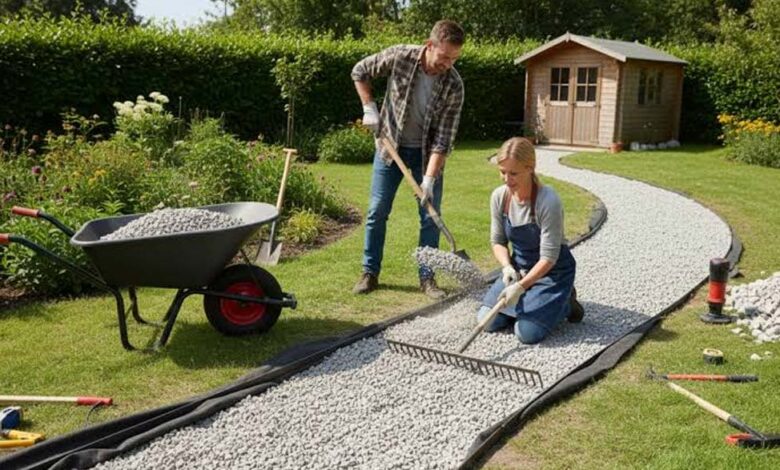
Edging can help keep loose gravel contained within the intended area. Without appropriate boundaries, gravel may gradually spread into lawns, garden beds, sidewalks, or other spaces through foot traffic, vehicle movement, rain, and routine maintenance.
There are many possible edging materials, including metal, stone, concrete, brick, timber, and specialized landscape edging products. The best choice depends on the desired appearance and the level of durability required.
Edging also contributes to the visual definition of the project. A clean border can make a gravel pathway or garden area appear more organized and finished while helping to reduce material migration.
Spreading and Compacting the Gravel
Once the foundation is prepared, the surface gravel can be distributed across the area. It should be spread evenly to achieve the intended depth rather than creating thick piles or thin spots. Consistent distribution helps improve appearance and performance.
Compaction requirements depend on the type of gravel and intended use. Some decorative applications may require limited compaction because maintaining a loose appearance is part of the design. Driveways and other traffic-bearing surfaces generally benefit from appropriate compaction to create a firmer, more stable surface.
The final surface should be checked for low spots, excessive material, and uneven areas. Adjustments can be made before the project is considered complete.
Gravel for Driveways
Gravel driveways are a popular application because they can provide a functional driving surface without the same construction process associated with some paved alternatives. However, driveway gravel needs to withstand repeated vehicle traffic, weather exposure, and water movement.
The foundation is particularly important for a driveway. A weak base can quickly lead to potholes, ruts, and uneven areas. Larger angular aggregate is often used in lower layers to create structural support, while a suitable surface gravel provides the final driving layer.
Regular maintenance is also important. Vehicles can gradually push gravel toward the edges, while rainfall can wash material into low areas. Periodic grading and replenishment can help maintain a smoother driving surface.
Gravel Walkways and Garden Paths
Gravel can create attractive pedestrian paths that connect different areas of a property. It works particularly well in gardens because its natural appearance can complement plants, trees, stonework, and other landscape features.
For a comfortable walking surface, the size and shape of the gravel should be considered carefully. Very large or sharp stones may be uncomfortable underfoot, while extremely smooth stones can move more easily. A well-chosen material can provide a balance between appearance, stability, and walking comfort.
The pathway should also have a clearly defined route and appropriate width. Slight curves can create a natural landscape appearance, while straight paths may complement more formal designs. Edging can help preserve the intended shape over time.
Common Installation Mistakes to Avoid
One of the most common mistakes is failing to prepare the ground adequately. Installing gravel directly over grass or unstable soil may produce a surface that looks acceptable initially but deteriorates relatively quickly. Another frequent problem is using a single layer of decorative gravel where a stronger structural base is required.
Insufficient drainage is another major concern. Water that collects beneath or around the gravel can weaken the foundation and lead to movement. Ignoring the property’s existing slope can therefore result in costly maintenance problems later.
Using the wrong gravel is also an avoidable mistake. Material should be selected according to the intended purpose rather than appearance alone. Homeowners should consider traffic levels, walking comfort, drainage, maintenance, and the desired visual effect before making a final selection.
Maintaining a Gravel Surface
Although gravel generally requires less maintenance than some other outdoor surfaces, it is not completely maintenance-free. Regular inspection can help identify problems before they become significant. Low spots, potholes, exposed base material, displaced gravel, and weed growth should be addressed as needed.
Driveways may require periodic grading to redistribute displaced material. Additional gravel may also be necessary after extended periods of heavy use or severe weather. Decorative areas may require occasional raking to restore an even appearance.
Keeping surrounding vegetation under control can also help. Plants and weeds may gradually spread into gravel areas if they are not managed. Appropriate maintenance methods should be selected according to the landscape and environmental conditions.
When Professional Installation Makes Sense
Small decorative projects can sometimes be completed by homeowners with suitable tools and preparation. However, larger projects may require specialized equipment and considerable physical labor. Driveways, extensive pathways, sloped areas, and projects involving drainage modifications can be particularly demanding.
Professional installation can provide advantages in grading, excavation, compaction, material selection, and site preparation. Experienced installers can also identify potential problems before they become expensive repairs.
For property owners who want a durable finished surface without managing the physical demands of excavation and material handling, professional assistance can be a practical option. The most important consideration is choosing a provider who understands the requirements of the specific project rather than treating every gravel surface in exactly the same way.
Final Thoughts on Gravel Projects
Gravel can be a practical and attractive solution for many outdoor surfaces, but its long-term performance depends heavily on proper preparation and installation. Selecting the right material, preparing the ground, creating a suitable base, managing drainage, installing appropriate edging, and distributing the gravel correctly can all contribute to a stable and visually appealing result.
A successful project begins with understanding how the area will be used. Driveways, walkways, patios, drainage zones, and decorative landscape features each have different requirements. Taking these differences into account helps ensure that the selected materials and installation methods are appropriate for the intended purpose.
Professional gravel installation may be particularly beneficial for larger or technically demanding projects where grading, excavation, drainage, and compaction require specialized knowledge or equipment. Regardless of whether the project is completed professionally or as a carefully planned DIY improvement, investing time in preparation can significantly improve the finished surface.
With appropriate planning and routine maintenance, gravel can provide a durable, adaptable, and attractive addition to an outdoor space. Its combination of versatility, natural appearance, and practical performance makes it a useful option for property owners seeking a surface that can complement their landscape while meeting everyday functional needs.