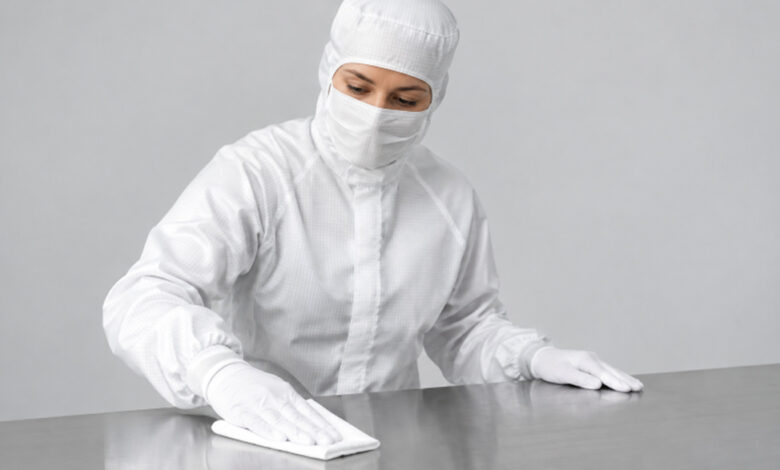

Across Massachusetts, controlled environments support pharmaceutical production, medical device manufacturing, laboratory operations, microelectronics, and research. In each setting, a surface can appear clean yet still carry particles, residues, or microorganisms that may affect the process. Reliable wiping is therefore not simply a housekeeping task. It is a repeatable contamination-control practice.
For practical guidance on wiping techniques for effective cleaning, Berkshire Corporation explains the value of quarter-folding, linear strokes, fresh wipe surfaces, and proper moisture control. Based in Great Barrington, Massachusetts, Berkshire Corporation is a technical resource for cleanroom and controlled-environment consumables used in fields such as pharmaceuticals, medical devices, laboratories, and microelectronics, making its guidance relevant to facilities throughout Massachusetts and beyond.
Why Wiping Technique Matters in a Controlled Environment
Cleaning removes soil and unwanted material from a surface. Sanitizing lowers the number of certain microorganisms to a level considered acceptable for a particular use. Disinfecting uses an approved product to inactivate or destroy specified microorganisms when applied according to its label. These steps are related but not interchangeable.
Physical wiping action matters because it helps lift and collect contamination rather than merely moving it around. Random or circular motion can make coverage difficult to verify and redistribute soil. A controlled pattern, sufficient surface wetting, and the required product contact time work together to make the process more dependable.
Start With a Clear Cleaning Plan
A cleanroom team should know exactly what must be cleaned before work begins. List benches, equipment exteriors, pass-throughs, door hardware, carts, keyboards, control panels, floors, walls, and any process-specific surfaces. Then separate lower-risk areas from high-touch or higher-risk points.
Written procedures should define the responsible person, approved wipes and solutions, cleaning frequency and sequence, disposal method, and required documentation. A repeatable plan reduces missed locations and makes it easier to identify whether an issue comes from materials, timing, technique, or training.
Choose Wipes and Solutions for the Surface
Selection should account for wipe material, absorbency, particle shedding, packaging, chemical compatibility, and the surface being cleaned. A wipe that is appropriate for stainless steel may not be the right choice for optics, coated equipment, electronics, or sensitive process surfaces. Confirm compatibility with both the surface and the facility procedure.
- Dry wipes can be useful when a separate approved solution is applied in a controlled manner.
- Pre-saturated wipes can simplify application and promote more consistent wetting.
- Wipes used with separate solutions may offer flexibility, but operators must avoid applying too little or too much liquid.
An insufficient solution may limit soil removal. Excess liquid can cause pooling, leave residue, or lead to drying issues. Keep enough clean materials on hand, segregate clean supplies from used materials, and avoid returning a used wipe to a solution container.
Use a Consistent Wiping Pattern
- Begin with the cleanest section of the surface.
- Work toward areas more likely to contain soil or contamination.
- Clean higher surfaces before lower surfaces.
- Use steady, overlapping linear passes rather than random strokes.
- Lift the wipe at the end of a pass when required by the procedure.
- Turn or refold the wipe to expose a fresh working surface.
- Follow the approved standard operating procedure for specialized equipment.
Quarter-folding can make it easier to use multiple clean sections of one wipe without touching the contaminated side. The goal is not to maximize the life of a wipe. The goal is to maintain a clean working surface for each pass.
Prevent Cross-Contamination During Cleaning
A used wipe can become a transfer tool if it is carried from one area to another without being changed. For example, an operator may wipe a visibly soiled machine panel and then move to a nearby control without changing or refolding the wipe. That action can transfer contaminants to a surface that was previously cleaner.
Replace wipes when they are visibly soiled, dry, damaged, oversaturated, or no longer present a fresh usable surface. Use dedicated wipes for separate zones when the facility’s risk assessment requires it. Keep used materials away from clean stock, and dispose of them according to site procedures.
Handle Visible Soil and Residue Carefully
Visible soil often requires more than one pass. Remove it with fresh wipes until the final wipe no longer shows soil, then complete the facility’s approved cleaning or disinfection step. Do not assume that a single wet pass is enough simply because the surface looks better.
Residue deserves attention as well. Cleaning agents and disinfectants can leave films if they are not used as directed or if the process calls for a final residue-removal step. Include streaks, deposits, dust, and recurring residue in routine visual inspections.
Train Operators on Technique, Not Just Products
Training should show workers how to fold, hold, turn, and discard wipes, as well as how to follow the approved direction and sequence. Hands-on practice is more useful than written instructions alone. Supervisors should watch for common errors, including circular wiping, reused soiled wipes, skipped corners, and inconsistent coverage.
Retraining is appropriate after process changes, inspection findings, or repeated failures. Short, regular observations can address technique issues before they become audit findings or process deviations.
Use Simple Checks to Confirm Coverage
Review cleaning logs for missed tasks, unusual gaps, and incomplete entries. Inspect finished surfaces for soil, streaks, residue, or dust. Facilities may also use approved fluorescent markers or comparable verification tools during training and process checks. Track repeat findings by room, surface, shift, or workflow so improvements focus on the system rather than only on the individual.
Common Questions About Cleanroom Wiping
How Often Should a Wipe Be Changed?
Change it when it becomes dirty, dry, damaged, oversaturated, or no longer provides a fresh cleaning surface. The approved procedure and surface risk should guide the exact frequency.
Should Wiping Move in Circles or Straight Lines?
Controlled, overlapping linear passes are easier to track and repeat. Always follow the facility’s validated method.
Are Presaturated Wipes Always Best?
Not always. They can improve consistency, but the right choice depends on the surface, the solution, the wet contact time requirement, and the process controls.
Practical Wiping Checklist
- Review the approved procedure before starting.
- Gather enough compatible wipes and the correct solution.
- Move from cleaner areas to dirtier areas and from high to low.
- Use consistent overlapping passes and fresh wipe surfaces.
- Replace wipes before they spread soil or lose their moisture-absorbing effectiveness.
- Allow required wet contact time when disinfecting.
- Inspect, document, and report residue, damage, or unusual contamination.
Make Every Wipe Count
Effective cleanroom wiping depends on the right materials, a clear sequence, controlled movement, frequent wipe changes, and trained operators. For Massachusetts facilities, consistency in these details can help reduce the risk of avoidable contamination and strengthen the broader cleaning program.