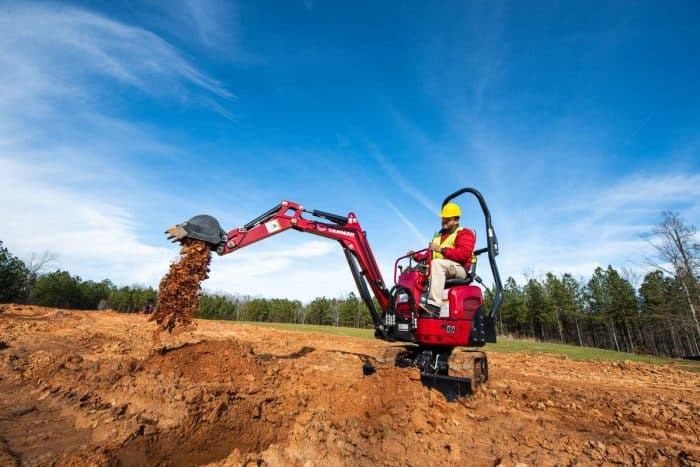
Mini Excavators for Rent vs. Buying: The Real Cost Breakdown Most Contractors Get Wrong

Most contractors who face this decision approach it the same way: they look at the monthly rental cost, compare it to the purchase price, and assume ownership wins once enough projects accumulate. That reasoning is understandable, but it skips over several cost categories that quietly erode the value of owned equipment over time. The rent-versus-buy calculation is not simply about machine cost. It is about total operational exposure — and that includes maintenance schedules, capital allocation, storage, resale uncertainty, and what happens when a machine goes down mid-project.
The construction and excavation industry has evolved considerably in how contractors manage equipment. Smaller jobs, faster timelines, and tighter site constraints have made compact equipment more central to day-to-day operations. How a contractor sources that equipment — and how honestly they account for the full cost of each path — often determines whether a project stays within margin or quietly loses ground.
What the Rental Model Actually Covers That Ownership Does Not
When contractors explore mini excavators for rent, they are often focused on short-term flexibility. What is less discussed is the structural cost relief that renting provides across categories that ownership forces the contractor to absorb entirely. Renting a machine means the rental provider carries the asset on their books, handles scheduled maintenance, manages mechanical failures, and absorbs the depreciation that occurs the moment a machine leaves a lot. For contractors managing multiple job types across varying timelines, this shifts risk away from their operations in ways that add up across a fiscal year.
A useful starting point for understanding equipment cost structures is the U.S. Occupational Safety and Health Administration’s construction industry guidance, which outlines operational and compliance responsibilities that fall to the equipment operator and site manager regardless of whether the machine is owned or rented. That responsibility remains constant — but the financial burden of keeping the machine compliant, functional, and current does not have to rest entirely on the contractor when renting is the chosen path.
The core categories where rental provides relief include:
- Maintenance and repair costs, which are absorbed by the rental provider rather than billed to the contractor after unexpected breakdowns
- Depreciation, which begins immediately upon purchase and accelerates as equipment ages, reducing resale value faster than most buyers anticipate
- Storage and transport overhead, which can represent a meaningful hidden cost for contractors who do not have dedicated equipment yards
- Capital lock-up, which affects a contractor’s ability to respond to new project opportunities that require liquid resources
Why Depreciation Rarely Appears in the Buy-Side Calculation
Depreciation is the cost that ownership advocates most often understate. A compact excavator does not retain its value in a straight line. In the early years of ownership, value drops at a rate that rarely matches what most buyers expect when they commit to a purchase. By the time a contractor considers selling the machine to recover some of their investment, market conditions, equipment hours, maintenance records, and competing inventory all influence what the machine will actually fetch. The gap between purchase price and realized resale value represents a real cost — one that never appears on a monthly loan statement but absolutely affects the economics of ownership.
Contractors who rent mini excavators for rent avoid this exposure entirely. They pay for productive use of the machine without carrying the risk of an asset that may be worth significantly less when they no longer need it.
Where Ownership Creates Hidden Costs That Compound Over Time
Owning construction equipment introduces a set of ongoing obligations that extend well beyond the loan or purchase payment. These obligations are not optional — they are required to keep the machine operational, legally compliant, and safe to operate on a job site. When those costs are mapped out honestly across the useful life of a machine, the total cost of ownership often exceeds initial projections by a meaningful margin.
Maintenance and Repair Obligations Do Not Scale Linearly
During the first years of ownership, maintenance costs tend to be manageable and relatively predictable. Scheduled service intervals, fluid changes, and wear-part replacements are built into most ownership planning. What changes over time is the unpredictability. As machines accumulate hours, the likelihood of unscheduled repairs increases. Hydraulic systems, undercarriage components, electrical systems, and engine components all degrade at rates that vary by how the machine has been used and the conditions it has worked in. These repairs do not announce themselves in advance, and they rarely arrive at convenient moments in the project calendar.
A machine breakdown mid-project is not simply a repair cost. It is downtime that may delay crew work, push project completion dates, and create downstream costs with other trades or subcontractors waiting on the excavation phase. Renting mini excavators for rent from providers who maintain their fleets actively reduces this exposure. When a rental machine develops a mechanical issue, the provider either repairs it quickly or supplies a replacement — options that an equipment owner must solve internally or through third-party service relationships.
Insurance, Registration, and Compliance Costs Are Constant
Owned equipment carries annual costs that exist whether the machine is in active use or sitting between projects. Insurance coverage for construction equipment is not insignificant, particularly for machines with higher replacement values. Registration and licensing requirements vary by jurisdiction, but they represent recurring obligations that add to the ownership ledger. Compliance inspections and documentation requirements are also the sole responsibility of the owner, creating administrative overhead that rental relationships largely eliminate. The rental provider handles these requirements for their fleet. The contractor handles only site-level safety and operator responsibilities.
When Buying Actually Makes Sense — and Why the Threshold Is Higher Than Expected
Ownership does make sense in specific circumstances, but the conditions required to justify the decision are more demanding than most contractors initially assume. The common argument — that if you use the machine enough, buying eventually wins — is only valid when the full cost of ownership is accounted for, not just the loan payment against the rental rate.
High Utilization Across Predictable, Consistent Work Types
The strongest case for ownership is when a contractor can project sustained, consistent machine utilization over an extended period using the same equipment type for the same category of work. A contractor who specializes in utility installation, for example, and runs excavation work year-round across multiple simultaneous projects may reach a utilization point where owning one or more units produces better economics than renting indefinitely. The key word is sustained. Utilization that fluctuates seasonally, drops between contract cycles, or depends on winning future bids creates gaps in productive use that erode the ownership math.
Capital Availability Without Opportunity Cost
Buying equipment outright, or financing it, commits capital or borrowing capacity to a depreciating asset. For contractors who are actively growing, pursuing larger contracts, or building out teams and operational infrastructure, tying capital to equipment purchase can limit their ability to respond to other business needs. Renting mini excavators for rent keeps that capital available. This is not a trivial consideration — access to working capital is consistently cited as one of the primary constraints on small and mid-size contractor growth, and equipment ownership decisions directly affect how much capital remains flexible.
Project Type and Duration Should Drive the Decision, Not Volume Alone
The most common error in the rent-versus-buy decision is treating equipment volume as the only variable. Contractors sometimes reason that if they expect to complete a certain number of projects over the next few years, ownership becomes the rational choice. This ignores several factors that have nothing to do with volume: project type variation, geographic spread, machine size requirements, and the probability that work demand stays consistent across that projection period.
Different projects require different machine configurations. A contractor moving between residential grading, utility work, and commercial site preparation may need varying bucket sizes, attachments, and machine weights across those job types. Renting mini excavators for rent allows contractors to match the right machine to each specific project without building an inventory of owned equipment that may not be optimally suited to each application. Ownership, by contrast, tends to push contractors toward using what they have rather than what the project actually requires.
Rental Supports Operational Flexibility During Business Transitions
Contractor businesses are not static. They take on new service lines, lose contracts, adjust staffing, and shift geographic focus. Equipment owned during a period of growth can become a liability when work slows or when the business pivots. A machine sitting in a yard generates depreciation, insurance costs, and storage overhead whether it is being used or not. Rental relationships scale with actual workload, which means they do not create stranded cost during transition periods. This flexibility is particularly valuable for contractors who are in early growth phases or who operate in markets with meaningful seasonal variation.
Closing Perspective: Grounding the Decision in Honest Cost Accounting
The rent-versus-buy question deserves more honest accounting than it typically receives. The contractor who runs the comparison correctly — including depreciation, maintenance unpredictability, insurance, capital opportunity cost, and utilization gaps — often finds that rental remains competitive across a wider range of scenarios than the surface-level math suggests. Ownership is not inherently wrong, but the conditions that make it genuinely advantageous are more specific and demanding than the simple “use it enough and it pays off” logic implies.
For contractors who work across varied project types, operate in fluctuating market conditions, or want to preserve capital flexibility, renting compact excavation equipment is a financially sound approach that also reduces operational risk. The decision should be made with full visibility into what each path actually costs — not just what appears on the monthly statement. That level of clarity tends to produce better outcomes regardless of which direction a contractor ultimately chooses.