
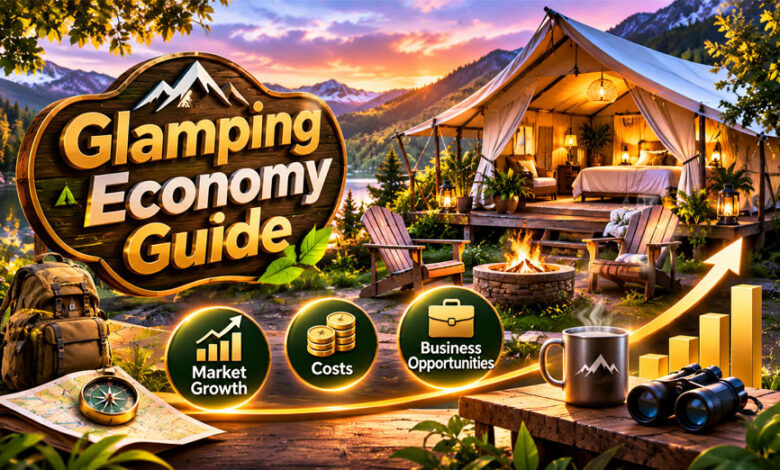

The glamping economy is the business around comfortable outdoor stays. Glamping gives people a way to enjoy nature without giving up many of the comforts they get in a hotel or vacation rental.
Glamping is not only about luxury tents. It includes cabins, pods, yurts, domes, treehouses, RVs, booking services, outdoor equipment, food, activities, and other services.
More travelers are choosing glamping because they want nature, privacy, comfort, and something different from a normal hotel. This guide explains how the glamping economy works, its market growth, costs, income opportunities, and main challenges.
What Is the Glamping Economy?
The glamping economy includes businesses connected with comfortable outdoor stays. The word glamping comes from “glamorous camping.”
Normal camping often requires people to bring their own tent, bedding, cooking items, and other equipment. With glamping, most of these things are already provided.
A glamping stay may have a real bed, electricity, lights, heating or cooling, furniture, Wi-Fi, a bathroom, a kitchen, and outdoor seating. What guests receive depends on the property and its price.
The glamping economy also includes businesses that support these stays. This can include booking websites, cabin builders, furniture companies, cleaning services, solar equipment, bedding, food services, and outdoor equipment.
Local businesses can benefit too. A glamping property may work with farms, wineries, restaurants, photographers, guides, bike rentals, or wellness businesses.
This is why glamping is closer to the hospitality business than normal camping. Guests are paying for a place to stay, but they are also paying for comfort, privacy, location, and convenience.
Types of Glamping Accommodation
Glamping comes in many forms. There is no single type of glamping accommodation.
Luxury and safari tents are common choices. They are usually larger than normal tents and may include beds, furniture, electricity, heating, and private outdoor areas.
Cabins and pods give guests more protection from the weather. They can offer many of the comforts found in a small hotel room. One market report said cabins and pods made up more than 43% of the global glamping accommodation market in 2025.
Yurts and geodesic domes are also popular choices. Their unusual shapes can attract travelers who want something different from a normal hotel.
Treehouses and tiny homes may also be used for glamping when they are built around an outdoor or nature-based stay.
RVs are another option. Vintage trailers, Airstream-style trailers, campervans, motorhomes, and converted buses can be placed on suitable land and rented to guests.
The type of accommodation is only one part of the business. Location, cleanliness, comfort, privacy, facilities, service, and price are also important.
How Big Is the Glamping Market?
Glamping has grown into a noticeable part of the outdoor travel industry.
One Grand View Research estimate valued the global glamping market at about $3.79 billion in 2025. The same research expects the market to reach around $7.87 billion by 2033.
It also estimates yearly market growth of about 9.5% from 2026 to 2033.
North America is an important glamping market. The same research valued the North American market at about $993.2 million in 2025 and expects it to reach around $2.61 billion by 2033.
Other studies give different numbers. Another source estimated the global market at about $2.35 billion in 2023 and discussed forecasts of around $4.8 billion to $5.2 billion by 2028–2030.
These numbers are estimates, not exact totals. Research companies may use different definitions of glamping.
Still, several market reports expect glamping to continue growing. This does not mean every glamping business will make money. Individual results depend on many factors.
Why Is the Glamping Economy Growing?
Many people like spending time in nature but do not enjoy every part of normal camping.
Sleeping on the ground, setting up a tent, carrying equipment, and dealing with bad weather can make camping difficult. Glamping removes many of these problems.
Guests can enjoy forests, mountains, farms, lakes, and other outdoor locations while still having a proper bed, electricity, lights, and other comforts.
Outdoor travel also became more popular during and after the COVID-19 pandemic. Many people tried camping and local outdoor trips during this time.
Younger travelers are also interested in unusual places to stay. Cabins, domes, trailers, and treehouses can offer something different from a standard hotel room.
Wellness travel is another reason for growth. Glamping properties may offer hiking, yoga, stargazing, outdoor cooking, or quiet places to relax.
Remote work has also created new opportunities. Some properties offer good Wi-Fi and work areas so guests can work while staying away from home. These trips are sometimes called workcations.
Sustainability is important to some travelers as well. Solar power, lower water use, less waste, and careful land use may make a property more attractive to these guests.
Glamping fills the space between a hotel and traditional camping. People can spend time outdoors without giving up all their normal comforts.
Who Uses Glamping?
Glamping attracts many types of travelers.
Couples may book glamping stays for weekends, anniversaries, or short breaks. Small pods, tents, domes, and trailers can work well for couples.
Families may prefer cabins or larger RVs with several beds, bathrooms, cooking areas, and more space.
Groups of friends may choose larger properties for holidays, celebrations, and outdoor activities. Some glamping sites also host retreats and small events.
Glamping can also attract people who would not normally go camping. A proper bed, electricity, bathroom, and heating or cooling can make outdoor travel easier for them.
Remote workers may choose properties with good internet, electricity, and a comfortable place to work.
Pet-friendly glamping is another option. It allows people to travel without leaving their pets at home.
There is no single type of glamping guest. The right customer depends on the location, accommodation, price, and services offered.
How Does a Glamping Business Make Money?
Most glamping businesses make their main income from nightly bookings.
Guests pay to stay in a tent, cabin, pod, dome, yurt, treehouse, RV, or another type of accommodation.
Operators can also make money from extra services.
Properties with private bathrooms, kitchens, hot tubs, better views, large decks, or other premium features may charge higher prices.
Food can bring in extra income. This may include breakfast baskets, coffee, snacks, barbecue supplies, or s’mores kits.
Some businesses also offer bike rentals, guided walks, yoga, stargazing, farm activities, and local tours.
Special packages can be offered for birthdays, anniversaries, proposals, retreats, and other events.
Glamping operators may also work with nearby restaurants, farms, wineries, photographers, guides, and activity providers.
Direct bookings can help too. Booking platforms can bring new customers, but they may charge fees. A business with its own booking website can have more control over bookings and customer relationships.
A glamping business can therefore make money from more than the accommodation itself.
How Much Does Glamping Cost for Guests?
There is no fixed price for glamping.
Prices depend on location, accommodation type, season, facilities, and the level of service.
One source gives broad North American examples. Simpler glamping stays may cost around $80 to $150 per night.
Mid-range stays may cost around $150 to $300 per night.
Luxury glamping may cost $300 to $600 or more per night. Some high-end resorts can charge much more.
These are only general examples.
A simple tent with shared bathrooms will usually cost less than a private dome with a bathroom, heating, hot tub, and mountain view.
Prices may also increase on weekends, holidays, and during busy travel seasons.
Location matters too. A property near a national park, beach, mountain, or popular tourist area may charge more than a similar property in a less popular area.
Guests should also check what is included in the price. Meals, parking, cleaning, activities, Wi-Fi, heating, and other services may sometimes cost extra.
What Do Glamping Guests Expect?
Guest expectations usually increase with the price of the stay.
Most guests expect clean and safe accommodation. They also expect the property to look similar to the photos shown online.
A comfortable bed and clean bedding are important.
Many modern glamping stays also offer electricity and lighting. Heating, fans, or air conditioning may be needed depending on the weather.
Bathroom facilities should be clearly explained before guests book. Some properties offer private bathrooms, while others use shared facilities.
Kitchen facilities also vary. Some properties have full kitchens. Others may only provide a small fridge, kettle, coffee maker, or simple cooking area.
Outdoor space is another important part of glamping. A deck, chairs, dining area, or fire pit can help guests enjoy the natural setting.
Wi-Fi can be useful, especially for remote workers and longer stays. If a property promises reliable internet, guests will expect it to work.
People paying higher prices may also expect better bedding, stylish rooms, private facilities, easy check-in, and a good location.
Clear information helps avoid problems. Operators should explain exactly what guests will receive before they book.
How Much Does It Cost to Start a Glamping Business?
There is no fixed cost for starting a glamping business.
The amount depends on the land, accommodation, location, utilities, and size of the business.
Land can be one of the biggest costs. Some operators already own land. Others need to buy or rent it.
Accommodation is another major cost. A furnished tent may cost much less than a cabin, dome, or tiny home.
The land may also need work before guests can stay there. This can include leveling, drainage, roads, parking, decks, foundations, landscaping, water, electricity, sewage, and internet.
Operators also need beds, mattresses, bedding, furniture, lighting, heating, cooling, kitchen equipment, and guest supplies.
Other costs can include permits, insurance, booking software, photography, marketing, cleaning equipment, and repairs.
One source estimates that a purpose-built yurt, cabin, or dome setup may cost around $30,000 to $100,000 or more.
The same source estimates that preparing a site for an RV may cost around $5,000 to $15,000, not including all upgrades and other expenses.
These are only rough examples. Real costs can be much lower or much higher.
Owners should also keep extra money for unexpected repairs and problems.
Is a Glamping Business Profitable?
A glamping business can make a profit, but profit is never guaranteed.
Income depends on nightly prices, bookings, location, season, and operating costs.
Even a property with high nightly rates may make little profit if its costs are also high.
Common expenses include land, cleaning, electricity, water, insurance, booking fees, repairs, workers, marketing, and taxes.
One source estimates profit margins of around 30% to 50% after expenses. It also gives examples of RV glamping businesses making around $25,000 to $40,000 in yearly revenue.
These are examples and estimates. They should not be treated as normal results for every business.
Occupancy is very important. A property charging $250 per night only earns that money when someone books it.
Seasonality can also affect income. Some properties may be busy during summer but have fewer bookings during winter.
The time needed to recover the original investment also varies. Someone who already owns land or an RV may recover costs faster than someone who needs to buy land and build accommodation.
RVs and the Glamping Economy
RVs can work well as glamping accommodation because they already include many useful features.
A stationary RV may have beds, electricity, storage, a kitchen, heating or cooling, and a bathroom.
Instead of renting the RV for people to drive, the owner can place it on suitable land and rent it as accommodation.
Vintage trailers and Airstream-style RVs can be popular because they offer a different look from a normal hotel room.
Modern travel trailers and fifth wheels may work well for families because they often have more space.
Smaller trailers and campervans may be better for couples.
Class A and Class C motorhomes can also be used for glamping.
People who already own an RV may spend less than someone building a new cabin or dome. However, they may still need to pay for land preparation, utilities, furniture, insurance, outdoor areas, and permits.
RVs also need regular care. Roofs, plumbing, electrical systems, air conditioning, seals, and exterior parts can wear over time.
Another benefit is that some RVs can be moved to another location if needed. However, moving a glamping unit can still involve costs and local rules.
Location, Land, and Zoning
Location can make a big difference to a glamping business.
Properties near mountains, beaches, lakes, forests, national parks, farms, wineries, and tourist areas may attract more visitors.
A good view and privacy can also make a property more attractive.
Guests still need to reach the property safely. A very remote location may be peaceful, but poor road access can create problems.
Owners should check local laws before spending money.
Glamping may come under short-term rental, campground, building, land-use, health, sanitation, or fire rules.
Some places may require special permits. Water, toilets, sewage, parking, fire access, and electrical systems may also need to meet local rules.
Rules are different from one place to another. There is no single law that applies to every glamping business.
Some operators work with farms, campgrounds, vineyards, or other tourism properties instead of buying their own land.
Any agreement should clearly explain rent, income sharing, insurance, repairs, and other responsibilities.
Technology Used in Modern Glamping
Technology can make a glamping business easier to run.
Online booking systems allow guests to check available dates, choose a unit, pay online, and receive booking details.
A business can also have its own website for direct bookings.
Keyless entry and mobile check-in can make it easier for guests to arrive without waiting for staff.
Some properties use smart lights, thermostats, locks, and other connected devices.
Wi-Fi can be important for remote workers and guests who want internet access.
Businesses listed on several booking websites may use channel-management software. This keeps booking calendars connected and helps prevent double bookings.
Pricing tools can also help owners change prices based on demand, weekends, holidays, and busy seasons.
Technology should make things easier for guests and owners. Systems that are difficult to use or often stop working can create more problems.
Power, Solar, and Off-Grid Glamping
Electricity is important at many glamping properties.
Guests may need power for lights, phones, laptops, Wi-Fi, fans, refrigerators, coffee makers, heating, cooling, and other equipment.
Normal grid electricity is often the easiest option when available.
Remote properties may need portable power stations, solar panels, batteries, or generators.
Portable power stations can run certain devices and small appliances. The correct size depends on how much electricity the property needs.
Solar panels can help recharge batteries. Their performance depends on sunlight, weather, panel size, and battery capacity.
Generators can provide backup electricity, but they can be noisy and require fuel.
The source we collected also mentions specific UDPOWER products. These are commercial recommendations and are not required for every glamping property.
Each business should choose its power system based on its location and actual electricity needs.
A backup power plan can also be useful. Power cuts can affect lighting, internet, heating, cooling, and refrigerators.
Sustainability in Glamping
Some glamping businesses try to reduce their effect on the environment.
Solar power can reduce the need for fuel-powered generators in suitable locations.
Energy-saving lights and appliances can also reduce electricity use.
Water-saving equipment can help lower water use. Reusable products and less single-use packaging can reduce waste.
Some sites use composting toilets, but these systems must follow local health and sanitation rules.
Good site planning is also important. Owners can try to protect plants, manage drainage, reduce erosion, and avoid unnecessary damage to the land.
Working with local food businesses, guides, and activity providers can also support the local economy.
However, simply using tents or solar panels does not automatically make a property environmentally friendly.
Booking, Pricing, and Marketing
Glamping prices should match the property, local demand, costs, and competition.
Many operators charge more on weekends, holidays, and during busy seasons.
Lower weekday or off-season prices may help bring in more bookings during quieter periods.
Some businesses require guests to stay for at least two or three nights during busy dates. This can reduce cleaning and turnover work.
Last-minute discounts may help fill empty dates. Discounts for longer stays can attract remote workers and other long-term guests.
Booking platforms can help new businesses reach customers. Some operators list their properties on several websites.
When using several platforms, calendars should be connected to prevent two people from booking the same unit.
Direct bookings can become useful as the business grows. They can reduce dependence on third-party booking websites.
Good photos are also important. Guests often want to see the accommodation, outdoor area, views, bathroom, and other facilities before booking.
Social media can help people discover unusual stays too.
Marketing can attract attention, but it cannot replace good service. Clean accommodation, working facilities, accurate information, and good communication are still important.
Business Opportunities in the Glamping Economy
The glamping economy offers opportunities to many types of businesses.
Landowners may use suitable land for outdoor accommodation.
Farm and vineyard owners may add glamping to their existing businesses.
Campgrounds can add cabins, tents, or pods for guests who do not own camping equipment.
RV owners may use suitable vehicles as stationary accommodation where local laws allow it.
Wellness businesses can combine glamping with yoga, hiking, meditation, massage, or other activities.
Event venues may use glamping accommodation for weddings, retreats, festivals, and other events.
Other businesses can also earn money from the industry. These include cabin manufacturers, booking software companies, furniture suppliers, solar businesses, cleaners, photographers, property managers, repair services, food providers, and tour guides.
Nearby restaurants, farms, wineries, shops, bike rentals, and activity providers may also benefit from glamping visitors.
This means the glamping economy is much larger than accommodation bookings alone.
Benefits of Running a Glamping Business
A glamping business can offer several benefits.
- Higher prices: Comfortable and unusual stays may charge more than basic camping.
- Extra income: Food, activities, events, and rentals can bring in more money.
- Start small: Some owners can begin with one or two units.
- Use existing property: Existing land, cabins, or RVs may lower startup costs.
- Direct bookings: Owners can build their own customer base.
- Local partnerships: Glamping businesses can work with restaurants, farms, guides, and other local services.
- Flexible options: Some tents, pods, and RVs can be easier to add or move than permanent buildings.
These benefits do not guarantee profit. Local demand and good management are still important.
Challenges and Risks
Running a glamping business also has challenges.
Seasonal demand can make income uneven. A property may be busy in summer and quiet during winter.
Weather is another risk. Heavy rain, wind, snow, heat, and cold can affect both guests and accommodation.
Cleaning can take time because both indoor and outdoor areas may need attention.
Maintenance is also important. Plumbing, electricity, heating, cooling, roofs, furniture, and outdoor equipment can need repairs.
Rural properties may also have problems with insects, pests, and wildlife.
Guest expectations can be high, especially when they are paying premium prices.
Internet problems, power cuts, no hot water, or broken heating and cooling can quickly lead to complaints.
Competition is also growing in some popular areas. Glamping properties may compete with hotels, cabins, vacation rentals, campgrounds, and other outdoor stays.
Local laws can also change.
For these reasons, a glamping business should not be seen as easy passive income. Owners still need to manage guests, cleaning, repairs, marketing, and finances.
Tips for Starting a Glamping Business
A few simple steps can help reduce problems.
- Research the local market. Check nearby properties, prices, reviews, busy seasons, and attractions.
- Check local rules first. Learn about zoning, permits, insurance, sanitation, and short-term rental rules.
- Create a clear budget. Include land, accommodation, utilities, furniture, insurance, marketing, and repairs.
- Choose the right accommodation. Think about local rain, snow, heat, cold, and wind.
- Focus on comfort. A good bed, clean bathroom, electricity, and working heating or cooling are important.
- Prepare for bad weather. Good drainage and covered outdoor areas can help.
- Use honest photos. Show guests what the property really looks like.
- Make check-in easy. Give guests simple directions and instructions.
- Keep money for repairs. Unexpected problems can happen.
- Track results. Check bookings, prices, costs, reviews, and profit.
Starting with a small number of units can also reduce risk. Owners can learn what guests want before spending money on a larger site.
Future of the Glamping Economy
Market forecasts suggest that the glamping economy may continue to grow.
One Grand View Research forecast expects the global market to reach about $7.87 billion by 2033. This is only a forecast and is not guaranteed.
Travelers also have more types of accommodation to choose from. Cabins, pods, domes, treehouses, vintage trailers, RVs, and other unusual stays are all part of the market.
Off-grid glamping may also grow as solar panels, batteries, and energy-saving equipment improve.
Wellness stays are another possible growth area. Glamping can be combined with hiking, yoga, stargazing, saunas, and other outdoor activities.
Remote work may continue to create demand for properties with good Wi-Fi and work areas.
Pet-friendly properties may also attract more travelers who want to bring their animals.
Technology will continue to play a role. Online bookings, smart locks, connected calendars, automatic messages, and pricing tools can make businesses easier to manage.
Competition may also increase. Hotels, vacation rentals, campgrounds, and other glamping businesses can all compete for the same guests.
Because of this, simply having an unusual cabin or tent may not be enough. Location, comfort, fair pricing, working facilities, cleanliness, and good service will remain important.
Bottom Line
The glamping economy is an important part of outdoor hospitality. It gives travelers a way to enjoy nature with more comfort than traditional camping.
The business is not limited to tents and cabins. Landowners, RV owners, campgrounds, booking services, equipment suppliers, local businesses, and activity providers can all be part of the market.
Glamping can provide a good business opportunity, but profit is not guaranteed. Location, startup costs, bookings, pricing, local rules, maintenance, and guest service all affect the results.
Anyone planning to start a glamping business should research the local market and legal requirements first. Good planning and careful cost control can help reduce risks.
Frequently Asked Questions
What is the glamping economy?
The glamping economy is the business around comfortable outdoor stays. It includes places to stay, food, activities, and other services.
How is glamping different from camping?
Camping often requires you to bring your own tent and equipment. Glamping gives you a ready place to stay with more comfort.
How big is the glamping market?
One estimate valued the global glamping market at about $3.79 billion in 2025. Other studies may give different numbers.
How much does glamping cost per night?
Basic stays may cost around $80–$150 per night. Luxury glamping can cost $300–$600 or more.
Is a glamping business profitable?
Yes, it can be profitable, but income is not guaranteed. Profit depends on bookings, location, prices, and costs.
How much does it cost to start a glamping business?
There is no fixed cost. The total depends on land, accommodation, utilities, permits, insurance, and other setup costs.
What types of glamping accommodation are popular?
Popular options include luxury tents, cabins, pods, yurts, domes, treehouses, tiny homes, trailers, and RVs.
What are the biggest risks of a glamping business?
Main risks include bad weather, fewer bookings in some seasons, repairs, local rules, high costs, and competition.
Research Dossier for Target Company: A Beginner’s Guide to Business Research
EO Pis: Business Performance, KPIs, Dashboards, and Reporting




One Comment