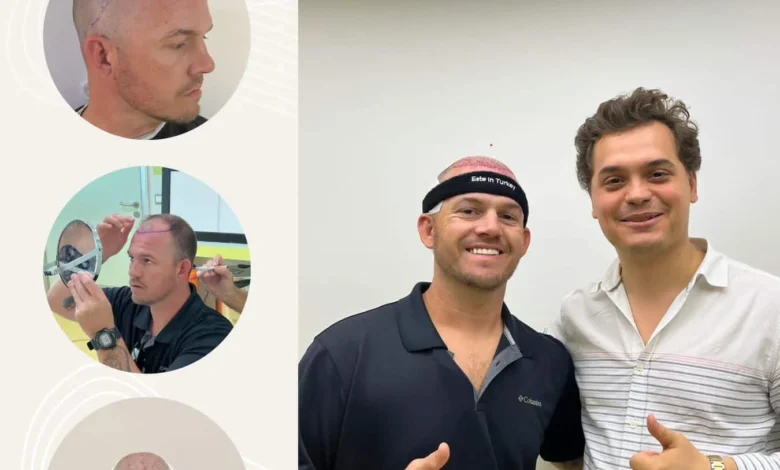

Hair transplantation has become increasingly accessible over the past decade, but the cost of treatment still varies significantly from one clinic to another and from one country to another. Turkey remains one of the most frequently considered destinations for the procedure, especially among patients travelling from the UK and Europe.
The appeal is not only the lower headline price. Many clinics in Turkey combine the procedure with accommodation, transfers, medication and postoperative support, which makes the overall treatment package easier to plan for international patients.
Still, there is no single standard price for a hair transplant in Turkey. The final cost depends on the technique used, the extent of hair loss, the number of grafts required and the level of medical involvement throughout the procedure.
Understanding these differences can make price comparisons far more useful.
What Does a Hair Transplant Typically Cost in Turkey?
In 2026, hair transplant prices in Turkey commonly range from around €1,500 to €3,500, although premium procedures can cost more.
This range is broad because the term “hair transplant” can describe very different treatment plans. A patient who only needs restoration in the frontal area may require a much smaller procedure than someone treating the hairline, mid-scalp and crown.
Clinics also structure their prices differently. Some charge according to the number of grafts, while others offer a fixed package after assessing the patient’s photographs and donor area.
For patients researching current hair transplant prices in Turkey, it is worth looking beyond the first number advertised and checking exactly what the package includes.
A lower quotation is not necessarily better value if accommodation, medication, transfers or postoperative services are added later.
FUE and DHI Usually Have Different Prices
The transplantation technique is one of the main factors affecting the final cost.
Sapphire FUE remains one of the most widely used methods. Hair follicles are individually extracted from the donor area before small channels are created in the recipient area, where the grafts are then implanted.
Because FUE is often performed with a full shave, it can be particularly practical for patients undergoing larger sessions.
DHI follows a different implantation process. The extracted follicles are placed with specialised implanter pens, allowing more direct implantation into the recipient area.
DHI can sometimes cost more because the implantation stage can take longer and may require a larger team working at the same time. It is also frequently preferred by patients who want to keep more of their existing hair, since in many cases only the donor area needs to be shaved.
The difference between FUE and DHI is therefore not simply about one method being better than the other. The most appropriate technique depends on the patient’s hair loss pattern, donor capacity, existing hair and cosmetic goals.
Does the Number of Grafts Affect the Price?
Sometimes.
A graft is a naturally occurring follicular unit that can contain one or several hairs. The number required depends mainly on the size of the recipient area and the density that can realistically be achieved.
A smaller frontal restoration may require around 2,000 to 2,500 grafts, while more extensive cases may involve 4,000 grafts or more.
However, a higher graft count does not always mean a proportionally higher price.
Many Turkish clinics offer session-based pricing rather than charging individually for every graft. In these cases, the medical team determines the appropriate number of grafts according to the donor area and the treatment plan.
This distinction is important because the donor supply is limited.
Removing too many follicles in a single session can reduce the appearance of density in the donor area permanently. A responsible treatment plan should therefore focus on the number of grafts that can be harvested safely, rather than simply promising the highest possible number.
What Is Usually Included in a Hair Transplant Package?
International patients often compare clinics based only on the price of the procedure, but package contents can vary considerably.
Depending on the clinic, a hair transplant package may include:
- preoperative blood tests
- the hair transplant procedure
- PRP treatment
- medications
- postoperative shampoo and lotion
- medical accessories
- the first hair wash
- dressing changes
- airport transfers
- transfers between the hotel and clinic
- hotel accommodation
- postoperative consultations and follow-up
These additions can explain why two apparently similar offers have different prices.
Accommodation is particularly relevant for medical tourists. Many patients stay in Istanbul for two or three nights, which gives enough time for the procedure and the first postoperative check before returning home.
Private transfers are also commonly included, reducing the need to organise transportation immediately after treatment.
Why Is Hair Transplantation Cheaper in Turkey?
The price difference between Turkey and countries such as the UK, Germany or France can appear significant.
A procedure costing several thousand euros in Istanbul may cost considerably more in Western Europe.
This does not automatically mean that Turkish clinics use lower-quality materials.
The difference is influenced by lower operating costs, staffing expenses, commercial rent and the scale of the medical tourism industry. Turkey also performs a high volume of hair transplant procedures, which has created a highly competitive market.
That competition helps keep package prices relatively accessible.
However, the large number of providers also means that patients need to compare clinics carefully.
There are established medical centres as well as high-volume providers where several operations may take place at the same time. Looking only at the price makes it difficult to understand the difference between them.
The Doctor’s Involvement Is Worth Checking
One of the most useful questions a patient can ask before booking is who actually performs each part of the procedure.
Hair transplantation involves several separate stages, including consultation, hairline planning, graft extraction, preparation of the recipient area and graft implantation.
The doctor’s involvement can differ significantly between clinics.
In some clinics, the physician performs or directly supervises the critical stages, while experienced medical staff carry out extraction or implantation. In others, much of the procedure may be technician-led.
This is why patients considering a hair transplant in Turkey should ask for a proper assessment of their donor area and treatment plan before focusing only on price or maximum graft numbers.
The donor area is a limited resource, especially for younger patients whose hair loss may continue over time.
Very Cheap Hair Transplants Deserve More Scrutiny
Turkey’s competitive market occasionally produces offers that appear exceptionally cheap.
A low price does not automatically mean poor quality, but unusually low quotations are worth examining more carefully.
Patients should ask several basic questions before booking:
Who performs the procedure?
How many operations are carried out each day?
Is the clinic licensed?
Is postoperative follow-up included?
Is the price genuinely final?
Are hotel and transfer costs included?
A quotation that initially looks inexpensive can become much higher once additional services are added.
Transparent package pricing therefore makes comparison easier for patients travelling from abroad.
Recovery Is Part of the Overall Treatment
The surgical procedure may take only one day, but the recovery process continues for months.
During the first week, redness and small crusts around the implanted follicles are common. Most crusts usually disappear within around 10 to 14 days.
The transplanted hairs often shed during the following weeks. This temporary shedding can worry patients, but the follicles generally remain beneath the skin.
New growth usually becomes more noticeable from the third or fourth month.
More visible cosmetic changes tend to appear between six and nine months, while final results may take around 12 months or longer, especially in the crown area.
This is why postoperative communication with the clinic remains important even after the patient has returned home.
Comparing Value Rather Than Only Price
Cost will naturally remain one of the main considerations for patients travelling abroad for a hair transplant.
But two clinics offering procedures at €1,800 and €2,200 are not necessarily offering the same treatment experience.
A more useful comparison looks at what is included in the price, who performs the key stages of the procedure, how the donor area is managed, how many patients are treated each day and what level of follow-up is available after surgery.
Turkey continues to offer a significant cost advantage for many international patients, but the lowest quotation is not always the most important figure.
For anyone researching treatment in 2026, a detailed consultation and a clear understanding of the treatment plan are usually far more valuable than choosing a clinic based on price alone.