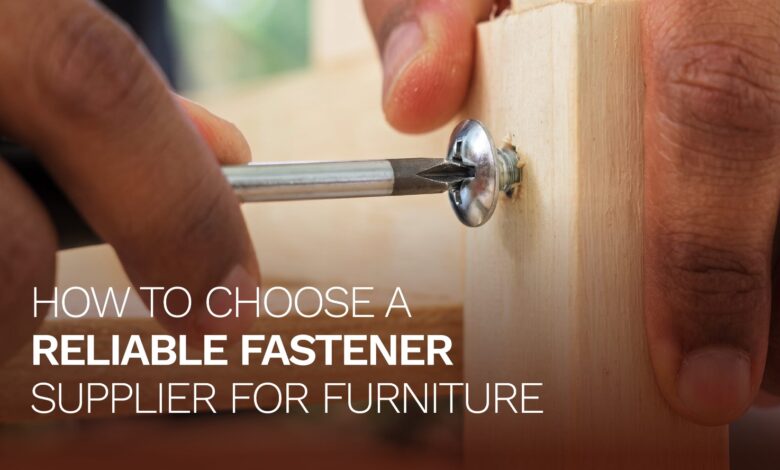

Locking down a solid hardware supply chain is a massive deal for any commercial furniture shop. But plenty of purchasing managers still pick a Fastener Supplier for Furniture just by chasing the cheapest quote and the quickest delivery date. That shortcut always backfires the second a weak screw snaps on the assembly line or starts rusting inside a client’s expensive custom wardrobe. A hardware manufacturing partner is truly only as reliable as the lowest quality batch they ship to your factory floor. Unfortunately the initial sample stage rarely reveals this reality because those first few boxes are always carefully curated for perfection before you see them.
The True Cost of Cheap Hardware on the Factory Floor
Procurement managers must look at the hidden costs that come with poor hardware choices. A supplier quoting well below the market average for the same size and grade is not doing you a favour. Somewhere inside that discount something is being cut. You might be getting thinner walls on the pouch count, mixed batches sourced from multiple unverified mills or a material claim that will fail a basic salt spray test. None of these production shortcuts show up on the initial quotation spreadsheet.
They show up on site months later. Hardware that was supposed to last five years starts leaving orange rust marks after a single heavy monsoon. A screw snaps in half while being driven into dense plywood halting the entire assembly line. When a hinge pulls away from a cabinet door because the screw threads sheared off under load the cost to fix it goes far beyond replacing the screw. You have to factor in the technician’s travel time to the client site, the replacement materials and the irreversible damage done to your brand reputation. By the time these issues surface the furniture is already installed and the labour cost is already spent. Those cheap screws quietly become the most expensive part of the entire job. It is a costly lesson in why strict quality control matters far more than a marginal upfront discount.
What Reliability Actually Looks Like in Volume Production
True reliability comes down to a few narrow manufacturing details. The gauge and length printed on the pouch must match what is actually inside every single time rather than just in the pristine sample box. The material label needs to be completely honest. Whether it is stainless steel, mild steel or zinc-plated hardware you need exact grades rather than vague wording standing in for a real answer. Most importantly a repeat order placed six months later must behave exactly like the first one did.
Most buyers only check these criteria at the billing counter on day one. The true test of a hardware partner happens when you open the fiftieth box. You usually find out things are wrong when a drawer channel starts binding because the screw heads in that specific batch were half a millimetre too thick and sit proud of the metal runner.
How to Test a Supplier Before You Commit
A simple testing process catches most of these red flags before a full bulk order goes out. You do not need an expensive metallurgical laboratory to spot a bad vendor. Just ask for three small sample packs drawn from three completely different production batches. Do not accept three pieces pulled from the same exact box.
Check the finish, the thread cut and the head shape against each other under decent light. If all three samples look and feel identical the manufacturer has real batch control. If even one screw looks slightly different from the others that tiny difference will definitely show up again later. It will just happen at a much larger and considerably more expensive scale on your factory floor disrupting your entire production schedule.
You can take this testing a step further on your own floor. Drive the sample screws into the exact density of wood or MDF your team uses daily. Watch how the heads handle the torque of an industrial drill. If the drive recess strips out easily or the shank warps under pressure you know the metal is too soft.
Navigating the Hardware Inventory You Actually Need
The sheer variety of Types of SS Fasteners needed for professional furniture work is much wider than most people expect. Modern furniture relies on a complex mix of materials like MDF, particle board, solid timber and metal framing. You need chipboard screws for basic carcass panels and drywall screws for gypsum partitions near a modular kitchen. You also need heavy wood screws for solid timber joints alongside pan head and countersunk variants for hinges, handles and drawer channels. Add in machine screws for anything bolted through a nut or a tapped bracket and the inventory list grows incredibly fast.
A trader who only stocks two or three generic sizes is not truly serving the furniture industry regardless of what their shop sign claims. Real Furniture fasteners cover enough distinct head types and drive styles that a vendor without real depth across all of them will just slow your production down. They will keep sending your purchasing team back out to a second shop to hunt down whatever they failed to stock the first time.
You need a partner who manufactures multiple Types of SS Fasteners under one roof. This ensures your assembly team never has to pause work just because a specific wardrobe hinge requires a unique thread pitch that your supplier cannot provide.
Questions to Ask a Fastener Supplier in India
Before signing a long-term contract with any Fastener Supplier in India four specific questions will help you separate a genuine manufacturer from a middleman repackaging bulk goods.
Firstly, check for their manufacturing certification directly rather than accepting a blurry photocopy printed in a sales brochure. A real plant hands over CE and ISO documentation without hesitation because it already exists on file. Secondly, confirm whether sizes outside their standard catalogue can be produced on demand or whether you are strictly limited to whatever happens to sit on their shelf that week.
Thirdly, ask how returns or mismatched batches get handled. A vendor who has never had to answer that question has probably never been truly tested on their own return policy. Finally ask for the minimum order quantity in writing. Verbal promises about highly flexible quantities have a funny way of changing once the official purchase order is placed.
The Documentation Standard
A company that is genuinely confident in its own production quality does not wait for you to beg for paperwork. Clear certification copies, batch test summaries and an accurate size chart should arrive with the very first sample. Every time you inquire about hardware the quote should include a written material grade. Having just the word “stainless” printed on a sticker is not enough. That single line of documented proof is often the only thing standing between a screw that lasts a decade and one that fails long after the invoice is paid.
FAQs
How do I know if a Fastener Supplier for Furniture is genuine?
Ask for CE and ISO certification directly. Request physical samples from more than one production batch and verify that the material label exactly matches what is actually inside the pouch. A reliable manufacturing partner provides all three without hesitation.
What is the minimum order quantity for these supplies?
This varies heavily by manufacturer and screw size. Always get the exact minimum order quantity in writing before placing your first order. Verbal promises about flexible minimums often disappear once a purchase order is confirmed.
Why do some screws rust despite being labelled stainless?
The label might be accurate for the screw head only or the bulk batch may simply not match the premium sample you were shown earlier. Always test a small batch yourself and demand the specific material grade in writing before committing to a purchase.
This article has been contributed by LP Screw, a CE Certified, ISO 9001-2009 certified fastener manufacturer based in Ahmedabad, following DIN 7982 standards. Visit lpscrew.com to explore their range.