
Deciding whether a tree should stay or be removed is rarely simple. Many homeowners notice a lean after a storm, a hollow-sounding trunk, or large dead limbs and wonder whether pruning will be enough or whether tree removal is the safer option. The right choice depends on visible defects, what the tree could damage if it fails, and how much room is available to manage the work safely. This article explains how to recognize common risk signals, when pruning or cabling may help, and what safe removal looks like on a tight property. It also outlines practical steps to restore the site and replant wisely so the landscape stays resilient for years to come.
-
Red Flags That Point to Removal Rather Than Pruning
Some conditions strongly suggest that tree removal deserves serious consideration. Mushroom-like fungal growth at the base, a sunken or decayed root flare, and fresh soil movement after strong winds may indicate root plate failure, which pruning cannot correct. A pronounced new lean, a vertical crack running through the trunk, or large cavities near major scaffold limbs can reduce structural stability. Widespread dieback across the canopy, several dead leaders, and codominant stems with included bark may further increase failure risk. In older neighborhoods such as Janesville, where trees often stand close to driveways, roofs, and utility lines, these defects can place valuable property directly within the potential fall zone.
Consider a silver maple that split at a narrow V-shaped union during heavy snow. The wound exposes decayed wood deep inside the crotch, while the remaining leader now leans over a garage. Because included bark prevents a strong connection between codominant stems, the remaining structure may be more likely to fail under wind loading. Pruning cannot rebuild the damaged union, and cabling may not correct the imbalance between the root system and the crown. In this situation, the combination of serious structural defects and limited clearance may make removal the safer option.
-
When Pruning, Cabling, or Retrenchment Can Preserve the Tree
Not every compromised tree needs to be removed. If defects are limited mainly to the crown, targeted pruning may reduce risk while preserving benefits such as shade, habitat, and visual appeal. Reduction cuts that shorten heavy or overextended limbs can reduce bending stress without excessively thinning the canopy. In some situations, through bolts and supplemental cabling can help stabilize codominant leaders. For mature shade trees, phased retrenchment pruning intentionally reduces crown size to create a more stable structure while encouraging new growth closer to the trunk. These methods are different from topping, which can encourage weak shoots and accelerate decay.
There is an important limitation. Pruning and cabling may improve crown structure, but they cannot repair extensive root decay, a failing root plate, or severe trunk cavities. When structural problems begin below ground or at the trunk base, removal may remain the safer option. For otherwise sound trees, however, carefully planned crown work can reduce risk and extend useful life when combined with regular inspections after major storms or periods of high wind.
-
Planning a Safe Tree Removal on a Small or Busy Lot
Small yards, fences, and nearby buildings can significantly affect how tree removal is performed. Before work begins, clear access for trucks and chippers, move vehicles away from the work zone, and keep pets indoors. Mark irrigation heads and discuss gate widths, patios, septic systems, and other features that may restrict equipment access. Overhead power lines, communication lines, and public rights-of-way can create additional constraints. Underground utilities should also be identified in areas where logs, equipment, or heavy limbs may be placed or moved. If a tree borders a sidewalk or shared driveway, coordinating work times and setting up barriers can help protect pedestrians and vehicles.
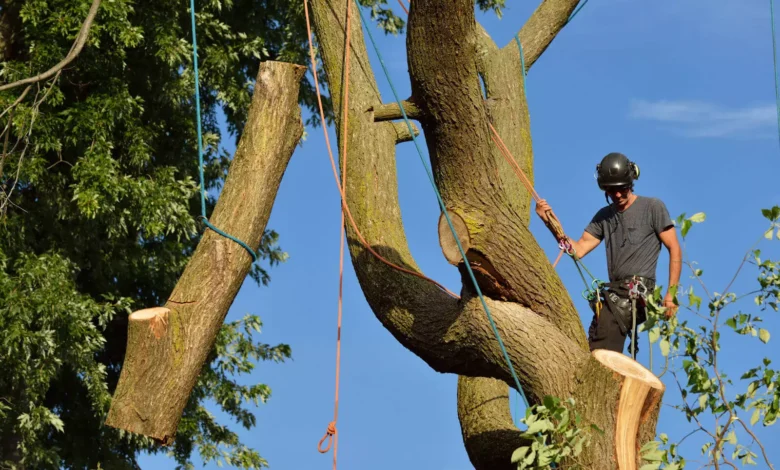
In confined spaces, removing the tree in sections is usually safer than dropping the entire trunk at once. A climber or lift operator may remove limbs systematically while securing sections with rigging lines connected to blocks and friction devices. Taglines can help guide large limbs away from roofs, sheds, windows, and other structures. Ground protection mats can reduce lawn damage, while cones and caution barriers help define the work area. If access or weight makes conventional rigging difficult, a crane may be used to lift sections away from the property. Weather conditions also matter because strong winds, rain, or slippery surfaces can increase risk and may require the work to be postponed.
-
What to Expect From Professional Techniques and Controls
Safe tree removal depends on careful planning, proper equipment, and disciplined technique. When a trunk can be felled safely, crews may create an open face notch in the intended direction of fall, preserve adequate hinge wood for control, and position the back cut appropriately. Wedges may be used to help prevent saw binding and improve directional control. During sectional removal, cutting points are selected with rigging loads in mind, while communication between the climber and ground crew helps keep every movement coordinated.
Personal protective equipment typically includes helmets, eye protection, hearing protection, gloves, and chainsaw protective clothing. Chipper work areas should be clearly separated from other activity, and trained operators should control the equipment. Work near energized electrical conductors requires additional precautions. Only properly qualified personnel should work within required approach distances, and some situations require coordination with the local utility before removal begins.
After the Tree: Soil Recovery and Smart Replanting
After the wood has been removed and the site cleaned, attention should shift to soil recovery and replacing lost canopy. Where heavy limbs or equipment have compacted the soil, loosen the top layer carefully and add compost before reseeding if appropriate. Create a mulch ring around nearby trees to protect roots and reduce competition, but keep mulch away from the trunk flare to avoid excess moisture and decay.
Choose replacement species based on the amount of available space at maturity. Consider overhead wires, nearby foundations, sidewalks, driveways, and the width of the planting area. Plant at the correct depth so the root flare remains slightly above the surrounding soil level. Water deeply during the first two growing seasons and create a broad mulch ring around the base rather than piling mulch against the trunk.
Tree removal is ultimately a decision based on risk. The severity of structural defects, the presence of nearby people or property, and the amount of space available to complete the work safely are more important than appearance alone. Learning to recognize warning signs in the roots, trunk, and canopy can help homeowners act before a storm forces the decision. When defects are manageable, alternatives such as reduction pruning or cabling may help preserve the tree. Document visible problems with photographs, note nearby hazards such as roofs and utility lines, and plan access and timing carefully. A thoughtful approach can protect people and property while creating space for healthier, better-placed trees in the future.