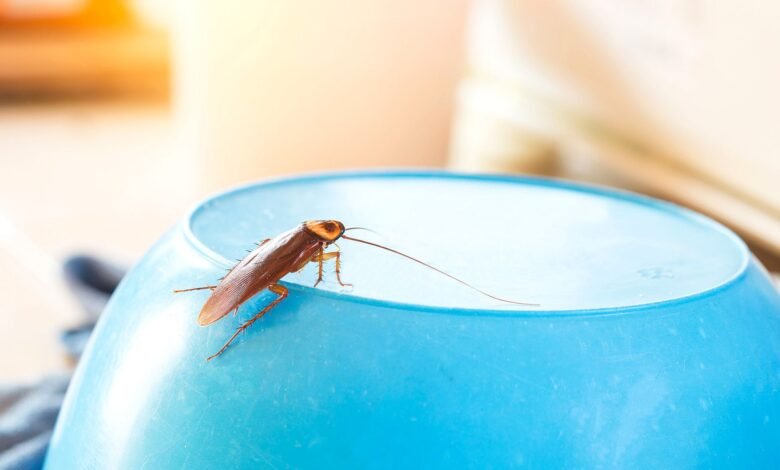

Sydney’s warm conditions and periods of high humidity can create favourable conditions for cockroach activity throughout much of the year. Combine this with dense housing, older plumbing systems and access to food and moisture in kitchens, and it is easy to see why cockroaches can become a problem in homes across the city.
Cockroaches are highly adaptable and capable of entering through small gaps around doors, walls, plumbing and other parts of a building. Understanding what attracts them into a home in the first place is an important step towards keeping them out.
What Attracts Cockroaches
Cockroaches are driven by three basic needs: food, water and shelter. Homes can unintentionally provide all three.
- Food crumbs and residue left on benchtops, floors or inside pantries can provide an easy food source.
- Rubbish that isn’t sealed or removed regularly can attract cockroaches, particularly when food waste is present.
- Leaking pipes and standing water under sinks, in laundries or around plumbing fixtures provide the moisture cockroaches need.
- Clutter, including stacked boxes, newspapers and rarely used storage areas, creates dark, undisturbed hiding places.
- Gaps around doors, walls and plumbing penetrations can provide potential entry points from outside or adjoining areas.
Addressing these factors cannot guarantee that cockroaches will never enter a home, but it can significantly reduce the conditions that allow them to feed, hide and reproduce.
Keeping Kitchen Areas Less Attractive
Kitchens are common areas for cockroach activity because they often provide consistent access to food, water and concealed hiding places. Wiping down surfaces after meals, cleaning spills promptly and avoiding leaving dirty dishes overnight can all help.
Food residue can also accumulate around stovetops, behind appliances, beneath cabinetry and along skirting boards. These less-visible areas are easy to overlook during everyday cleaning but may continue providing food for cockroaches.
This is especially relevant in kitchens featuring stone benchtops Sydney homeowners may choose during renovations. Stone itself does not attract cockroaches, and different stone surfaces vary in porosity depending on the material, finish and sealing. The more important issue is food residue, grease and moisture collecting around benchtop edges, joins, sinks and adjoining cabinetry.
Regularly cleaning around stone benchtops Sydney kitchens, as well as sinks, splashbacks, appliances and cupboard interiors, helps reduce accessible food sources and hiding conditions.
Seal Common Entry Points
Even a clean kitchen can experience cockroach activity if pests have easy access to the property. Inspecting and addressing suitable entry points is therefore an important part of long-term prevention.
Common areas to check include:
- Cracks in external walls and around window frames
- Gaps where pipes and cables enter the home, particularly beneath sinks and behind appliances
- Gaps around plumbing penetrations
- Damaged or poorly fitted door seals
- Damaged flyscreens
- Openings around vents, eaves and other exterior building features
Suitable gaps can often be closed using sealant, weatherstripping or pest-resistant mesh. However, ventilation openings, drainage systems and weep holes should not simply be blocked, as they may serve an important building function. Purpose-designed pest barriers may be more appropriate in these areas.
Checking these areas periodically can help identify new gaps caused by weathering, movement or general wear.
Why DIY Prevention May Not Be Enough
Good hygiene, moisture management and sealing appropriate entry points can reduce cockroach activity considerably. However, these measures may not fully address an established infestation where cockroaches are hiding in concealed areas such as wall voids, cabinetry, subfloors or spaces around appliances.
Cockroaches are primarily nocturnal, so homeowners may not immediately realise how much activity is present. Repeated sightings, particularly during the daytime, droppings or egg cases can indicate that further investigation is needed.
Professional cockroach pest control Sydney can help identify likely harbourage areas and determine which control measures are appropriate for the property.
Depending on the species and extent of activity, treatment may involve targeted baits, insecticidal treatments, monitoring and recommendations for reducing food, moisture and shelter. The most suitable approach depends on where the cockroaches are living and how established the infestation has become.
Professional cockroach pest control Sydney should focus not only on reducing visible cockroach activity but also on identifying the conditions that are allowing the infestation to continue.
Ongoing Prevention
Preventing cockroaches isn’t a one-off task. Consistent household habits can make the property much less suitable for them over time.
Some useful ongoing measures include:
- Cleaning kitchen and dining areas regularly, including beneath and behind appliances
- Storing food in sealed containers rather than leaving opened packaging accessible
- Removing rubbish regularly and using bins with secure lids
- Repairing leaking taps, pipes and appliances promptly
- Reducing unnecessary clutter in storage areas and garages
- Vacuuming areas where crumbs and food residue can accumulate
- Checking plumbing areas for persistent moisture
- Monitoring places where cockroach activity has previously been noticed
None of these steps is particularly difficult on its own, but together they reduce the food, moisture and shelter that cockroaches depend on.
Conclusion
Preventing cockroaches from becoming established in a Sydney home comes down to consistency. Managing food sources, reducing excess moisture, addressing appropriate entry points and maintaining good household hygiene can all make the property less attractive to cockroaches.
These measures can be particularly effective when pest activity is caught early. However, repeated sightings, droppings, egg cases or cockroaches appearing in multiple areas may suggest a more established infestation.
In these situations, professional cockroach pest control Sydney can help determine where the activity is coming from and what treatment or preventative measures are appropriate. Combining good household maintenance with timely intervention provides a more practical long-term approach than repeatedly treating only the cockroaches that are visible.
FAQs
- What are the early signs of a cockroach problem in a Sydney home?
Possible signs include small dark droppings, shed skins, egg cases, unusual odours and live cockroach sightings, particularly at night. Seeing cockroaches regularly during the daytime can also warrant further investigation. - Do stone benchtops attract cockroaches more than other surfaces?
No. Stone benchtops themselves do not attract cockroaches. Food residue, grease and moisture around any benchtop, sink or adjoining cabinetry can provide conditions that support cockroach activity. Regular cleaning around stone benchtops Sydney kitchens helps reduce these food sources. - How often should I check my home for potential entry points?
There is no fixed schedule suitable for every home. Check gaps, seals, plumbing penetrations and exterior openings periodically and whenever you notice pest activity, building movement or damaged seals. - Can I get rid of cockroaches without calling a professional?
Minor activity may sometimes be reduced through cleaning, removing moisture, sealing appropriate gaps and correctly using suitable household products. Persistent or widespread infestations may require professional assessment and targeted treatment. - How long does professional cockroach treatment typically last?
This depends on the treatment method, cockroach species, level of infestation, environmental conditions and whether food, moisture and harbourage areas have been addressed. Follow-up treatment or monitoring may sometimes be required. - Are cockroaches more active in Sydney during certain seasons?
Cockroach activity may increase during warmer and more humid conditions, although indoor environments can provide food, warmth and shelter throughout the year. This means cockroach activity can occur in any season.