Soffit Repair in Toronto: What’s Actually Going Wrong and How to Fix It Properly

Soffit does not get thought about until it starts showing problems. It sits under the roofline, out of direct sight from grade, and performs its ventilation and structural enclosure functions without drawing attention as long as it is intact. When it begins to fail, the signs are visible enough that most homeowners notice something is wrong. Understanding what is actually causing those signs determines whether the repair addresses the problem or simply covers it.
Soffit repair in Toronto is a category where the visible symptom and the underlying cause are frequently different things, and treating the symptom without identifying the cause produces repairs that fail on a predictable timeline.
What Soffit Does and Why Its Condition Matters
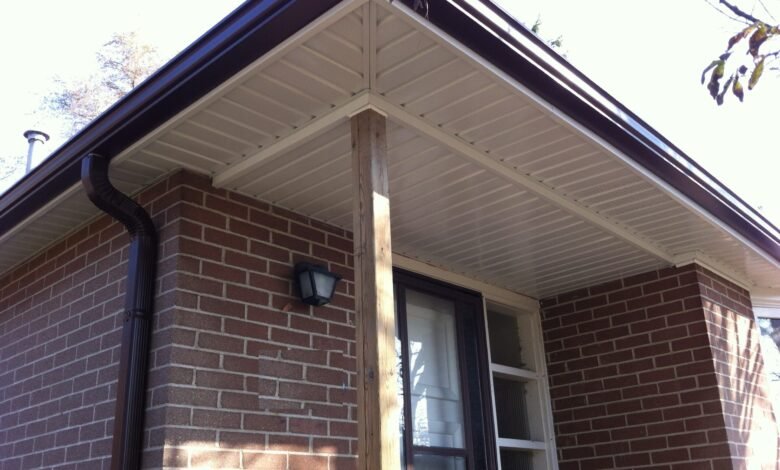
Soffit serves two functions in a Toronto home’s exterior assembly. It encloses the underside of the roof overhang, providing a finished surface that seals the rafter tails and the space between the exterior wall and the roofline from weather, pests, and moisture. And in vented configurations, which are standard in the GTA housing stock, it provides the intake ventilation pathway that allows outside air to enter the attic space and move toward ridge venting, regulating attic temperature and moisture in a way that affects both the roofing system above and the insulation and structure below.
When soffit is damaged or deteriorated, both functions are compromised. The enclosure function fails at the point of damage, allowing moisture, insects, and small animals access to the rafter space and the attic. The ventilation function is disrupted by blocked or damaged vents, which affects attic thermal performance, accelerates moisture accumulation in the attic space, and in Toronto winters contributes to the ice damming conditions that damage both the roof edge and the eavestrough system.
Soffit condition is, in other words, not isolated from the performance of the broader exterior system. A deteriorated soffit affects the attic above it, the eavestrough beside it, and the wall below it in ways that extend the consequence of the damage beyond the visible surface.
Why Toronto Homes See Soffit Damage
The damage patterns that present most frequently in Toronto soffit repair work are consistent across the GTA housing stock and trace to identifiable causes that the repair must address.
Moisture from eavestrough overflow is the most common source of soffit damage on Toronto homes. When eavestroughs overflow during heavy rainfall, or when joint failures deliver water to the fascia and soffit continuously during rain events, the soffit absorbs that moisture over time. Wood soffit deteriorates through rot. Aluminum soffit develops staining and eventually structural failure at fastener points as the fascia it attaches to deteriorates. Vinyl soffit survives moisture at its surface but the substrate it is fastened to does not.
The practical implication is that soffit damage caused by eavestrough overflow cannot be correctly repaired without first addressing the eavestrough condition. Replacing damaged soffit panels while the overflow condition that damaged them continues is replacing material that will be damaged again on the same timeline as the original failure.
Ice damming delivers moisture to the soffit through a different mechanism but with similar results. Ice that forms at the eavestrough and backs up under the roof edge delivers meltwater to the rafter space, the fascia, and the soffit during thaw periods. Repeated freeze-thaw cycling through a Toronto winter delivers this moisture repeatedly. Soffit damage from ice damming is recognizable by its location, typically concentrated at the lower edge of the overhang closest to the eavestrough, and by its seasonal pattern, worsening after cold winters with significant ice accumulation.
Pest intrusion is the third common source of Toronto soffit damage. Squirrels, starlings, and raccoons are persistent in the GTA’s urban and suburban residential areas, and soffit that has developed even minor gaps or deterioration at joints provides an entry point that these species will enlarge through persistent attention. Pest-damaged soffit requires repair material and pest exclusion measures simultaneously to prevent recurrence.
Material Options for Soffit Repair in Toronto
The GTA residential housing stock presents soffit in three primary materials: wood, aluminum, and vinyl. Each presents differently in deterioration and responds to repair differently.
Wood soffit, common in older Toronto housing stock, deteriorates through moisture-driven rot that typically progresses from the areas of highest moisture exposure outward. Localized rot can be addressed through section replacement where the surrounding material is sound. Widespread deterioration is more economically addressed through full replacement with a lower-maintenance material that will not reproduce the same failure pattern over time.
Aluminum soffit is durable at its surface but depends on the fascia and framing it attaches to for structural integrity. Aluminum soffit damage from moisture typically manifests as surface staining from water mineral deposits and progressive failure at fastener points as the wood substrate beneath deteriorates. Repair of aluminum soffit in good surface condition with deteriorated substrate requires substrate remediation before panel replacement.
Vinyl soffit offers the lowest maintenance profile of the three materials and is the appropriate replacement choice in most Toronto soffit repair situations where the existing material is being replaced rather than patched. It does not rot, does not require painting, and is available in vented configurations that maintain the intake ventilation function of the original installation.
The Repair Sequence That Produces Lasting Results
A soffit repair that lasts begins with identification of the moisture source driving the damage. Eavestrough condition, roof edge condition, and the presence of ice damming patterns from the previous winter all inform the source assessment. Repairing soffit without completing this assessment first is addressing the evidence of a problem rather than the problem itself.
Fascia condition assessment follows. Soffit attaches to the fascia, and fascia that has deteriorated through moisture exposure cannot provide a sound substrate for new soffit material. Fascia remediation or replacement where required is the correct sequence before new soffit is installed.
Century Aluminum handles soffit repair across Toronto alongside their eavestrough and siding work, approaching the assessment and repair sequence with attention to the underlying causes rather than the visible surface symptoms alone. Homeowners dealing with soffit damage in Toronto can reach their team through Century Aluminum to get an honest assessment of what the repair actually involves and what it will take to fix it correctly.
Ventilation Continuity After Repair
Soffit repair on vented installations must preserve the intake ventilation function that the original soffit provided. Replacement panels in vented sections must be vented to maintain airflow. Solid panels used in vented locations block the ventilation pathway and produce the attic moisture accumulation and thermal performance problems that vented soffit design exists to prevent.
This is a detail that matters for the performance of the attic assembly above the repair and is worth confirming explicitly before repair work begins. The correct material for a vented soffit repair is a vented panel. This is not a complicated specification, but it is one that needs to be stated clearly and confirmed in the material selection rather than assumed.