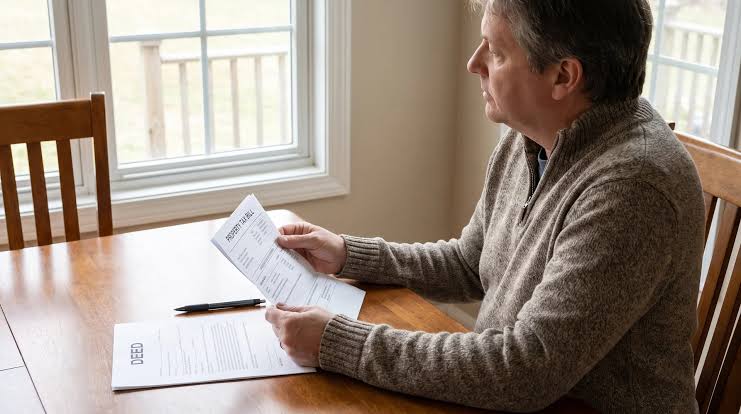

A county can price your house at a number nobody would pay and still call it fair. That sentence is the wholereason the assessment industry exists. You get a postcard, a new valuation, and a bill that assumes the person typing it measured your half bathroom without ever walking through the door.
Most owners assume the assessor is right because the number arrived in an official envelope. That assumption costs money every year. The valuation is a guess built from permits, sales records, and drive-by eyeballing, and guesses can be challenged. When owners bring in property tax appeal services, the first thing a reviewer does is not read the appeal form. It is ask five questions the notice probably cannot answer. That is where your case starts.
I have watched people spend weeks drafting angry letters and lose, then spend forty minutes gathering five facts and win. The facts matter more than the tone.
What the five-number test actually measures
Before you hire anybody or file anything, pull your assessment card and line up these five figures. Most county portals publish them for free, usually behind a search box that wants a parcel number or PIN. You are looking for:
- The assessed value your county assigned this cycle
- The living area in square feet, as recorded
- The year the assessor believes your house was built
- The sale price paid for the closest genuinely comparable house in the last two years
- The actual market value a recent appraisal or purchase contract shows for your property
Any single mismatch is a lead. Two mismatches is a case. When the recorded square footage is higher than the tape measure, you are taxed on rooms that do not exist. When the recorded year is older than the deed, maintenance history gets graded against a house you do not own. Both are clerical flaws, and clerks are human.
The numbers also reveal something subtler. If your neighbor across the street owns the exact same model of house and pays noticeably less, that gap has a name: lack of uniformity. Counties are required to value similar properties similarly, not perfectly, but closely. I think the uniformity check is the most overlooked tool a homeowner has, because it needs no expertise in appraisal theory. It needs one neighbor willing to share their tax card, which usually costs a plate of cookies.
Why the value on the notice drifts away from reality
Assessment offices do not re-inspect every parcel every year. Mass appraisal works from formulas and periodic data sweeps, so errors survive for years in the record. A kitchen renovation permit triggers a value bump while a fire that gutted the same kitchen might not land in the file until someone checks the city’s own inspection reports.
Assessments also arrive in waves rather than annual adjustments. A county reassesses a district, adjusts every parcel’s value using that district’s sales data, and moves to the next one. If your township was reassessed right after a hot year of sales, your valuation reflects a market that has since cooled. Since local governments oversee more than 80,000 units of government in the United States, according to the National Association of Counties, the quality of those cycles varies enormously from one office to the next. Some publish clean, searchable records. Others feel like a scavenger hunt through a fax machine.
The value can drift upward while nothing about your property changes. That is the part owners find insulting, and it is a legitimate complaint.
Which of the five numbers wins at the Board of Review
Not every flaw earns a reduction. Review boards respond to evidence, and different evidence carries different weight. Here is how I would rank the five:
| Number | Typical weight | What you need to prove it
|
| Square footage error | Strong | Measurements, a floor plan, photos, a recent appraisal |
| Actual market value below assessment | Strong | Purchase contract or arm’s length appraisal |
| Lack of uniformity | Moderate to strong | Neighbor assessment cards and sales data |
| Year built error | Moderate | Deed, building permits, historical records |
| Recent comparable sale | Variable | Formal sales study of similar homes |
Notice what is absent from that table: interior condition. Your county does not care that the siding needs paint or that the basement smells like a wet dog. Condition arguments without a documented event like a fire or demo permit usually land with a thud. Save your energy.
A worked example, minus the drama
Picture a couple in an inner-ring suburb. They buy a three-bedroom house for a price both parties agreed was fair. The county then reassesses and arrives at a value tens of thousands of dollars higher. The owners have not changed a window.
They log into the portal, find the card, and discover the living area is listed at a figure above the one the listing described. Two of the five numbers fail: the value disagrees with the sale price, and the square footage disagrees with the tape measure. They photograph a few rooms with a laser measure in frame, print the closing statement, grab two neighbor cards, and file before the assessor’s deadline. That is a fileable case. It is also the ordinary shape of most successful appeals, which is why I tell people the hard part is not winning. It is starting.
One warning here. The assessor’s deadline is the first door, not the only one. If you miss it, a board of review window usually follows, and even a missed board deadline may roll into the next cycle. Deadlines are strict, but the calendar is not a cliff.
Your pre-filing checklist
Run this before you submit anything:
- Pull the official assessment card and screenshot it with the date visible.
- Measure your rooms and photograph the measurement in the same frame.
- Locate your closing statement or a recent appraisal to anchor market value.
- Ask two nearby owners with similar houses for their assessed value and square footage.
- Write one paragraph per broken number. Facts first, feelings never.
- File in the correct window. The S. Census Bureau tracks how fast your area’s housing stock and prices shift, which is a useful sanity check when you argue that a valuation is out of date.
Keep every document in a single folder, digital or paper. Boards read files, not memories.
The clock you cannot restart
Nothing in this process rewards panic, but everything in it rewards early. Values hinge on evidence you can collect this weekend, and deadlines hinge on a calendar set by clerks who will not extend it for a busy week. Federal housing data published by HUD shows how much local markets move between assessment cycles, which is exactly the argument your file should carry when the county’s number and your number disagree.
Pull your card tonight. Run the five numbers. If two of them fail, you have a conversation worth having with your county, with or without help. So which of your five numbers would you defend if a neighbor knocked on your door and asked?