
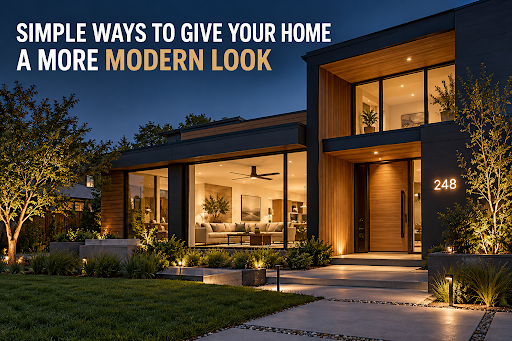

Modernizing your home does not always require a major renovation or an expensive interior design project. Small, thoughtful changes can make a noticeable difference in how a space looks and functions. From updating ceiling fixtures to improving exterior details, homeowners can create a more contemporary atmosphere by focusing on simplicity, functionality, and visual consistency.
A modern home often combines clean lines, practical furnishings, balanced lighting, and carefully selected finishes. Whether you want to refresh a living room or improve your property’s curb appeal, a few strategic upgrades can help bring your home’s overall appearance together.
1. Embrace Clean Lines and Minimalist Design
One of the easiest ways to create a modern interior is to simplify the space. Contemporary design often emphasizes uncluttered surfaces, streamlined furniture, and a balanced arrangement of decorative elements.
Start by removing unnecessary items from countertops, shelves, and tables. Keep the accessories you genuinely enjoy and arrange them thoughtfully rather than filling every available space. Furniture with simple silhouettes and clean edges can also help a room feel more organized.
Neutral shades such as white, beige, gray, and warm cream provide a versatile foundation. You can introduce contrast through artwork, cushions, rugs, or darker furniture finishes without making the room feel visually crowded.
The goal is not to eliminate personality from your home. Instead, choose elements that complement one another and allow the room’s most important features to stand out.
2. Upgrade Ceiling Fixtures for a Contemporary Interior
Ceiling fixtures have a significant influence on a room’s appearance because they combine practical functions with visual impact. An outdated fixture can make an otherwise refreshed interior feel inconsistent, while a well-chosen replacement can help tie the design together.
When updating a living room, bedroom, or open-plan space, consider modern ceiling fans that complement the room’s furniture, color palette, and architectural style. Contemporary options are available in a variety of finishes, including matte black, brushed metal, white, and natural wood tones.
Before selecting a ceiling fan, consider the room’s dimensions, ceiling height, and airflow requirements. The fan should be appropriately sized for the space, installed with suitable clearance, and compatible with the existing electrical setup. Features such as integrated lighting and remote controls may also provide additional convenience.
A coordinated ceiling fixture can serve as a functional design feature without overwhelming the rest of the room. Pairing it with simple furniture and complementary lighting helps create a more cohesive interior.
3. Use Layered Lighting to Transform Living Spaces
Lighting can change how a room feels throughout the day. Rather than relying on a single overhead fixture, combine different lighting sources to make the space more adaptable and comfortable.
Ambient lighting provides general illumination, while task lighting supports activities such as reading, cooking, and working. Accent lighting draws attention to artwork, architectural details, or decorative features.
For example, recessed lights can provide an understated foundation in a living room, while floor lamps and wall sconces introduce additional depth. Pendant lights can also add visual interest above a dining table or kitchen island.
The color temperature of your bulbs matters, too. Warm white lighting often works well in relaxing spaces, while neutral or cooler lighting may be appropriate for work areas, depending on personal preference and the room’s purpose.
When choosing new fixtures, consider how their finishes and shapes relate to the rest of your interior. Consistency does not mean every fixture must match exactly; a shared design theme is often enough to create a polished result.
4. Improve Your Home’s Exterior With Thoughtful Details
A home’s exterior creates the first impression for visitors and passersby. Although large landscaping projects and facade renovations can be expensive, smaller improvements can help make an entrance feel more current.
Start by examining the front door, porch lighting, visible hardware, and house numbers. Replacing worn or outdated details with simpler, coordinated alternatives can help create a cleaner appearance.
Installing lighted house numbers is one practical way to update an entrance. Illuminated address numbers can make a property’s address easier to identify after dark while adding a contemporary accent to the exterior. They can be particularly useful for homes with recessed entrances, limited porch lighting, or street-facing walls that become difficult to see at night.
When choosing illuminated numbers, consider their size, contrast against the mounting surface, illumination style, and visibility from the street. Weather resistance is also important for outdoor installations. Solar-powered and hardwired options may suit different properties, depending on sunlight exposure, installation requirements, and maintenance preferences.
For a cohesive exterior, coordinate the finish of the numbers with nearby lighting fixtures, door hardware, or other architectural details. The result can feel intentional without requiring extensive structural changes.
5. Refresh Your Color Palette and Finishes
Color and material choices help establish the overall character of a modern home. A restrained palette can make different rooms feel connected, especially when the same tones appear in furniture, wall finishes, and decorative accessories.
Neutral colors are a useful starting point because they work with many design styles. To prevent the space from feeling plain, introduce contrasting textures and finishes. Natural wood can add warmth, while glass and metal can contribute a cleaner, more contemporary appearance.
Matte black hardware, brushed metal fixtures, and understated cabinet handles are examples of details that can refresh a room without changing its entire layout. However, these finishes should complement the existing materials rather than compete with them.
You can also repeat selected colors throughout the home. For instance, a dark metal finish used in a living room fixture might appear again in a hallway mirror frame or an exterior light. These small connections help create a consistent design language between spaces.
6. Make the Entryway More Welcoming
The entryway is an important transition between the outdoors and the interior. A thoughtfully arranged entrance can feel more welcoming while making everyday routines easier.
Keep the area organized with a suitable storage bench, wall hooks, or a compact console table. Choose accessories according to the available space, and avoid blocking the natural pathway into the home.
Lighting is another important consideration. A well-positioned porch light can illuminate the doorway, while additional exterior lighting may help reveal steps, walkways, and nearby features. House numbers should be positioned where they are easy to identify without creating visual clutter.
For a modern appearance, combine a few complementary elements rather than using too many decorative accents. A simple planter, a clean-lined doormat, and coordinated hardware may be all that is needed to give the entrance a more finished look.
7. Choose Functional Furniture and Practical Layouts
Modern design is not just about appearance. It also involves making the most of the available space and ensuring that furniture supports everyday activities.
In smaller rooms, multifunctional furniture can help reduce clutter. Storage ottomans, extendable dining tables, and beds with built-in drawers are useful examples. In larger spaces, arranging furniture into clearly defined zones can make an open layout feel more organized.
Pay attention to circulation as well. Leave enough room to move comfortably between furniture pieces, doors, and frequently used areas. A well-planned layout often makes a room feel more spacious without requiring additional square footage.
When selecting new furniture, consider proportion and scale. Oversized pieces may overwhelm a compact room, while furniture that is too small can make a larger space feel unfinished. Choosing appropriately sized items helps maintain visual balance.
8. Bring Natural Elements Into Your Home
Natural materials can soften the clean lines often associated with contemporary interiors. Wood, stone, woven fabrics, and indoor plants introduce texture and warmth while helping a room feel more inviting.
Houseplants can add color to a living room, kitchen, or home office. Choose varieties that suit the available light and the amount of care you can provide. If natural light is limited, consider plant placement carefully rather than relying on decorative choices alone.
Window treatments also influence how a space feels. Lightweight curtains or appropriately selected blinds can provide privacy while allowing useful daylight into the room.
Combining natural textures with contemporary fixtures creates a balanced look. For example, a streamlined ceiling fixture can complement a wooden coffee table, while neutral walls provide a backdrop for greenery and textured accessories.
9. Focus on Small Upgrades Instead of Major Renovations
A modern home can develop gradually through improvements that address the most noticeable or practical issues first. Rather than replacing everything at once, identify the areas where a modest investment could make the greatest difference.
Begin with fixtures that are outdated, damaged, or poorly suited to the room. Updating cabinet handles, replacing an old light fixture, refreshing paint, or improving the front entrance may be more practical than undertaking a complete renovation.
It is also helpful to distinguish between cosmetic improvements and essential maintenance. Electrical problems, damaged exterior fittings, and other safety concerns should take priority over purely decorative changes.
Set a budget and consider the long-term usefulness of each upgrade. Durable materials, appropriately sized fixtures, and versatile finishes can remain suitable even if your decorating preferences change over time.
Conclusion: Create a Modern Home Through Thoughtful Design
Giving your home a more modern look does not have to involve a complete redesign. Clean lines, coordinated finishes, practical furniture, layered lighting, and carefully selected fixtures can gradually transform both interior and exterior spaces.
The most successful improvements balance appearance with everyday usefulness. A thoughtfully chosen ceiling fixture can complement a living room, while an illuminated address display can make an entrance more distinctive and easier to identify at night.
By focusing on a few meaningful changes at a time, homeowners can create a more cohesive and comfortable environment while keeping their projects manageable. Modern design ultimately comes down to choosing details that work together, suit the property’s character, and support the way people use their homes.



One Comment