
Tree trimming is an important part of responsible property maintenance, helping trees remain healthy, structurally sound, and visually balanced throughout their lives. Trees provide shade, privacy, habitat, beauty, and environmental benefits, but they require appropriate care to maintain those advantages. Overgrown branches, dead limbs, weak growth, and poorly positioned limbs can create safety concerns and may affect the health of the entire tree. Regular and carefully planned trimming can address these problems while encouraging stronger growth and a more attractive appearance.
Although trimming may seem like a straightforward landscaping task, removing branches incorrectly can cause permanent damage. Cutting too much foliage, making improper cuts, trimming at the wrong time, or using unsuitable equipment can weaken a tree and make it more vulnerable to pests, disease, decay, and storm damage. For this reason, understanding basic trimming principles and recognizing when professional assistance is appropriate can make a significant difference.
Why Tree Trimming Matters
Healthy trees naturally develop branches in different directions, and some growth may eventually become crowded, damaged, or poorly positioned. Tree trimming helps manage this growth and maintain a suitable structure. Removing dead, diseased, broken, or crossing branches can improve the tree’s overall condition and reduce potential hazards.
Trimming can also improve clearance around buildings, driveways, walkways, fences, and utility infrastructure. Branches that extend too close to roofs or structures may cause physical damage during storms or create pathways for pests. Limbs hanging over walkways can also become a safety concern if they break unexpectedly.
Another important benefit is improved appearance. Properly maintained trees can complement landscaping and make outdoor areas look more organized. However, appearance should not be the only consideration. Every cut should have a clear purpose and should support the tree’s health, structure, or safety.
Identifying Branches That Need Attention
Before any trimming begins, the tree should be inspected carefully. Dead branches are among the most obvious candidates for removal. They may appear dry, brittle, discolored, or completely leafless compared with healthy growth.
Broken branches should also be evaluated, particularly when they have been damaged by wind, storms, animals, or other causes. Cracked limbs can become unstable and may fall without warning.
Branches that cross or rub against each other can create wounds where bark becomes damaged. Over time, repeated friction may increase the risk of decay or disease. Weakly attached branches may also deserve attention when they pose a structural concern.
Branches growing toward roofs, windows, driveways, sidewalks, or other areas where they could cause damage may need to be reduced or removed. However, the goal should be selective pruning rather than removing large amounts of healthy growth unnecessarily.
Choosing the Right Time for Trimming
The best time to trim a tree depends on its species, health, growth pattern, climate, and the objective of the work. Some trees respond well to trimming during dormant periods, while others may have different seasonal requirements.
Dead, broken, or hazardous branches can generally require attention regardless of the season because safety concerns should not be ignored. However, routine structural or appearance-focused trimming should be planned with the tree’s growth cycle in mind.
Timing can also affect flowering and fruit production. Removing branches at an inappropriate time may reduce blooms or fruit for a particular season.
Because tree species vary significantly, property owners should avoid assuming that one trimming schedule works for every tree. When the species or appropriate timing is uncertain, consulting a qualified tree professional can help prevent unnecessary damage.
Understanding Proper Cutting Techniques
The location and angle of a cut can influence how effectively a tree seals or compartmentalizes the resulting wound. Cuts should generally be made carefully without unnecessarily damaging the branch collar or trunk.
Large stubs should not be left behind because they may decay and create structural problems. At the same time, cutting too closely into the trunk can damage tissues that help the tree respond to the wound.
When removing larger limbs, professional arborists may use specialized techniques to control the branch and prevent it from falling unexpectedly. This is particularly important when branches are located above structures, vehicles, people, or valuable landscaping.
Clean, deliberate cuts using properly maintained tools can reduce unnecessary tearing and injury. Equipment should also be appropriate for the branch size and location.
Removing Dead and Diseased Growth
Dead branches can become brittle and may fall during strong winds or heavy weather. Removing them can reduce the risk of property damage and personal injury.
Diseased branches may require more careful evaluation. Removing affected material can sometimes help limit the spread of certain diseases, but the correct approach depends on the specific condition.
Tools should be cleaned appropriately when moving between affected trees or branches if disease transmission is a concern. Improper disposal of infected plant material can also create problems if the disease remains viable.
Property owners should avoid assuming that every discolored or damaged branch is diseased. Environmental stress, insect damage, drought, mechanical injury, and natural aging can produce similar symptoms.
Managing Overgrown Trees
Overgrown trees may have branches extending toward roofs, power infrastructure, roads, driveways, or neighboring structures. Selective trimming can restore clearance while maintaining the natural form of the tree.
It is generally better to remove or reduce problematic branches selectively than to cut large sections of the canopy indiscriminately. Excessive removal can expose the tree to intense sunlight, alter its balance, and stimulate weakly attached regrowth in some circumstances.
A professional can evaluate the tree’s natural structure and determine which branches should be retained. This is particularly important for mature trees because large cuts can take longer to close and may have lasting structural consequences.
Maintaining Clearance Around Buildings
Trees growing near buildings can create several maintenance concerns. Branches that touch roofs can scrape roofing materials during windy conditions, while dense foliage can restrict airflow and create damp areas.
Branches growing near windows or exterior walls may also interfere with maintenance and inspection. Maintaining reasonable clearance can make it easier to clean gutters, inspect roofs, paint exterior surfaces, and access the building.
However, clearance should be achieved without unnecessarily removing healthy branches. The structure of the tree should be considered before cuts are made.
Tree Trimming Near Utility Lines
Branches near utility lines require special caution. Electricity and elevated branches create a potentially dangerous combination, and attempting to trim such trees without proper training and equipment can result in serious injury or property damage.
Property owners should not attempt to handle branches that are touching or growing dangerously close to electrical lines. Qualified professionals with appropriate training should evaluate these situations.
The safest approach may involve coordination with the relevant utility provider or specialized tree-care professionals depending on the circumstances.
Storm-Damaged Trees
Severe weather can leave trees with broken limbs, hanging branches, split trunks, or partially uprooted root systems. These conditions can create immediate hazards.
After a storm, property owners should avoid standing beneath damaged branches or attempting to pull down hanging limbs. Even branches that appear stable can shift suddenly.
A professional assessment can determine whether damaged limbs can be safely removed or whether the tree has suffered more extensive structural problems.
Emergency situations may require priority attention when trees or branches are blocking access routes, threatening buildings, or creating an immediate risk to people.
Avoiding Excessive Trimming
One of the most damaging mistakes is removing too much of the canopy at once. Healthy foliage is essential for photosynthesis, and excessive pruning can place unnecessary stress on the tree.
Removing large portions of the crown can also alter the tree’s natural structure. In some cases, it may encourage rapid but weakly attached growth that creates future maintenance concerns.
A well-planned trimming project should focus on specific objectives rather than simply making the tree smaller. If clearance, safety, structural balance, or deadwood removal is the goal, only the branches necessary to achieve that objective should generally be considered.
Tree Trimming for Young Trees
Young trees can benefit from structural training because early development influences their future form. Selective removal of competing leaders, poorly attached branches, or crossing limbs can encourage a stronger framework.
Early structural care may reduce the need for major corrective cuts later when branches become larger. Large branches are generally more difficult and potentially more hazardous to remove than small ones.
Young trees should still be trimmed conservatively. The objective is to guide development rather than drastically change the natural shape.
Caring for Mature Trees
Mature trees often require a different approach because their structure is already established. Large cuts can create substantial wounds and may take considerable time to compartmentalize.
Trimming mature trees should therefore be based on a clear reason, such as removing deadwood, addressing a specific structural concern, improving clearance, or managing a hazardous limb.
A qualified arborist can evaluate the tree’s overall condition, including trunk structure, branch unions, canopy balance, and signs of decay.
Regular inspections can help identify problems while branches are still manageable rather than waiting until significant defects develop.
Tools Used for Tree Trimming
Different branches require different tools. Hand pruners can be useful for small twigs, while loppers provide greater leverage for somewhat larger branches. Pruning saws are designed for branches that are too large for standard hand tools.
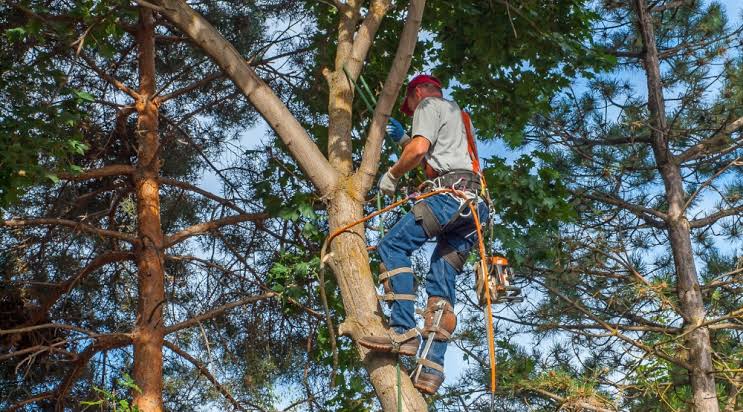
Professional tree crews may also use pole saws, ropes, harnesses, lifts, chippers, and other specialized equipment for larger or more complicated projects.
Tools should be sharp, clean, and appropriate for the task. Dull equipment can create rough cuts and require excessive force, increasing the likelihood of accidental damage.
Using ladders while handling cutting tools can be dangerous, particularly in unstable conditions or around overhead branches. Larger trees should be handled by trained professionals with appropriate equipment.
Tree Health and Pest Prevention
Proper trimming can contribute to healthier tree structure, but it is not a substitute for comprehensive tree care. Soil conditions, water availability, pests, diseases, root health, and environmental stress can all affect tree condition.
Removing dead or severely damaged material can sometimes reduce shelter for certain pests. Improving airflow through selective canopy management may also benefit some trees.
However, excessive trimming can have the opposite effect by creating wounds and stress. Tree health should therefore be considered before deciding how much material to remove.
If a tree shows unusual leaf loss, discoloration, fungal growth, holes, bark damage, or declining branches, a professional assessment can help identify the underlying cause.
Benefits of Professional Tree Trimming
Professional tree care can be particularly valuable when trees are large, mature, close to structures, or difficult to access. Experienced professionals can evaluate branch structure and identify potential hazards before beginning work.
They also have equipment designed for elevated branches and heavy limbs. Proper rigging techniques can help control falling branches and reduce the risk of damage to roofs, vehicles, fences, landscaping, and other property.
Professional services may also include cleanup and disposal of removed branches. For larger projects, this can save property owners considerable time and effort.
Most importantly, skilled trimming focuses on preserving the tree’s natural structure rather than simply removing as much growth as possible.
Common Trimming Mistakes
Incorrect cutting is one of the most common problems associated with do-it-yourself tree maintenance. Cutting into the trunk, leaving excessive stubs, or removing major structural branches without understanding their role can create long-term issues.
Another mistake is trimming trees simply because they appear too large. Mature trees often require their existing canopy for stability and energy production.
Ignoring branches near utility lines can create serious safety hazards. Property owners should never treat electrical clearance as an ordinary pruning task.
Using unsafe equipment is another concern. Working from unstable ladders or attempting to lower heavy limbs without proper rigging can lead to injuries and property damage.
Finally, failing to identify the underlying reason for poor tree health can result in ineffective trimming. If a tree is declining because of disease, root damage, drought, or pests, removing branches alone may not solve the problem.
Creating a Long-Term Tree Care Plan
Tree maintenance works best when it is planned rather than performed only after a branch breaks. Periodic inspections can help identify structural concerns, deadwood, pest activity, and clearance problems before they become emergencies.
A long-term plan should account for the age, species, location, and condition of each tree. Young trees may benefit from structural training, while mature trees may need more conservative maintenance.
Property owners should also monitor soil moisture, drainage, surrounding construction, and other environmental factors that can affect root health.
Keeping records of previous trimming and inspections can make future maintenance easier. This information can help professionals understand how the tree has developed and what work has already been performed.
Final Thoughts on Tree Trimming
Tree trimming is an important component of responsible landscape care, but effective trimming requires knowledge, planning, and attention to safety. Removing dead, damaged, crossing, or poorly positioned branches can improve clearance, reduce hazards, and support a healthy tree structure.
The process should always begin with an assessment of the tree and its surroundings. Factors such as species, age, branch structure, health, weather exposure, nearby buildings, and utility lines should influence the approach.
Routine maintenance is generally preferable to waiting until a major branch fails. Young trees can benefit from early structural guidance, while mature trees require careful and selective pruning to avoid unnecessary stress and large wounds.
Property owners should also recognize when a project is beyond the scope of basic maintenance. Large trees, storm-damaged limbs, elevated branches, and trees near electrical infrastructure can present significant hazards and should be evaluated by qualified professionals.
With thoughtful planning, appropriate techniques, and regular inspections, trees can remain strong, attractive, and functional features of a property for many years. Proper trimming is not simply about changing the appearance of a tree; it is about maintaining its structure, protecting surrounding property, and supporting healthy growth over the long term.